

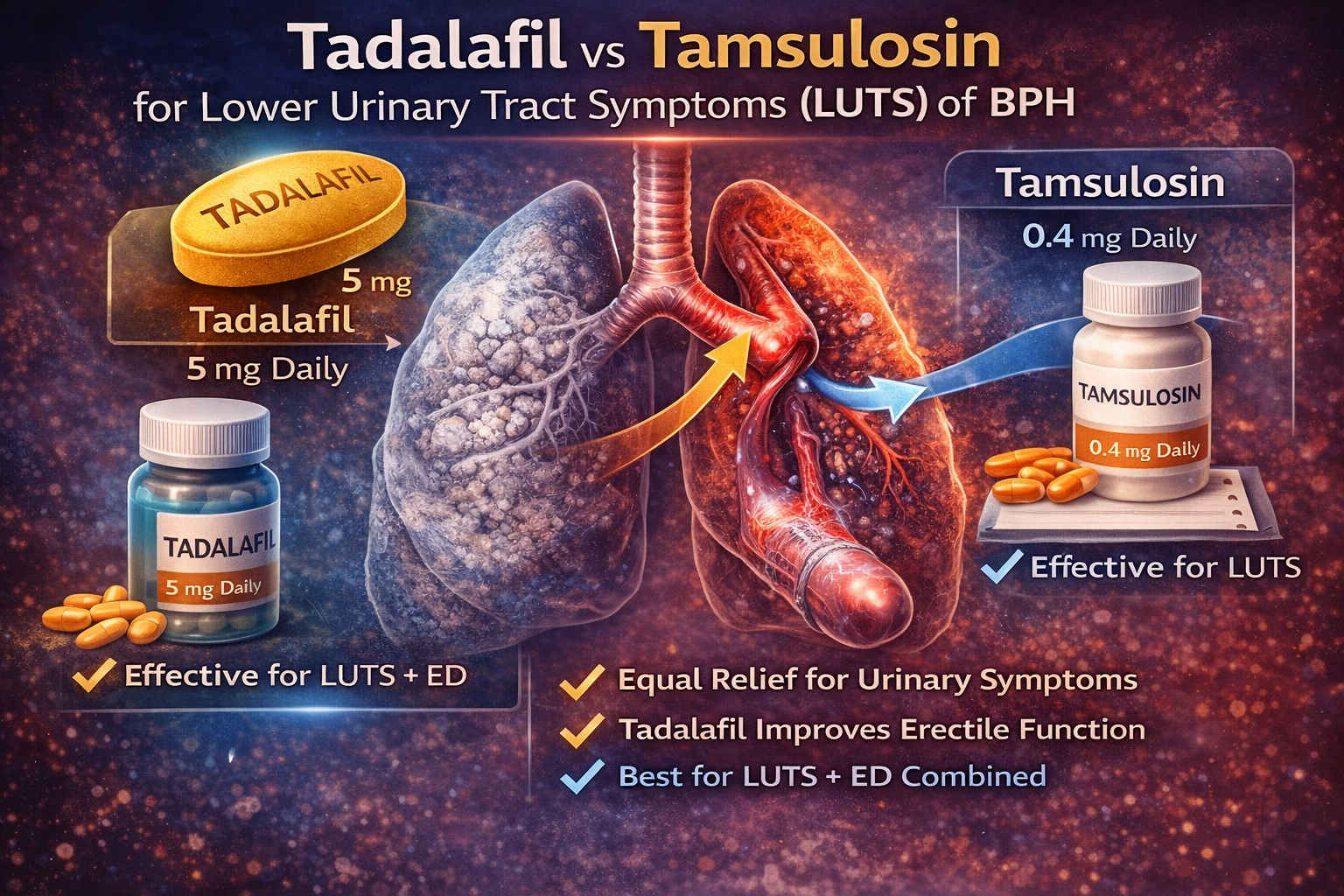
The Clinical Intersection of LUTS and BPH: Why the Comparison Matters
Lower urinary tract symptoms (LUTS) suggestive of benign prostatic hyperplasia (BPH) remain among the most prevalent and disruptive conditions affecting aging men. Frequency, urgency, nocturia, weak stream, incomplete emptying—these are not trivial inconveniences. They fragment sleep, impair productivity, and erode quality of life. Epidemiological data presented in the analyzed meta-analysis confirm that the burden rises sharply with age, with prevalence estimates reaching substantial proportions in men over 60 .
The International Prostate Symptom Score (IPSS) has become the clinical lingua franca for evaluating symptom severity. It dissects LUTS into voiding (obstructive) and storage (irritative) domains, complemented by quality-of-life (QoL) assessment. Objective measures such as maximum urinary flow rate (Qmax) and postvoid residual urine (PVR) further anchor subjective reports in physiological data . Any pharmacologic strategy must therefore be judged across this multidimensional framework.
For decades, α1-adrenergic antagonists such as tamsulosin have been considered first-line pharmacotherapy. Their mechanism is direct and pragmatic: relax smooth muscle in the prostate and bladder neck to reduce dynamic obstruction. Yet clinical practice has evolved. The recognition that erectile dysfunction (ED) frequently coexists with LUTS has reshaped expectations. Men do not present with isolated urinary complaints; they present with intertwined urological and sexual concerns. In this context, tadalafil—a phosphodiesterase type 5 (PDE5) inhibitor—emerged as more than an erectile aid. It became a candidate for dual-action therapy.
The meta-analysis under discussion synthesized randomized controlled trials comparing tadalafil and tamsulosin monotherapy in LUTS suggestive of BPH . Its findings invite careful interpretation—not simply to declare equivalence or superiority, but to refine therapeutic reasoning.
Study Architecture and Evidence Synthesis: A Methodological Overview
The meta-analysis screened 335 publications and ultimately included seven randomized controlled trials comprising 1,601 participants . All trials compared tadalafil monotherapy with tamsulosin monotherapy, typically over a 12-week treatment period. The Jadad scoring system was applied for quality assessment; most trials met high-quality criteria, though some variability in blinding and allocation concealment was noted .
Outcome measures included:
- Total IPSS
- Voiding and storage subscores
- Quality of life (QoL)
- Maximum flow rate (Qmax)
- Postvoid residual urine (PVR)
- International Index of Erectile Function (IIEF) scores
The statistical approach used standardized mean differences (SMD), weighted mean differences (WMD), and heterogeneity analysis (I²). Notably, significant heterogeneity was present in several outcomes, reflecting differences in populations, baseline characteristics, and dosing regimens .
From a clinical perspective, the key question was not whether both drugs worked—both clearly do—but whether one meaningfully outperformed the other in specific domains.
Symptom Control: IPSS and Subscores Reveal Therapeutic Parity
Across total IPSS, tadalafil demonstrated no statistically significant difference compared with tamsulosin . The standardized mean difference was small and not clinically meaningful. In practical terms, both medications alleviated overall LUTS severity to a comparable extent over 12 weeks.
Similarly, analyses of voiding subscores showed no significant advantage for either agent . This is noteworthy. Tamsulosin directly targets prostatic smooth muscle tone via α1-blockade, and one might anticipate superior impact on obstructive symptoms. Yet tadalafil—through modulation of the nitric oxide (NO)/cGMP pathway and smooth muscle relaxation—achieved comparable results.
Storage subscores followed the same pattern . Irritative symptoms such as urgency and frequency improved similarly under both treatments. This suggests that the therapeutic mechanisms of PDE5 inhibition extend beyond erectile physiology into bladder and prostatic functional modulation.
Objective measures reinforced these findings. Qmax and PVR changes did not differ significantly between groups . In other words, from a purely urinary standpoint, tadalafil and tamsulosin performed as therapeutic equals.
For clinicians accustomed to viewing tamsulosin as the benchmark, this equivalence warrants attention. Tadalafil is not a secondary player in LUTS management; it operates on the same clinical stage.
Erectile Function: Where Therapeutic Divergence Becomes Clear
The distinction between the two drugs emerges sharply in erectile function outcomes. In the meta-analysis, tadalafil significantly improved IIEF scores compared with tamsulosin . The weighted mean difference was robust and statistically convincing.
This is hardly surprising mechanistically. Tadalafil enhances erectile response via PDE5 inhibition, increasing cGMP availability and promoting smooth muscle relaxation in penile vasculature. Tamsulosin has no direct pro-erectile mechanism and may, in some patients, even contribute to ejaculatory disturbances.
What is clinically important is not merely that tadalafil improves erectile function. It is that it does so while providing urinary symptom relief comparable to tamsulosin. For men presenting with both LUTS and ED—a common scenario in aging populations—tadalafil addresses two pathophysiological domains simultaneously.
This dual efficacy is not trivial. It reduces pill burden, simplifies regimens, and potentially improves adherence. In a population already at risk of polypharmacy, therapeutic consolidation is more than convenient; it is strategic.
Mechanistic Insights: Smooth Muscle, Endothelium, and the NO–cGMP Axis
Understanding why tadalafil can rival tamsulosin in LUTS requires a brief revisit of physiology. The NO–cGMP signaling pathway plays a central role in regulating smooth muscle tone in the bladder neck, prostate, and urethra . PDE5 inhibition augments this pathway, promoting relaxation and improving perfusion.
Beyond simple smooth muscle relaxation, tadalafil may exert additional benefits:
- Enhancement of endothelial function
- Improved pelvic blood flow
- Modulation of afferent nerve activity
- Anti-inflammatory effects in lower urinary tract tissues
These mechanisms may collectively influence both storage and voiding symptoms. While tamsulosin primarily reduces dynamic obstruction, tadalafil appears to modulate a broader physiological landscape.
This distinction might explain why symptom relief is comparable despite different molecular targets. One drug narrows its focus; the other operates with wider vascular and neurogenic implications.
Duration of Therapy: Short Trials, Long Questions
All included trials evaluated 12-week treatment periods . This duration is sufficient to demonstrate symptomatic efficacy but insufficient to answer long-term comparative questions.
Tamsulosin has decades of longitudinal data supporting sustained use. Tadalafil, although supported by extension studies, still lacks equivalent long-duration head-to-head data against α-blockers in LUTS populations.
However, available evidence suggests that tadalafil’s benefits in LUTS can persist beyond 12 weeks. The practical question is not whether it works short-term—it does—but how best to position it within chronic management algorithms.
Until longer randomized trials are available, clinicians must balance current evidence with individual patient characteristics.
Clinical Decision-Making: Selecting the Right Agent for the Right Patient
When urinary symptom control is the sole therapeutic objective and erectile function is intact, either drug is reasonable. Cost, comorbidities, and tolerability may guide the decision.
However, when ED coexists—a frequent reality—the balance shifts. In such cases, tadalafil offers distinct advantages. It:
- Provides LUTS improvement comparable to tamsulosin
- Significantly enhances erectile function
- Reduces the need for combination therapy
- May improve overall treatment adherence
Combination therapy with tadalafil and tamsulosin has been explored, but the incremental benefit over tadalafil monotherapy appears modest in many scenarios . Given cost considerations and polypharmacy risks, monotherapy with tadalafil often represents a rational starting point when dual symptoms are present.
Ironically, what began as a drug developed for ED has matured into a credible urological multitasker.
Limitations of the Evidence and Areas for Future Research
The meta-analysis identified heterogeneity across trials, reflecting differences in dosing (5 mg vs. higher doses), populations, and methodological rigor . Some studies lacked optimal blinding or allocation concealment.
Furthermore, the 12-week duration limits extrapolation to long-term disease modification. BPH is chronic and progressive. Whether tadalafil influences structural progression, acute urinary retention rates, or surgical intervention needs remains incompletely defined.
Future research should address:
- Long-term comparative efficacy beyond one year
- Cardiovascular and endothelial implications in LUTS populations
- Cost-effectiveness modeling
- Patient-reported outcome measures in real-world settings
High-quality, adequately powered trials will refine current understanding and may further solidify tadalafil’s role.
Conclusion: Comparable Urinary Relief, Superior Functional Breadth
The meta-analysis clearly demonstrates that tadalafil and tamsulosin achieve similar improvements in total IPSS, voiding and storage subscores, Qmax, PVR, and quality of life in men with LUTS suggestive of BPH . However, tadalafil provides a decisive advantage in improving erectile function.
For patients with isolated LUTS, either medication is appropriate. For those with coexisting ED, tadalafil emerges as the more comprehensive therapeutic option. It exemplifies a pragmatic principle in modern medicine: when one intervention can address two interconnected pathologies without compromising efficacy, it deserves serious consideration.
In clinical practice, the question is no longer whether tadalafil can compete with tamsulosin. The evidence shows that it can. The more relevant question is how thoughtfully we integrate this knowledge into individualized care.
FAQ
1. Is tadalafil as effective as tamsulosin for urinary symptoms alone?
Yes. According to randomized controlled trials summarized in the meta-analysis, tadalafil provides improvements in total IPSS, voiding and storage subscores, Qmax, and PVR comparable to tamsulosin .
2. When should tadalafil be preferred over tamsulosin?
Tadalafil should be strongly considered in men who have both LUTS suggestive of BPH and erectile dysfunction, as it significantly improves erectile function while maintaining urinary symptom control .
3. Is combination therapy necessary?
Combination therapy may benefit select patients, but in many cases tadalafil monotherapy provides sufficient relief for both LUTS and ED. Avoiding unnecessary polypharmacy can reduce cost and improve adherence .
