

Introduction
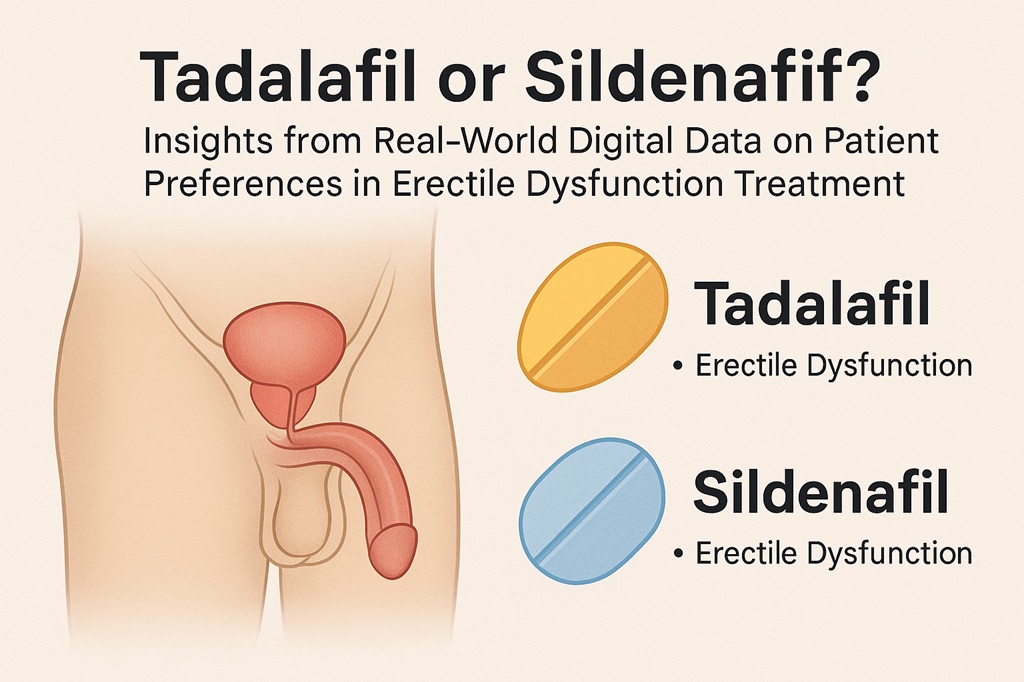
Erectile dysfunction (ED) is not only a deeply personal condition but also a global public health issue with rising prevalence. Affecting men across all ages, it often reflects a combination of vascular, neurological, hormonal, and psychological factors. Its association with cardiovascular disease, metabolic syndrome, and mental health problems makes ED an important marker of overall male health rather than a purely sexual complaint. For decades, oral pharmacotherapy with phosphodiesterase-5 inhibitors (PDE5is) has been the mainstay of treatment. Among these, sildenafil (widely known as Viagra) and tadalafil (Cialis) dominate clinical practice.
Sildenafil, introduced in the late 1990s, revolutionized ED management. It is characterized by a rapid onset of action and relatively short half-life, providing efficacy for up to 12 hours. Tadalafil followed a few years later, offering a longer duration of action—up to 36 hours—which earned it the colloquial title of the “weekend pill.” Clinical trials have shown both medications to be safe and effective, with broadly comparable efficacy rates. However, head-to-head comparisons have yielded nuanced differences in patient experience, adherence, and psychosocial outcomes.
Until recently, most comparative data came from randomized controlled trials conducted under tightly controlled conditions. Yet real-world behavior often differs substantially from trial environments. The rise of digital health platforms—online prescription portals where patients can obtain medical consultation and treatment remotely—provides a new opportunity to study how patients actually use these medications outside the clinic. The study under discussion analyzed more than 26,000 German men with ED who obtained prescriptions via an online prescription platform (OPP). By observing prescription patterns over time, the researchers assessed whether patients showed a preference for tadalafil over sildenafil once both had been tried.
The findings offer an intriguing window into modern digital healthcare, patient autonomy in treatment selection, and the subtle drivers of medication preference in a real-world setting. This article explores these insights, examining the study’s design, results, and implications for both clinical practice and digital medicine.
Understanding Erectile Dysfunction and Its Treatment Landscape
ED is far from a uniform disease. In younger men, psychogenic factors such as anxiety, relationship difficulties, and stress predominate. In older populations, vascular impairment and comorbid chronic diseases become more prominent. Regardless of age, the condition often diminishes quality of life, affects self-esteem, and strains relationships. Importantly, ED can also serve as a sentinel marker for cardiovascular disease, sometimes preceding clinical cardiac events by several years.
Treatment follows a stepwise approach. Lifestyle interventions—weight reduction, smoking cessation, and exercise—form the foundation, especially since modifiable cardiovascular risk factors often overlap with ED. When behavioral measures prove insufficient, pharmacotherapy with PDE5 inhibitors is introduced. Other options, including vacuum devices, intra-cavernosal injections, and penile prostheses, are reserved for refractory cases.
Among PDE5 inhibitors, sildenafil and tadalafil are the workhorses. Despite similar efficacy, their pharmacokinetic profiles differ in clinically meaningful ways. Sildenafil works quickly, usually within 30–120 minutes, but its action wanes after 8–12 hours. Tadalafil’s onset is slightly slower, yet its effect can last up to 36 hours, offering greater flexibility. Some men prefer the spontaneity afforded by tadalafil, while others appreciate sildenafil’s shorter activity window, which limits prolonged exposure.
Historically, comparative studies suggested no major differences in overall success rates, tolerability, or satisfaction. However, tadalafil demonstrated a modest advantage in psychological outcomes such as confidence and sexual spontaneity. The real-world question remained: when given free choice, do men gravitate toward one medication over the other? The rise of OPPs created a unique setting to observe this phenomenon at scale.
Digital Health Platforms: A New Research Window
The German OPP analyzed in this study was operated by Wellster Healthtech Group. It functioned as a telemedical service dedicated to men’s health, accessible exclusively online. Patients completed structured questionnaires regarding their medical history, ED characteristics, and potential contraindications. Licensed physicians reviewed responses, considering age, body mass index (BMI), smoking status, and cardiovascular risk factors before prescribing. Prescriptions were then filled through partner online pharmacies.
This digital model offered several advantages:
- Accessibility: Patients could seek treatment without the logistical or psychological barriers of in-person visits.
- Data richness: Structured questionnaires captured standardized information across thousands of users.
- Naturalistic behavior: Unlike trial participants, these men selected their medications in real-world conditions without financial reimbursement from insurers or influence from study coordinators.
Between May 2019 and May 2020, over 26,000 men obtained prescriptions via this OPP. Of these, a smaller subset had tried both sildenafil and tadalafil, allowing researchers to directly observe preference dynamics over multiple orders. This “P2” group became the focal point for identifying true shifts in behavior once patients had personal experience with both drugs.
Patient Characteristics and Study Cohorts
The study population represented a younger, treatment-naïve group compared to traditional clinical trial cohorts. The median age was 49 years, with about 30% under the age of 40. The median BMI hovered around 26 kg/m², falling in the slightly overweight range. Strikingly, over 60% of men still reported regular morning erections, suggesting earlier disease stages than typically seen in tertiary care settings.
These features distinguish digital platform users from classic ED study populations, which often involve older men recruited from university hospitals with more advanced disease. For example, earlier approval studies for sildenafil and tadalafil enrolled patients with mean ages near 59, higher rates of comorbid illness, and greater severity of ED. The OPP users thus provided a fresh epidemiological window: younger, healthier, less medically encumbered, and more comfortable with digital solutions.
Within the dataset, two main analytic groups emerged:
- P1: All men with any PDE5i prescriptions (n ≈ 26,800).
- P2: A subgroup of 367 patients with 1,388 prescriptions who had tried both sildenafil and tadalafil.
It was within P2 that preference could be meaningfully assessed by examining the trajectory of repeat orders over time.
Results: A Gradual Shift Toward Tadalafil
At the outset, sildenafil dominated prescriptions, reflecting its historical primacy and perhaps brand recognition. However, as patients experimented with both drugs, a clear shift emerged. In the P2 group, tadalafil accounted for just 30% of first orders after switching between drugs, but rose steadily to represent 80% of prescriptions by the eighth order. This progressive tilt strongly suggested an accumulating preference.
Several subgroup analyses revealed that the preference for tadalafil was particularly pronounced among:
- Men aged ≤40 years
- Patients with BMI ≤25 kg/m²
- Those with sustained morning erections
In these groups, tadalafil prescriptions rose significantly after initial trials, often replacing sildenafil as the favored option. By contrast, older, heavier men or those without morning erections demonstrated less dramatic differences.
Interestingly, despite its reputation as the “expensive pill,” tadalafil was actually cheaper per unit than sildenafil in this dataset (approximately €5.8 vs €7.6). Brand loyalty patterns also emerged: patients more frequently sought the original sildenafil brand (Viagra) compared with tadalafil’s brand (Cialis), although generics dominated both categories.
Why Do Patients Prefer Tadalafil?
The preference for tadalafil is not merely a quirk of pricing. Several plausible drivers emerge when pharmacological and psychosocial aspects are considered.
First, the extended half-life of tadalafil offers a degree of spontaneity not possible with sildenafil. Rather than planning intercourse within a narrow time frame, men taking tadalafil enjoy a 24–36 hour window of responsiveness. This reduces the pressure of “performance scheduling,” which can itself be a source of anxiety and erectile failure.
Second, psychological benefits play a role. Prior studies demonstrated that men on tadalafil report higher sexual confidence, less time-related stress, and greater satisfaction with intimacy. These softer outcomes, while difficult to quantify, directly influence adherence and preference.
Third, daily dosing options are more practical with tadalafil. A 5 mg once-daily regimen allows men with frequent sexual activity to maintain readiness without repeated on-demand dosing. This mode of therapy can also enhance endothelial health over time, although more evidence is needed.
Finally, in the digital environment, patients made choices without the mediating influence of physicians physically present. The pattern of gradual adoption suggests that lived experience with both drugs, rather than marketing or initial physician bias, guided preference.
Clinical Implications
The study’s implications extend beyond the sildenafil–tadalafil debate. Several broader lessons for sexual medicine and digital healthcare can be drawn.
- Tadalafil deserves consideration as first-line therapy for younger men with preserved morning erections. These patients appear more likely to appreciate its flexibility and may adhere better over time.
- Digital prescription platforms can complement traditional care, especially for men reluctant to discuss sexual issues in person. They may capture earlier-stage patients who would otherwise forgo treatment, allowing earlier intervention and improved quality of life.
- Patient-centered prescribing must consider lifestyle and psychological context, not just pharmacology. The difference between a 12-hour and 36-hour window may seem clinically trivial, but it can profoundly shape a patient’s relationship to sexual activity and confidence.
- Healthcare economics play a role: generic availability, per-pill pricing, and brand perception all influence patient choice. Clinicians should be aware that affordability may not always align with assumptions, especially as market dynamics shift.
Limitations of the Study
While rich in insights, the study carries limitations inherent to its retrospective, digital nature. Diagnosis of ED relied on self-assessment rather than standardized clinical testing. Questionnaires, though structured, may suffer from inaccuracies or selective reporting. The population may also differ from general ED cohorts due to self-selection bias—digitally literate, younger, and less comorbid patients may disproportionately use OPPs.
Furthermore, the absence of randomization precludes firm causal conclusions. While preference trends are striking, one cannot exclude external influences such as advertising exposure or evolving social perceptions of different medications.
Nevertheless, the scale and real-world nature of the data make it a valuable complement to controlled clinical research. It highlights what patients actually do when freed from trial protocols and physician oversight—a perspective often missing in traditional medical literature.
The Future of Digital Health Research in Sexual Medicine
The success of this study illustrates the untapped potential of digital health platforms as research tools. By amassing large volumes of standardized, anonymized data, OPPs can illuminate trends that clinical trials miss. They also bridge gaps in access, offering discreet and convenient care to men who might otherwise avoid traditional consultations.
Looking ahead, OPP data could support prospective studies, not only in ED but across diverse men’s health issues. Stratified by demographics, comorbidities, and behavioral factors, such databases could guide more personalized treatment pathways. They might also function as early detection tools, flagging patients at cardiovascular risk and channeling them into preventive care.
Importantly, collaboration between digital providers and traditional healthcare systems will be essential to ensure safety, accuracy, and continuity of care. ED may be an ideal proving ground for such models, given its sensitive nature and high prevalence.
Conclusion
This large-scale analysis of real-world digital prescription data confirmed a notable preference for tadalafil over sildenafil among men with ED, particularly younger, leaner patients with preserved morning erections. Beyond pharmacological efficacy, lifestyle flexibility, psychological reassurance, and cost considerations shaped patient behavior. The study also underscored the utility of online platforms as valuable research environments and access points for care.
For clinicians, the findings invite reconsideration of tadalafil as a strong first-line choice in appropriate patients. For digital medicine, they affirm the role of OPPs not only as convenient treatment channels but also as generators of meaningful epidemiological data. Ultimately, the message is clear: in the real world, patients vote with their prescriptions—and increasingly, they are voting for tadalafil.
FAQ
1. Is tadalafil really more effective than sildenafil?
Both drugs are equally effective in producing erections sufficient for intercourse. The main difference lies in duration—tadalafil lasts up to 36 hours, while sildenafil’s effects diminish after about 12. Many men prefer tadalafil for the flexibility it offers, though individual response varies.
2. Are online prescription platforms safe for managing ED?
When well-managed with structured questionnaires and physician oversight, OPPs can provide safe and effective treatment. However, they are not substitutes for comprehensive medical care. Patients with significant cardiovascular risk should still undergo in-person evaluation.
3. Should tadalafil be considered the first choice for younger men with ED?
The study suggests yes—particularly for men under 40, with normal BMI, and preserved morning erections. These patients tend to prefer tadalafil, likely due to its extended window of action and reduced performance pressure. Nonetheless, individual medical history and contraindications must always guide prescribing decisions.
