

Introduction
Type 2 diabetes (T2D) remains one of the most formidable health challenges worldwide, responsible for increased morbidity, shortened lifespan, and a heightened burden of cardiovascular disease. While pharmacological innovation has yielded classes of drugs capable of lowering blood glucose, very few treatments directly address the underlying vascular pathology that drives much of the disease’s complications.
A key feature of T2D is endothelial dysfunction, which precedes overt atherosclerosis and interferes with the vascular delivery of insulin and nutrients to peripheral tissues. This vascular impairment translates into a cascade of metabolic disturbances, including reduced glucose uptake, impaired insulin signaling, and worsening insulin resistance. Against this backdrop, researchers have explored unconventional strategies to modulate vascular function in diabetes.
Enter phosphodiesterase-5 inhibitors (PDE5i)—agents classically used for erectile dysfunction and pulmonary hypertension. Their mechanism, rooted in nitric oxide–cyclic guanosine monophosphate (NO–cGMP) signaling, enhances endothelial function and vascular relaxation. Observational data and small clinical trials have hinted at metabolic benefits, including reduced HbA1c and improved insulin sensitivity. Yet, rigorous evidence from randomized controlled trials in both men and women with T2D has been scarce.
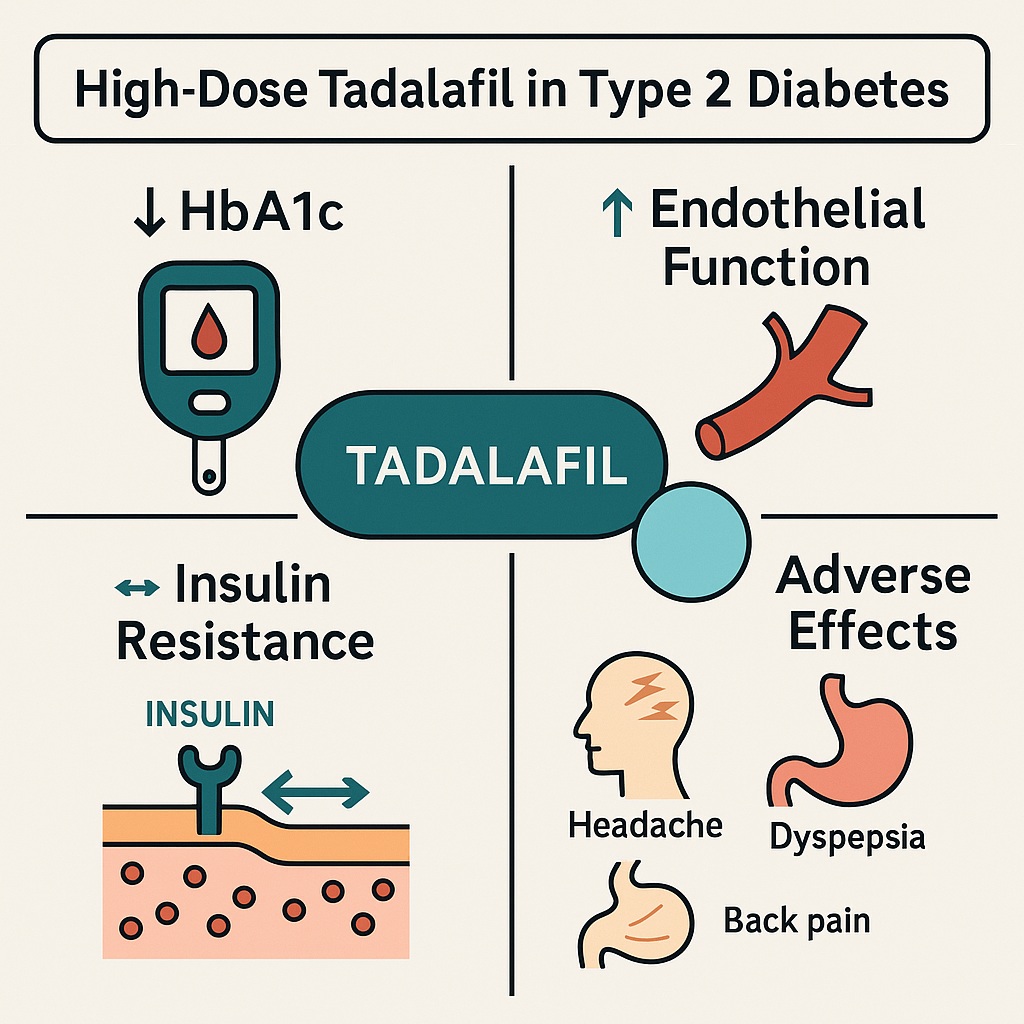
The MAKROTAD study, a randomized, double-blind, placebo-controlled, cross-over phase 2 trial, provides new insights. It examined whether high-dose tadalafil (20 mg daily) could improve insulin resistance and metabolic control in patients with well-controlled T2D. The results were nuanced: tadalafil failed to reduce insulin resistance as measured by glucose clamp, but it improved HbA1c, endothelial function, and markers of liver health. This article unpacks the trial, its findings, and the broader implications for diabetes care.
The Vascular-Metabolic Link in Type 2 Diabetes
The pathophysiology of T2D extends far beyond hyperglycemia. At its heart lies a failure of the endothelium to respond adequately to insulin and other vasodilatory signals. Under physiological conditions, insulin stimulates NO release from endothelial cells, facilitating vasodilation and increasing blood flow to skeletal muscle. This vascular recruitment is essential for glucose uptake.
In T2D, however, endothelial dysfunction blunts this response. Even in prediabetic states, evidence shows that vasodilatory capacity is impaired, creating a bottleneck for insulin action. The result is a mismatch: insulin levels rise, but glucose delivery to tissues remains inadequate, perpetuating insulin resistance.
Endothelial dysfunction is not merely a bystander; it actively fuels the vicious cycle of metabolic derangements. Importantly, no glucose-lowering therapy in current clinical use directly targets endothelial repair. This therapeutic gap invites the question: could a drug class designed for vascular health—PDE5 inhibitors—be repurposed for metabolic gain?
Study Design: A Rigorous Approach
The MAKROTAD trial was designed as a single-centre, double-blind, randomized, placebo-controlled, cross-over study conducted in Gothenburg, Sweden.
Participants
- Men aged 40–70 years (without erectile dysfunction) and postmenopausal women aged 55–70 years.
- Diagnosed with T2D for 3 months to 10 years.
- Stable metabolic control (HbA1c < 60 mmol/mol).
- BMI between 27–40 kg/m².
By including both sexes and excluding men with erectile dysfunction, the trial avoided confounding from the drug’s established indication.
Intervention
Each participant received tadalafil 20 mg once daily for six weeks and placebo for another six weeks, separated by an eight-week washout. This high dose, at the upper therapeutic range, was chosen to maximize endothelial and metabolic effects.
Endpoints
- Primary outcome: Whole-body insulin resistance, measured by glucose disposal rate during euglycemic hyperinsulinemic clamp.
- Secondary outcomes: HbA1c, fasting glucose, endothelial function (reactive hyperemia index), markers of liver function, body composition, inflammatory biomarkers, and microdialysis-derived metabolic intermediates.
This comprehensive design allowed assessment not only of glycemia but also of vascular and hepatic effects, providing a broader metabolic perspective.
The Primary Result: A Neutral Effect on Insulin Resistance
Contrary to the central hypothesis, tadalafil did not improve whole-body insulin resistance compared with placebo. The glucose clamp, the gold standard for assessing insulin sensitivity, showed no significant change in the M-value (glucose disposal rate).
This result highlights the complexity of insulin resistance. Skeletal muscle insulin sensitivity—primarily captured by clamp studies—may not be the principal target of tadalafil’s vascular actions. Instead, its benefits may manifest in other metabolic domains, such as hepatic glucose handling or microvascular recruitment, that are not fully captured by clamp methodology.
The finding also tempers enthusiasm for using PDE5 inhibitors as direct insulin-sensitizers. Yet, dismissing their utility on this basis alone would overlook meaningful secondary outcomes.
Glycemic Control: HbA1c Reduction Despite Neutral Insulin Sensitivity
One of the most compelling findings was a significant reduction in HbA1c with tadalafil compared to placebo. The average decrease was modest (−2.5 mmol/mol) but statistically robust.
This paradox—unchanged clamp-measured insulin sensitivity but improved long-term glycemic control—suggests alternative mechanisms. Possible explanations include:
- Improved hepatic metabolism, as reflected by reductions in alanine aminotransferase (ALT), a marker of liver steatosis.
- Enhanced endothelial function, improving glucose delivery at the microvascular level.
- Modulation of intermediate metabolites, including lactate and glycerol dynamics, which may reflect altered peripheral glucose and lipid utilization.
The HbA1c reduction, though numerically small, is clinically meaningful. Even modest improvements in HbA1c correlate with reduced risk of microvascular complications.
Endothelial Function: A Clear Win
The trial demonstrated a significant improvement in endothelial function, measured by reactive hyperemia index (RHI). This confirms tadalafil’s ability to enhance NO-mediated vasodilation and microcirculatory health.
Interestingly, improvement in endothelial function correlated with reductions in HbA1c, reinforcing the link between vascular health and metabolic control. While blood pressure and albuminuria were unaffected, the microvascular improvements themselves suggest a targeted benefit in resistance vessels, which may precede larger systemic changes.
In the broader context of diabetes management, where endothelial dysfunction is a precursor to both atherosclerosis and microvascular complications, this vascular effect is far from trivial.
Hepatic Effects: A Reduction in ALT
Another notable finding was the reduction in serum ALT, suggesting improved liver function and reduced hepatic steatosis. Non-alcoholic fatty liver disease (NAFLD) is highly prevalent in T2D and contributes to systemic insulin resistance and cardiovascular risk.
By lowering ALT, tadalafil hints at a hepatic benefit that warrants deeper exploration. While other markers of liver function and lipid metabolism were unchanged, the improvement in ALT is consistent with prior studies showing PDE5 inhibition may enhance hepatic lipid metabolism.
The implication is that tadalafil’s metabolic effects may be mediated more by the liver and microcirculation than by skeletal muscle glucose uptake.
Adverse Effects: The Price of High-Dose Therapy
High-dose tadalafil was moderately tolerated. Common adverse events included:
- Headache.
- Dyspepsia and reflux.
- Musculoskeletal pain (back pain, arthralgia).
Approximately half the participants required temporary symptomatic treatment for side effects, and a small number withdrew from the trial. No increase in serious adverse events was observed, but the tolerability profile underscores the challenge of using daily high-dose tadalafil in a non-erectile dysfunction population.
This raises practical questions: could lower doses or intermittent regimens preserve metabolic benefits while reducing side effects?
Interpretation: Reconciling the Findings
The MAKROTAD trial presents a nuanced picture:
- Neutral primary endpoint: no improvement in clamp-measured insulin resistance.
- Positive secondary endpoints: improved HbA1c, endothelial function, and ALT.
- Moderate tolerability: frequent, reversible side effects at high daily doses.
How should clinicians and researchers interpret this?
First, the absence of clamp-measured insulin sensitization does not negate tadalafil’s utility. Insulin resistance is multifaceted, and the glucose clamp captures primarily muscle sensitivity, potentially missing hepatic or microvascular contributions.
Second, the HbA1c reduction, though modest, aligns with clinical outcomes observed in other PDE5 inhibitor studies, suggesting a reproducible effect.
Third, the endothelial improvements strengthen the argument for vascularly focused diabetes therapies. Unlike existing glucose-lowering drugs, PDE5 inhibitors directly target the vascular dysfunction at the root of diabetic complications.
Limitations and Future Directions
The study, while carefully conducted, had limitations:
- Small sample size (n=18 full analysis set), limiting statistical power.
- Short duration (6 weeks per arm), which may be insufficient to capture long-term metabolic adaptations.
- High-dose design, raising tolerability concerns not necessarily representative of lower or intermittent dosing.
- Ethnic homogeneity, limiting generalizability beyond a Caucasian population.
Future studies should explore:
- Longer trials with HbA1c as the primary endpoint.
- Larger, more diverse populations.
- Alternative dosing regimens (e.g., lower doses or thrice-weekly schedules).
- Mechanistic studies focusing on hepatic metabolism and microvascular recruitment.
If confirmed, tadalafil and other PDE5 inhibitors may find a role not as first-line glucose-lowering agents but as adjunctive therapies targeting vascular and hepatic dysfunction in T2D.
Conclusion
The MAKROTAD trial challenges and refines our understanding of PDE5 inhibitors in type 2 diabetes. High-dose tadalafil did not improve insulin resistance as measured by glucose clamp, but it lowered HbA1c, enhanced endothelial function, and reduced a marker of liver steatosis.
These findings suggest that tadalafil’s benefits lie not in skeletal muscle insulin sensitization but in vascular and hepatic domains, which are equally crucial in the metabolic syndrome. While high daily doses may not be practical due to side effects, the trial opens the door to future studies exploring optimized dosing strategies.
In the broader picture, this research underscores an important principle: improving vascular health can translate into better metabolic control. As such, tadalafil represents more than a curiosity in diabetes research—it exemplifies the potential of repurposing established drugs to target neglected mechanisms in chronic disease.
FAQ
1. Does tadalafil improve insulin sensitivity in type 2 diabetes?
Not in terms of clamp-measured whole-body insulin resistance. However, tadalafil did improve HbA1c and endothelial function, suggesting benefits through other metabolic and vascular pathways.
2. Is high-dose tadalafil safe for people with diabetes?
It was moderately well tolerated in this study. Common side effects included headache, indigestion, and back pain. While no serious safety concerns emerged, high daily dosing may not be sustainable for all patients.
3. Could tadalafil become a standard diabetes therapy?
Not yet. The trial supports potential benefits but also highlights limitations. Larger, longer studies are needed, and future strategies may focus on lower or intermittent dosing to balance efficacy and tolerability.
