

Introduction
Erectile dysfunction (ED) continues to be one of the most prevalent male sexual disorders worldwide, affecting approximately 30–50% of men over the age of 40. The condition is multifactorial, involving vascular, neurogenic, hormonal, and psychogenic components. From a pathophysiological standpoint, endothelial dysfunction and impaired nitric oxide (NO) signaling represent the central mechanisms underlying most cases of ED.
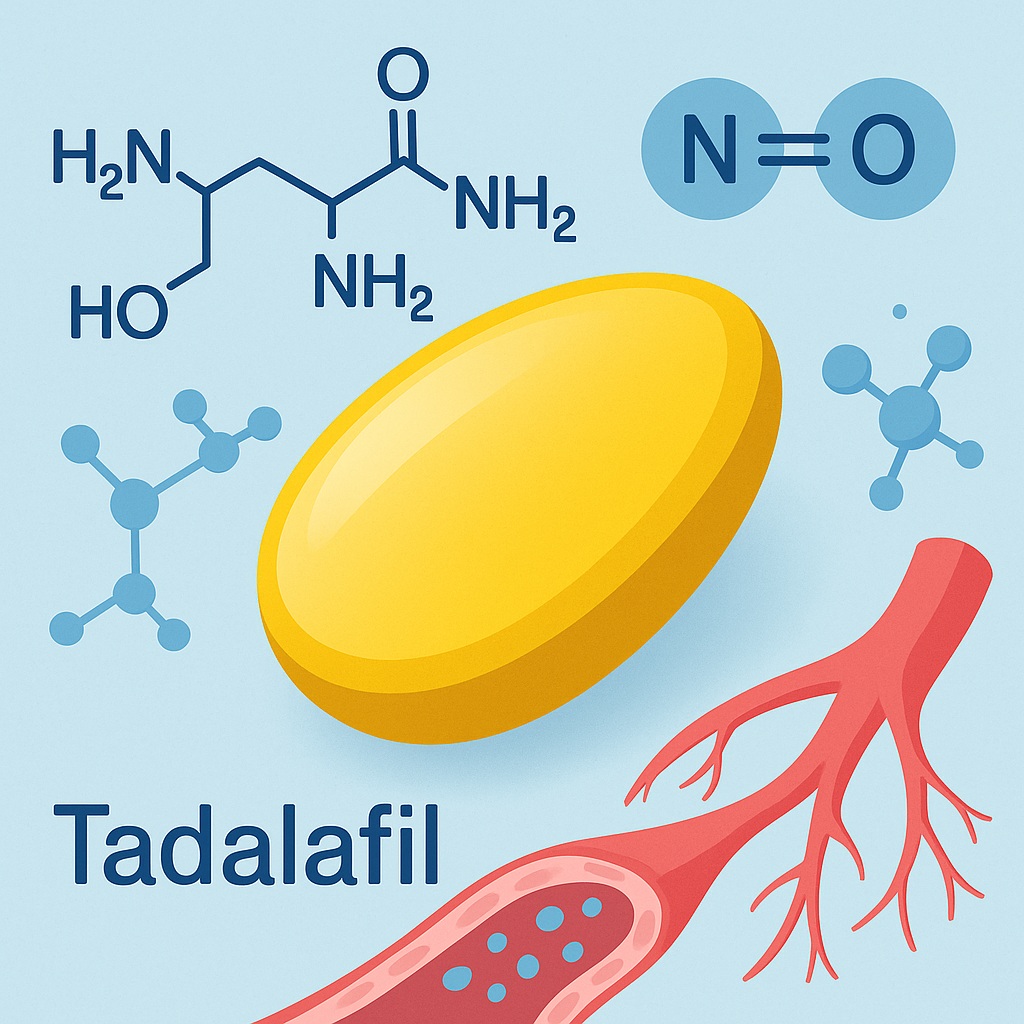
Phosphodiesterase type 5 inhibitors (PDE5Is), such as tadalafil, have become the mainstay of ED management owing to their potent facilitation of the NO–cyclic guanosine monophosphate (cGMP) pathway. Yet, the incomplete response rate to PDE5Is—estimated to be as high as 30–40% in some populations—has prompted research into complementary strategies that enhance NO bioavailability. One such approach involves L-arginine, a semi-essential amino acid and direct substrate for nitric oxide synthase (NOS).
The 2020 randomized clinical trial conducted by Gallo et al. explored the efficacy and safety of daily tadalafil (5 mg), daily L-arginine (2,500 mg), and their combination, in men with varying degrees of ED. The results of this trial offer clinically meaningful insights into both pharmacological synergy and real-world efficacy.
Study Design and Methodology
This open-label, prospective, randomized trial was conducted across multiple clinical sites in Italy and included a total of 300 male participants aged between 25 and 75 years who had been diagnosed with erectile dysfunction for at least 3 months. The inclusion criteria ensured a broad representation of ED severity—mild, moderate, and severe—classified according to the International Index of Erectile Function–Erectile Function domain (IIEF-EF) scores.
Participants were randomly assigned into three treatment arms for a total duration of 12 weeks:
- Group A: Tadalafil 5 mg once daily.
- Group B: L-arginine 2,500 mg once daily.
- Group C: Combination therapy with tadalafil 5 mg + L-arginine 2,500 mg daily.
The primary endpoint was the mean change in IIEF-EF score from baseline to 12 weeks. Secondary endpoints included patient satisfaction, tolerability, and adverse event incidence. The trial adhered to Good Clinical Practice (GCP) guidelines and was approved by relevant ethics committees.
Baseline demographics and clinical characteristics were similar across groups, with mean age 54 ± 10 years and an average baseline IIEF-EF score of approximately 14, reflecting moderate erectile dysfunction overall.
Primary Outcomes: Efficacy by IIEF-EF Improvement
After 12 weeks of treatment, all three groups demonstrated significant improvements in erectile function compared to baseline. However, the magnitude of improvement varied considerably depending on the pharmacological regimen used.
Tadalafil Monotherapy (5 mg daily)
Men receiving tadalafil monotherapy experienced an average increase of +6.5 points in IIEF-EF, confirming the robust efficacy of continuous PDE5 inhibition. This improvement was particularly marked in patients with mild-to-moderate ED.
The response pattern suggested the typical pharmacodynamic trajectory of tadalafil: steady-state PDE5 inhibition leading to sustained enhancement of cavernosal cGMP levels, improved endothelial responsiveness, and restoration of erectile rigidity over time. The daily dosing regimen, rather than on-demand use, likely contributed to a steady improvement without dependence on timing relative to sexual activity.
L-Arginine Monotherapy (2,500 mg daily)
The L-arginine group exhibited a mean increase of +2.3 points in IIEF-EF, a statistically significant but clinically modest improvement compared to baseline. This supports the hypothesis that L-arginine supplementation can enhance endothelial nitric oxide production, particularly in cases of subclinical endothelial dysfunction, but the effect is limited in magnitude and duration when used alone.
Interestingly, L-arginine was better tolerated than tadalafil and had no reported adverse effects leading to discontinuation. However, the overall clinical benefit of monotherapy appears insufficient for moderate or severe ED, likely due to rate-limiting factors such as NO synthase saturation and oxidative stress that limit the conversion of L-arginine to NO in vivo.
Combination Therapy (Tadalafil + L-Arginine)
The combination regimen demonstrated the most significant improvement, with a mean IIEF-EF increase of +8.4 points, surpassing both monotherapy arms (p < 0.001 vs. L-arginine; p = 0.03 vs. tadalafil). The synergy between tadalafil and L-arginine underscores the pharmacological complementarity of their mechanisms: one enhances cGMP accumulation by inhibiting PDE5, while the other boosts NO synthesis upstream.
This combined mechanism effectively amplifies and prolongs vasodilation in penile tissue, facilitating a more robust and sustained erectile response. The benefit was most pronounced in patients with moderate ED, who often display endothelial dysfunction but retain partially intact neural pathways—precisely the population most responsive to dual NO-pathway modulation.
Pharmacological Interpretation of Synergy
The observed efficacy of the tadalafil–L-arginine combination stems from their mechanistic convergence on the NO–cGMP axis, the central mediator of penile erection.
- L-Arginine serves as the substrate for nitric oxide synthase (NOS), generating NO, which activates guanylyl cyclase to produce cGMP in cavernosal smooth muscle cells.
- Tadalafil, by inhibiting PDE5, prevents cGMP degradation, prolonging its intracellular activity and amplifying smooth muscle relaxation.
Thus, L-arginine enhances the input (NO generation), while tadalafil maintains the output (sustained cGMP signaling). This dual approach compensates for reduced NO bioavailability commonly found in metabolic and vascular disorders associated with ED—such as diabetes, hypertension, and hyperlipidemia.
The pharmacodynamic synergy translates clinically into higher IIEF-EF improvements without proportional increases in adverse effects. Moreover, continuous administration fosters a favorable endothelial environment, potentially contributing to long-term vascular remodeling and improved cavernosal compliance.
Secondary Outcomes: Patient Satisfaction and Response Rate
Patient-reported satisfaction and global assessment were notably higher in the combination group. Approximately 79% of patients in the tadalafil + L-arginine arm reported “significant improvement” in erectile performance, compared with 65% in the tadalafil monotherapy arm and 35% in the L-arginine arm.
Moreover, the combination therapy demonstrated faster onset of clinical benefit—with significant IIEF-EF score increases already evident at week 4—whereas L-arginine monotherapy required at least 8 weeks to reach statistical significance. This aligns with the pharmacokinetic properties of tadalafil, which reaches steady-state plasma concentrations within 5 days, providing early therapeutic effect.
Importantly, the combination therapy also improved patient-perceived naturalness of erection and reduced reliance on psychological stimulation. This subjective improvement likely stems from the restoration of spontaneous endothelial-mediated erectile mechanisms, not merely from symptomatic pharmacological augmentation.
Safety and Tolerability
Across all groups, the treatments were well tolerated, with no serious adverse events reported. The incidence of mild side effects was highest in the tadalafil arms, as expected from its known safety profile.
Most frequent adverse events included:
- Headache (7% in tadalafil monotherapy, 9% in combination therapy).
- Dyspepsia (4%).
- Back pain or myalgia (3%).
- Facial flushing (2%).
In contrast, the L-arginine monotherapy arm had negligible side effects, reinforcing its excellent safety profile even with chronic use.
No participants discontinued therapy due to adverse reactions, and no significant changes were observed in blood pressure, heart rate, or biochemical parameters across all groups. The safety of the tadalafil–L-arginine combination supports its potential as a viable long-term treatment for ED, particularly for patients seeking non-invasive and physiologically synergistic approaches.
Subgroup Analyses: Effect by Severity of ED
The trial included stratified analyses by baseline ED severity:
- Mild ED (IIEF-EF 18–25): All groups improved significantly, but the combination regimen produced the greatest proportional benefit (+5.8 vs. +4.2 tadalafil alone).
- Moderate ED (IIEF-EF 11–17): The combination’s superiority was most pronounced in this cohort, with +9.1 points vs. +5.9 for tadalafil.
- Severe ED (IIEF-EF ≤10): Improvement was limited across all treatments, though the combination yielded modest gains (+4.3) compared to minimal response with L-arginine alone (+1.1).
These findings suggest that the pharmacological synergy is most effective when some degree of endothelial and neural integrity remains. In cases of severe neurogenic ED, PDE5 inhibition alone cannot overcome structural or functional nerve damage, regardless of upstream NO supplementation.
Pharmacodynamic Implications
The trial’s outcomes highlight an important pharmacodynamic principle: erectile function restoration depends on both adequate NO production and preserved cGMP signaling. When either mechanism is compromised, monotherapy yields suboptimal results.
- Tadalafil optimizes the cGMP phase but relies on endogenous NO release to initiate signaling.
- L-Arginine enhances NO synthesis but requires sufficient enzymatic conversion by NOS—often impaired in oxidative stress or diabetes.
Combining the two therefore addresses both bottlenecks, enhancing NO availability while sustaining cGMP-mediated vasodilation. This dual approach not only improves acute erectile response but may also contribute to endothelial repair over time.
Limitations of the Study
While the findings are compelling, several limitations warrant mention:
- Open-label design: Although randomization minimized selection bias, the lack of placebo blinding may have influenced subjective endpoints.
- Short treatment duration (12 weeks): Longer studies are needed to evaluate sustained endothelial effects and whether functional improvements persist post-therapy.
- Absence of objective hemodynamic measures: Penile Doppler ultrasound or flow-mediated dilation (FMD) could have provided deeper insight into vascular improvements.
- Population homogeneity: The trial excluded patients with major comorbidities (e.g., diabetes, cardiovascular disease), limiting generalizability to real-world ED populations.
Nevertheless, within these constraints, the pharmacological and clinical implications remain robust, demonstrating reproducible benefits in erectile performance and safety.
Conclusion
The randomized trial by Gallo et al. represents a significant contribution to our understanding of pharmacological synergy between tadalafil and L-arginine in the management of erectile dysfunction.
Key takeaways include:
- Combination therapy yields the greatest improvement in erectile function, particularly in moderate ED.
- The mechanisms of action are complementary—L-arginine increases NO synthesis, while tadalafil prolongs cGMP signaling.
- Safety and tolerability remain excellent, with no treatment discontinuations or major adverse events.
- Continuous daily dosing supports endothelial restoration and may offer long-term functional preservation.
From a pharmacological standpoint, this trial reinforces the value of addressing both the initiation and maintenance phases of the erectile cascade. For clinicians, the tadalafil–L-arginine regimen provides a scientifically rational, evidence-based option that balances efficacy, safety, and physiological coherence.
FAQ
1. Why combine tadalafil with L-arginine?
Because the two drugs act on complementary levels of the NO–cGMP pathway. L-arginine boosts NO production, while tadalafil prevents its downstream degradation by inhibiting PDE5, resulting in stronger and longer-lasting erections.
2. Can L-arginine alone treat erectile dysfunction effectively?
L-arginine may improve mild ED by enhancing endothelial NO production but is generally insufficient as monotherapy for moderate or severe ED due to limited enzymatic conversion efficiency and oxidative degradation of NO.
3. Is daily use of tadalafil and L-arginine safe for long-term therapy?
Yes. The study confirmed excellent safety for 12 weeks of continuous use, with only mild transient side effects. Chronic use appears safe, but further long-term studies are warranted to confirm vascular and systemic outcomes.
