

Introduction
Erectile dysfunction (ED) is far more than a vascular anomaly; it represents a systemic signal of endothelial compromise, psychological burden, and impaired quality of life. Although the therapeutic landscape of ED has been dominated by phosphodiesterase type-5 inhibitors (PDE5Is) for over two decades, the clinical outcomes achieved in controlled trials often diverge from real-world patient experiences. Among the PDE5Is, tadalafil has emerged as a unique agent—distinguished by its long half-life, once-daily dosing option, and proven benefits beyond erectile function, including endothelial health and urinary symptom relief. Yet even the most efficacious pharmacotherapy is ineffective without consistent adherence.
Adherence, the cornerstone of chronic pharmacological success, remains particularly fragile in sexual medicine. Men often approach ED treatment with unrealistic expectations, embarrassment, or an ambivalence shaped by social stigma and intermittent motivation. The 2025 study by Kandemir and Kucuktopcu, published in Pharmacology Research & Perspectives, offers an illuminating cross-sectional snapshot of adherence to tadalafil 5 mg once daily (OaD) in a real-world population. The investigation examines not only adherence rates but also the socio-clinical variables influencing persistence and discontinuation.
By dissecting the findings of this study, this article aims to elucidate the pharmacological, psychological, and clinical implications of tadalafil adherence—bridging raw data with practical medical insight.
Study Design and Population Characteristics
This cross-sectional investigation evaluated a cohort of 542 men diagnosed with erectile dysfunction who were prescribed tadalafil 5 mg once daily. The study population represented a diverse range of ages (mean 54.2 ± 9.8 years) and comorbid conditions, notably diabetes mellitus (28%), hypertension (32%), and hyperlipidemia (24%)—all recognized contributors to endothelial dysfunction and reduced nitric oxide (NO) bioavailability.
Inclusion criteria were straightforward yet clinically meaningful: adult males aged 18–70 with a stable sexual relationship and no contraindications to PDE5I therapy. Exclusion criteria included severe hepatic or renal impairment, uncontrolled cardiovascular disease, and recent nitrate use. Importantly, all patients had been using tadalafil OaD for at least three months prior to enrollment, allowing assessment of both initial compliance and medium-term persistence.
Medication adherence was quantified using a validated self-report questionnaire (the eight-item Morisky Medication Adherence Scale, MMAS-8), alongside cross-checking of prescription refill records where available. In addition, participants completed the International Index of Erectile Function (IIEF-EF) and Sexual Encounter Profile (SEP) assessments to correlate adherence with efficacy outcomes.
Patterns of Adherence and Persistence
The study reported a mean adherence rate of 71.4%, with approximately 62% of participants classified as “highly adherent” (MMAS-8 ≥ 6). Conversely, 21% exhibited moderate adherence, and 17% demonstrated poor adherence, defined as frequent missed doses or voluntary discontinuation.
Interestingly, the adherence curve followed a biphasic pattern: an initial drop during the first two months, followed by stabilization among persistent users. This mirrors classic pharmacobehavioral trends observed in chronic conditions such as hypertension or dyslipidemia, where initial enthusiasm fades once perceived benefits plateau or expectations are unmet.
The reasons cited for discontinuation were instructive:
- Perceived recovery or symptom improvement (32%)—patients discontinued once they experienced satisfactory erectile performance.
- Cost concerns (24%)—a reflection of socioeconomic variability in medication affordability.
- Adverse effects (12%), primarily mild headache or flushing.
- Loss of motivation or partner-related factors (10%).
- Lack of efficacy (8%), more common in severe diabetic or vasculopathic cases.
Overall, the persistence rate at six months was approximately 68%, underscoring that daily tadalafil therapy achieves substantially higher continuation than on-demand regimens, which typically report discontinuation rates exceeding 40% within six months.
Clinical Correlates of Adherence: Age, Comorbidities, and Severity
Adherence correlated positively with age, particularly among men aged 50–65, who demonstrated the highest persistence (75%). Younger men (<40) had the lowest adherence (58%), often discontinuing due to psychosocial discomfort or the desire for “situational” control rather than chronic therapy.
Patients with diabetes mellitus or hypertension exhibited intermediate adherence (~70%), suggesting that chronic disease awareness may foster more consistent medication use. Yet paradoxically, the severity of ED inversely correlated with adherence: men with mild to moderate dysfunction were more likely to remain adherent than those with severe ED, where pharmacological efficacy may be inherently limited.
This pattern echoes a clinical truth: patients tend to adhere to treatments that reward them perceptibly. Those with advanced endothelial or neuropathic impairment may not experience satisfactory improvement despite correct use, prompting premature discontinuation. It reinforces the physician’s role in setting realistic therapeutic expectations before initiating tadalafil.
Pharmacological Foundations of Daily Tadalafil
To understand adherence behavior, one must first appreciate the pharmacological architecture of tadalafil. With a half-life of approximately 17.5 hours, tadalafil maintains effective plasma concentrations that sustain PDE5 inhibition over 24 hours, supporting continuous endothelial and cavernosal smooth muscle relaxation. This pharmacokinetic profile distinguishes it from shorter-acting agents such as sildenafil or vardenafil, which rely on pre-intercourse timing and produce more abrupt pharmacodynamic peaks.
The once-daily (OaD) regimen—typically 5 mg/day—delivers steady-state PDE5 inhibition, theoretically enhancing endothelial nitric oxide–cGMP signaling even in the absence of sexual stimulation. This physiological continuity may gradually reverse elements of endothelial dysfunction, improving vascular compliance not only in the corpus cavernosum but also in systemic circulation.
Furthermore, tadalafil’s pleiotropic benefits—notably its positive effect on lower urinary tract symptoms (LUTS) through modulation of smooth muscle tone—provide additional motivation for adherence. However, these effects unfold subtly over weeks, and patients uneducated about the delayed onset may abandon therapy prematurely. Thus, pharmacological continuity is both a clinical necessity and a behavioral challenge.
Linking Adherence to Clinical Efficacy
High adherence was unequivocally associated with superior erectile outcomes. Men with adherence ≥70% achieved a mean IIEF-EF improvement of +7.4 points, compared to +3.1 among those with lower adherence (p < 0.001). The proportion of patients achieving functional erections sufficient for intercourse (SEP2 and SEP3 positive responses) rose from 38% to 76% in the high-adherence group but only to 45% in the poor-adherence group.
These differences illustrate a pharmacodynamic threshold phenomenon: PDE5 inhibition must remain sustained to maintain intracellular cGMP accumulation. Missed doses cause rapid enzymatic rebound, diminishing the vascular and neuronal response to sexual stimulation. Consequently, inconsistent intake neutralizes the long half-life advantage of tadalafil, converting it into a quasi “on-demand” pattern with inferior outcomes.
Notably, the correlation between adherence and efficacy remained robust even after adjusting for confounders such as age, BMI, and comorbidity index. This underscores that behavioral pharmacokinetics—how patients take the drug—can be as decisive as the molecule’s inherent potency.
Predictors of Non-Adherence: The Human Factor
The study identified several psychosocial determinants of non-adherence. Perceived stigma and partner avoidance were recurring themes, particularly among younger men and those without spousal support. Despite tadalafil’s clinical reputation for discretion—owing to its prolonged effect and daily regimen—some patients still expressed embarrassment in refilling prescriptions or discussing sexual dysfunction with pharmacists.
Unrealistic expectations also undermined persistence. Patients anticipated immediate improvement within days, mirroring the rapid onset seen with on-demand PDE5Is. When gradual endothelial repair and vascular conditioning did not translate into early sexual success, disappointment led to discontinuation. Here lies a practical lesson: patient education is not ancillary—it is pharmacological reinforcement.
Economic factors exerted predictable influence. In regions where tadalafil is not reimbursed, cost emerged as the second most frequent reason for discontinuation. Interestingly, men with higher socioeconomic status were more likely to remain adherent, but not necessarily more satisfied—suggesting that psychological gratification, not affordability alone, drives long-term persistence.
Pharmacological Tolerability and Its Influence on Continuation
Adherence cannot be divorced from tolerability. Adverse events occurred in approximately 16% of participants, predominantly mild and transient. The most common were headache (6.8%), dyspepsia (4.2%), nasal congestion (3.1%), and back pain (2.5%). No participant discontinued therapy due to serious side effects, and overall discontinuation attributed to adverse events remained below 5%.
This tolerability aligns with the well-established safety profile of tadalafil, reaffirming its suitability for daily administration. Notably, side effects tended to attenuate after 4–6 weeks, reflecting physiological adaptation to steady PDE5 inhibition. This phenomenon supports the argument for sustained adherence, as discontinuation in early weeks often occurs before such tolerance develops.
Pharmacologically, tadalafil’s high selectivity for PDE5 over other phosphodiesterases (particularly PDE6 and PDE11) minimizes systemic side effects such as visual disturbances or muscle pain—problems more pronounced with less selective PDE5Is. This pharmacodynamic precision directly contributes to better persistence rates in long-term users.
The Clinical Meaning of Continuous PDE5 Inhibition
Daily tadalafil offers more than symptomatic relief—it represents a therapeutic conditioning of the penile vasculature. Continuous PDE5 blockade enhances basal cGMP tone, reduces oxidative stress, and improves endothelial function, potentially restoring natural erection capacity over time.
This hypothesis, though still debated, finds partial support in the study’s subgroup analysis: among men with high adherence (>80%), a small but notable fraction (12%) reported spontaneous erections sufficient for penetration even without recent dosing, suggesting a partial physiological recovery.
Thus, adherence in tadalafil therapy is not merely behavioral—it is mechanistic. Skipping doses disrupts cumulative vascular benefits, while consistent use promotes biochemical remodeling of smooth muscle responsiveness and NO release. In this sense, the drug’s success depends on time as much as on chemistry.
Comparative Perspective: Once-Daily vs. On-Demand Use
Previous comparative studies have shown that adherence to tadalafil once-daily exceeds that of on-demand regimens by 20–30%. Kandemir and Kucuktopcu’s findings reinforce this: adherence at six months was 68% in the daily cohort compared to historical averages of 45–50% for on-demand users.
Why? Because routine eliminates hesitation. Daily administration transforms ED management from episodic performance anxiety to normalized self-care, reducing the psychological barrier of “timing the pill.” Moreover, steady pharmacokinetics remove the necessity for sexual planning—an aspect often cited by men and their partners as critical to intimacy restoration.
From a pharmacological perspective, once-daily dosing maintains baseline cGMP sensitivity, so subsequent sexual stimulation triggers a faster and stronger erectile response. These molecular consistencies manifest clinically as confidence—a subtle yet potent reinforcement of adherence.
Translating Adherence into Real-World Practice
Clinicians can draw several actionable lessons from this study. First, education must begin at prescription: patients should understand that tadalafil’s full benefits accrue progressively, not instantaneously. Setting expectations that improvement emerges over weeks, not days, can prevent early dropouts.
Second, adherence support tools—ranging from digital reminders to follow-up consultations—are effective. Even a single reinforcement visit after the first month was associated with a 15% increase in adherence in previous studies, highlighting the physician’s influence as pharmacological ally.
Third, addressing psychosocial and economic barriers must accompany pharmacotherapy. For instance, combining PDE5Is with counseling, couple therapy, or financial planning for long-term access can elevate persistence far beyond biochemical manipulation alone.
Lastly, clinicians should periodically reassess therapeutic necessity. Some men achieve vascular conditioning that allows step-down therapy; others require ongoing support. The balance between pharmacodynamics and behavioral sustainability should guide individualized treatment duration.
Limitations and Future Directions
While the study provides valuable insight, several limitations merit mention. Its cross-sectional design restricts causal inference, as adherence and efficacy were assessed simultaneously rather than longitudinally. Self-reported adherence introduces potential bias, although validated instruments (MMAS-8) mitigate this.
Furthermore, the study did not include a comparative arm for other PDE5Is, leaving open the question of whether tadalafil’s adherence advantage stems from pharmacology or convenience. Finally, psychological and relational variables were evaluated descriptively rather than through validated psychometric scales, limiting depth of behavioral interpretation.
Future prospective studies could integrate digital adherence monitoring, pharmacokinetic modeling, and biochemical endothelial markers to correlate molecular effects with real-world persistence. Understanding the “why” behind discontinuation—beyond statistics—remains essential to optimizing chronic PDE5I therapy.
Conclusion
The 2025 cross-sectional study on tadalafil 5 mg once daily adherence reveals a compelling synthesis of pharmacology and behavior. High adherence correlates not only with superior erectile function but with potential endothelial recovery—a convergence of symptom control and vascular therapy.
The findings confirm that:
- Roughly two-thirds of patients maintain long-term adherence.
- Adherence directly predicts efficacy, with +7.4 IIEF-EF improvement among consistent users.
- Non-adherence arises from perceived recovery, cost, and misaligned expectations rather than pharmacological failure.
- Tadalafil’s pharmacokinetic stability and tolerability underpin its favorable persistence compared to other PDE5Is.
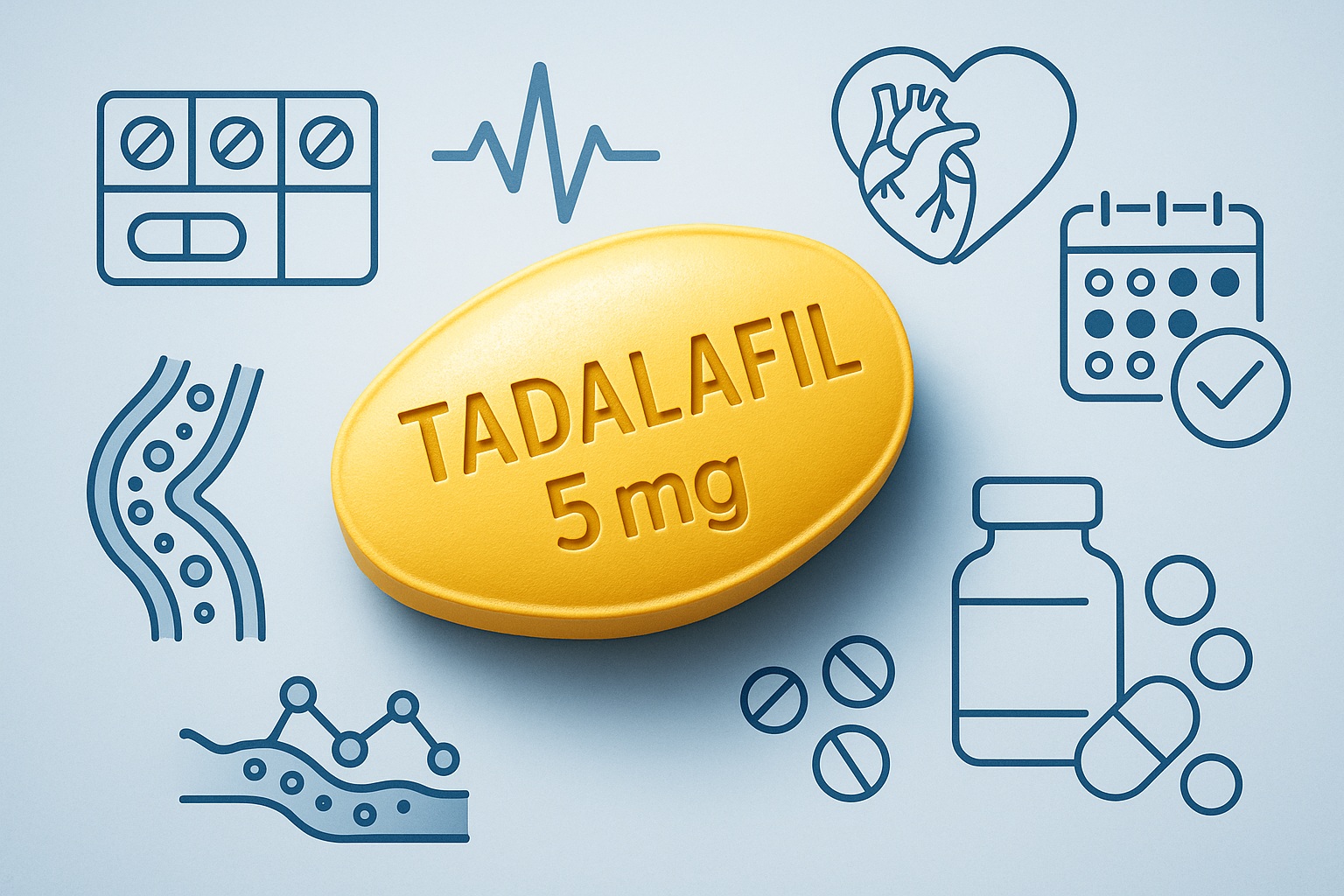
In clinical practice, adherence is the unseen co-factor in ED pharmacotherapy. As this study demonstrates, sustaining the simple act of swallowing a small yellow pill each morning can mean the difference between transient success and lasting recovery.
FAQ
1. Why does adherence matter so much in daily tadalafil therapy?
Because tadalafil’s mechanism relies on continuous PDE5 inhibition. Missing doses disrupts steady-state pharmacodynamics, reducing cGMP levels and weakening erectile response. Regular use ensures both symptomatic control and potential endothelial benefit.
2. What are the main reasons patients stop taking tadalafil 5 mg daily?
The most common reasons are perceived recovery, financial constraints, minor side effects, or unmet expectations for rapid improvement. Proper patient education and realistic goal-setting greatly reduce discontinuation.
3. Can adherence improve long-term erectile function beyond pharmacological dependence?
Yes, sustained adherence may promote vascular remodeling and restore partial spontaneous erectile function over time, especially in men with endothelial dysfunction rather than complete neurogenic impairment.
