

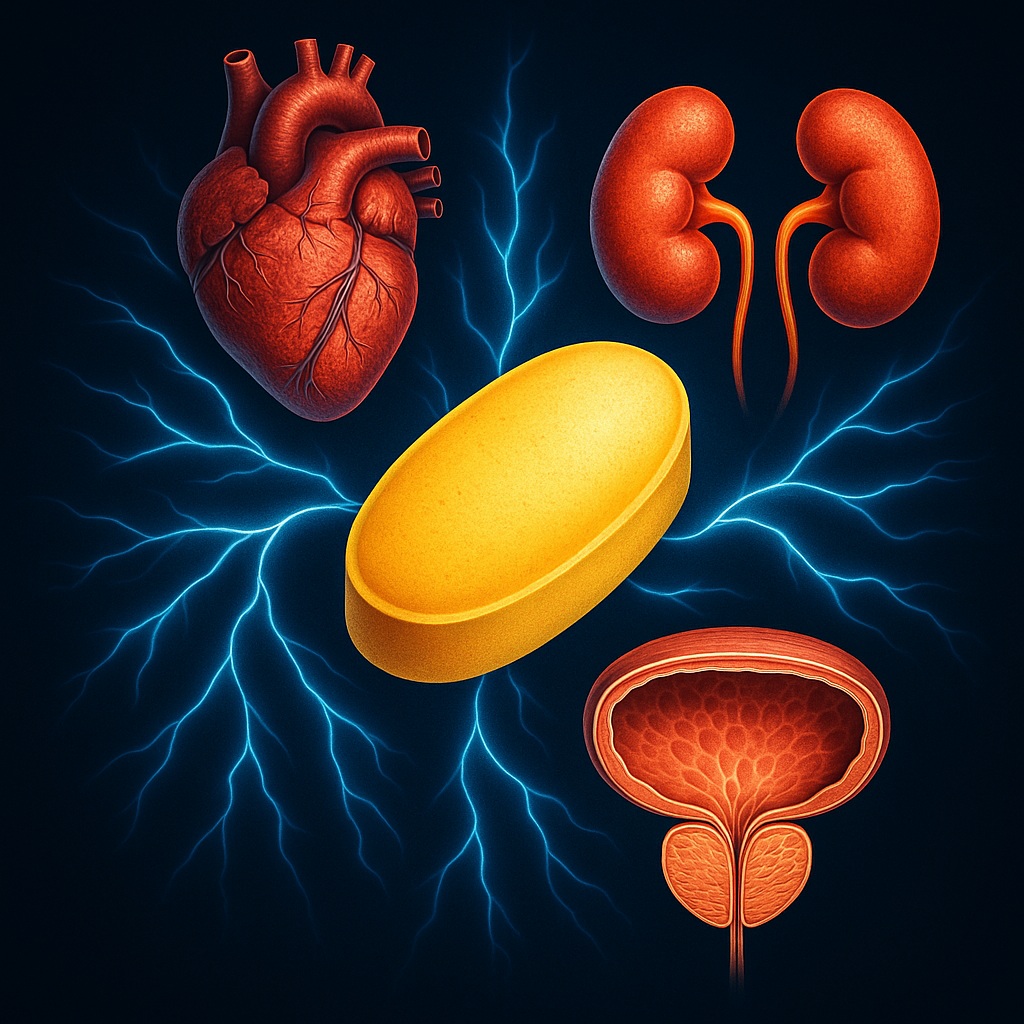
Introduction
Few drugs in modern pharmacotherapy illustrate the concept of repurposing as elegantly as tadalafil. Originally developed and approved as a treatment for erectile dysfunction (ED), this phosphodiesterase type 5 (PDE5) inhibitor has steadily expanded its therapeutic footprint into conditions as diverse as pulmonary arterial hypertension (PAH) and lower urinary tract symptoms (LUTS) associated with benign prostatic hyperplasia (BPH). Its pharmacological profile, notably a prolonged half-life allowing up to 36 hours of activity, sets it apart from its peers.
The significance of tadalafil lies not merely in its capacity to enhance erectile function but in its ability to modulate fundamental vascular and smooth muscle signaling pathways. By sustaining cyclic guanosine monophosphate (cGMP) levels, tadalafil improves endothelial function, promotes vasodilation, and regulates tissue remodeling processes. This article examines the scientific basis, clinical applications, and broader implications of tadalafil therapy, positioning it as more than just a lifestyle drug.
Pharmacological Foundations
Tadalafil exerts its effects by selectively inhibiting PDE5, an enzyme abundantly expressed in the corpus cavernosum, pulmonary vasculature, bladder, and prostate. PDE5 degrades cGMP, a key mediator of smooth muscle relaxation triggered by nitric oxide (NO). By preventing cGMP breakdown, tadalafil sustains vasodilation and reduces abnormal smooth muscle tone.
What distinguishes tadalafil pharmacokinetically is its extended half-life of approximately 17.5 hours. This feature translates into a therapeutic window of up to 36 hours, making it suitable for once-daily administration. Unlike sildenafil or vardenafil, whose effects last only 4–6 hours, tadalafil provides sustained coverage, supporting both spontaneous sexual activity and long-term vascular benefits.
Importantly, tadalafil’s selectivity profile minimizes off-target effects. While PDE5 is its primary target, tadalafil exhibits only minor activity against PDE11, a less understood isoform implicated in skeletal muscle pain. This selectivity accounts for its favorable safety and tolerability.
Erectile Dysfunction: The Original Indication
ED remains the most widely recognized and socially impactful indication for tadalafil. Affecting millions of men globally, ED is not merely a matter of intimacy but often an early marker of systemic vascular disease. By restoring endothelial function and enhancing cavernosal blood flow, tadalafil addresses both symptomatology and underlying pathophysiology.
Clinical trials consistently demonstrate high efficacy, with response rates exceeding 70% in men with mild-to-moderate ED. Daily tadalafil at 5 mg has gained popularity due to its capacity to restore sexual spontaneity, freeing patients from the “on-demand” model tied to intercourse timing. Patient satisfaction surveys underscore this advantage, with men reporting improved confidence and relationship satisfaction.
Interestingly, tadalafil also benefits men with comorbid conditions such as diabetes and cardiovascular disease, where endothelial dysfunction is pronounced. Its tolerability in these populations, provided contraindications such as nitrate therapy are respected, makes it a versatile therapeutic agent.
Lower Urinary Tract Symptoms and Benign Prostatic Hyperplasia
Perhaps the most significant expansion of tadalafil’s therapeutic scope is in LUTS associated with BPH. Traditionally managed with α1-blockers and 5α-reductase inhibitors, LUTS often remain suboptimally controlled, particularly in men with concurrent ED. Tadalafil offers a unique dual benefit: alleviation of urinary symptoms and enhancement of sexual function.
The mechanism extends beyond simple smooth muscle relaxation. Tadalafil reduces afferent nerve activity in the bladder, improves perfusion, and may mitigate inflammation within prostatic tissue. Randomized controlled trials reveal significant reductions in the International Prostate Symptom Score (IPSS) after 12 weeks of tadalafil therapy, with concomitant improvements in quality of life and sexual function.
Combination therapy with α1-blockers further augments outcomes, though careful monitoring is required to avoid hypotension. Importantly, tadalafil has shown efficacy even in men without ED, underscoring its role as a bona fide urological therapy rather than a sexual aid alone.
Pulmonary Arterial Hypertension
Tadalafil’s approval for PAH highlights its systemic vascular benefits. In this context, PDE5 inhibition promotes pulmonary vasodilation, reduces pulmonary vascular resistance, and improves exercise capacity. The PHIRST-1 trial demonstrated that tadalafil significantly increased six-minute walk distance and reduced clinical worsening events compared with placebo.
Daily tadalafil at 40 mg is now an established option for PAH, either as monotherapy or in combination with endothelin receptor antagonists or prostacyclin analogs. Its once-daily dosing regimen offers convenience compared with sildenafil, which requires thrice-daily administration.
Beyond functional outcomes, tadalafil therapy may improve hemodynamic parameters such as mean pulmonary artery pressure and right ventricular function. Long-term studies suggest sustained benefit with a manageable safety profile, making it a cornerstone of modern PAH management.
Mechanistic Insights: Vascular and Cellular Effects
The versatility of tadalafil arises from its modulation of shared signaling pathways across different organ systems. Several mechanistic themes recur:
- Endothelial protection: By sustaining cGMP, tadalafil counteracts oxidative stress and restores NO bioavailability.
- Smooth muscle relaxation: Relaxation of vascular and urinary tract smooth muscle reduces obstruction and pressure load.
- Anti-fibrotic actions: Tadalafil downregulates profibrotic cytokines and extracellular matrix deposition, slowing tissue remodeling.
- Neurogenic modulation: Effects on afferent signaling in the bladder and central nervous system pathways may contribute to symptom relief.
These mechanisms explain why tadalafil is effective in conditions as varied as ED, LUTS, and PAH, all of which involve impaired smooth muscle and vascular regulation.
Safety and Tolerability
A central question in any discussion of long-term pharmacotherapy is safety. Tadalafil has accumulated a reassuring profile over two decades of use. Common side effects include headache, dyspepsia, back pain, flushing, and nasal congestion. These are typically mild and transient.
More concerning, though rare, are cardiovascular interactions. Concomitant nitrate therapy is an absolute contraindication due to the risk of profound hypotension. Caution is also warranted in men with severe cardiac disease. However, large registries and post-marketing surveillance indicate that tadalafil does not increase the risk of myocardial infarction or stroke when appropriately prescribed.
Unique to tadalafil is its occasional association with musculoskeletal pain, possibly linked to PDE11 inhibition. Yet, in most cases, these symptoms resolve without intervention. The drug’s long half-life, while advantageous, may prolong side effects in sensitive individuals, necessitating careful dose adjustment.
Patient Adherence and Quality of Life
Pharmacologic efficacy is meaningless without adherence. Encouragingly, tadalafil demonstrates strong retention rates in both clinical trials and real-world practice. Its once-daily dosing, long duration of action, and dual benefits in LUTS and ED support persistence.
Patient-reported outcomes highlight increased spontaneity, reduced anxiety around medication timing, and improved relationship satisfaction. In LUTS populations, quality of life improvements extend beyond sexual function, encompassing sleep quality (via nocturia reduction) and daily comfort.
From a health systems perspective, improved adherence translates into better long-term outcomes and reduced progression to invasive interventions. These factors elevate tadalafil from a symptomatic treatment to a lifestyle- and disease-modifying agent.
Emerging and Experimental Applications
While ED, LUTS, and PAH are established indications, tadalafil’s reach may soon extend further. Preclinical and early clinical studies suggest potential roles in:
- Diabetic nephropathy: By modulating NO and hydrogen sulfide pathways, tadalafil may protect renal function.
- Cardiac hypertrophy: PDE5 inhibition reduces maladaptive remodeling in animal models.
- Raynaud’s phenomenon and systemic sclerosis: Vasodilatory effects may relieve digital ischemia.
- Endothelial dysfunction syndromes: Broader applications in metabolic syndrome and cardiovascular prevention are under exploration.
These possibilities highlight the drug’s versatility and reinforce the concept of targeting common molecular mechanisms across organ systems.
Conclusion
Tadalafil has transcended its origins as a treatment for erectile dysfunction to become a multifaceted therapeutic agent. Its prolonged half-life, robust efficacy, and favorable safety profile underpin its success in ED, LUTS, and PAH. More importantly, its mechanistic breadth—encompassing vascular protection, smooth muscle relaxation, and antifibrotic effects—positions it for future applications in diverse conditions.
For clinicians, tadalafil represents not just a tool for improving erections or urinary symptoms, but a strategic ally in managing systemic vascular and urological health. For patients, it offers not just restored intimacy but also improved quality of life and, potentially, protection against chronic disease progression.
As research continues to uncover new applications, tadalafil stands as a prime example of how repurposed drugs can exceed their original purpose, reshaping therapeutic landscapes and patient outcomes alike.
FAQ
1. Why is tadalafil considered different from other PDE5 inhibitors?
Because of its long half-life (≈17.5 hours), tadalafil provides up to 36 hours of therapeutic effect, allowing for once-daily dosing and greater sexual spontaneity compared with shorter-acting agents like sildenafil.
2. Can tadalafil be used for conditions other than erectile dysfunction?
Yes. It is approved for LUTS associated with benign prostatic hyperplasia and pulmonary arterial hypertension. Ongoing research suggests potential benefits in diabetic nephropathy, cardiovascular remodeling, and Raynaud’s phenomenon.
3. Is tadalafil safe for long-term use?
Clinical data and post-marketing surveillance confirm a favorable safety profile, provided contraindications (notably concurrent nitrate therapy) are respected. Most adverse effects are mild, transient, and manageable.
