

Introduction
Erectile dysfunction (ED) has long been regarded as a disorder confined to intimacy and quality of life. Yet, over the past two decades, it has revealed itself as a sentinel marker of systemic vascular disease. Men who present with ED often harbor endothelial dysfunction, an early harbinger of atherosclerosis and cardiovascular disease. This link has transformed ED from a “bedroom problem” into a potential window on cardiovascular health.
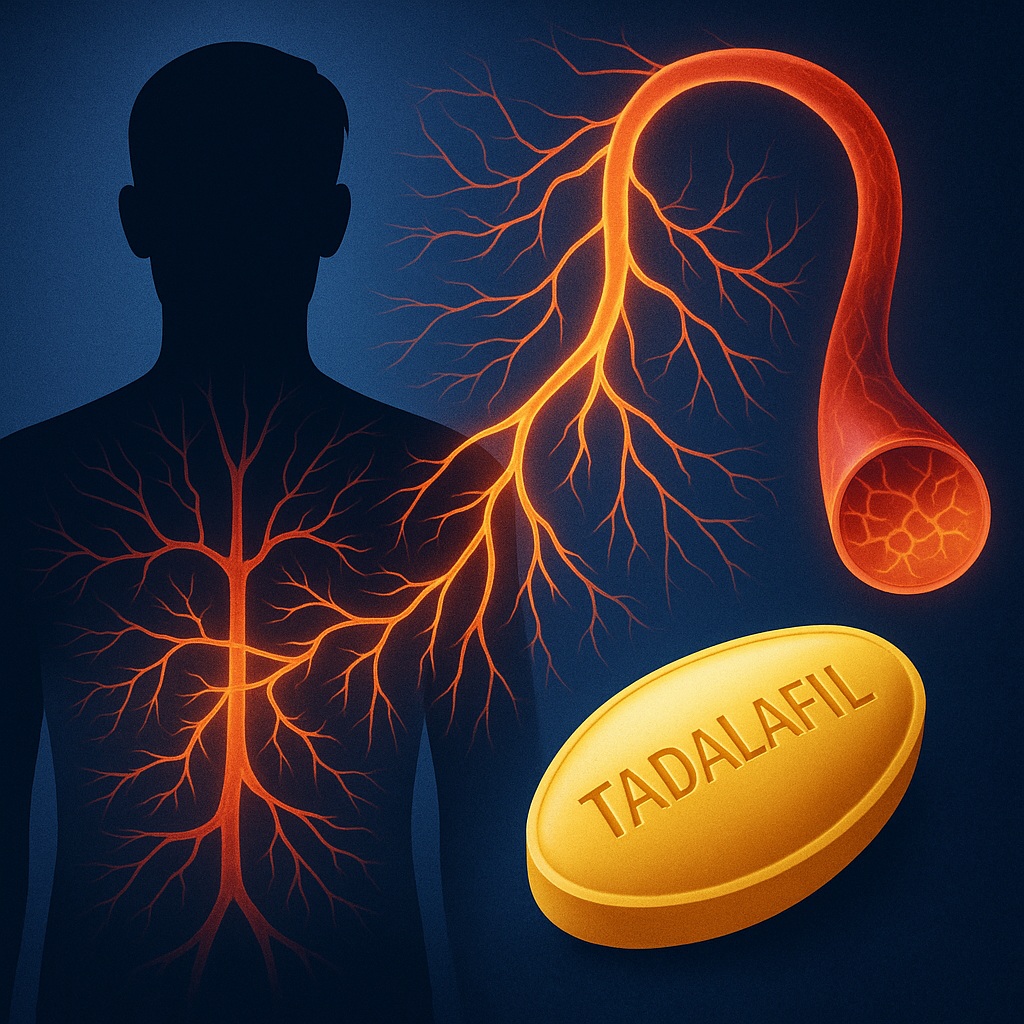
Among the available therapies, phosphodiesterase type 5 inhibitors (PDE5-Is) stand out as the first-line pharmacologic option. Within this class, tadalafil distinguishes itself with its long half-life and convenient once-daily dosing. Originally championed for its effects on penile hemodynamics, tadalafil has been hypothesized to exert broader vascular benefits by enhancing nitric oxide (NO)–cGMP signaling. If true, this would position tadalafil not merely as a symptomatic agent but as a disease-modifying therapy addressing the vascular roots of ED.
To explore this possibility, a randomized, double-blind, placebo-controlled trial assessed the effect of daily tadalafil on both erectile function and endothelial performance. Its results are both enlightening and cautionary, reminding us that biology rarely conforms neatly to hypotheses. This article unpacks those findings, explores their mechanistic underpinnings, and situates them within the evolving landscape of vascular and sexual medicine.
Erectile Dysfunction as a Vascular Disorder
The pathophysiology of ED is multifactorial, but endothelial dysfunction consistently emerges as a pivotal player. The vascular endothelium regulates tone, perfusion, and homeostasis through release of vasodilators (notably nitric oxide) and vasoconstrictors (such as endothelin-1). In healthy states, this balance ensures adequate penile blood inflow and restricted venous outflow during erection.
In ED, particularly when associated with cardiovascular risk factors like diabetes, hypertension, or smoking, the endothelial equilibrium is disrupted. Reduced NO bioavailability impairs vasodilation, while oxidative stress and inflammation accelerate vascular stiffening. The result is diminished arterial inflow, poor cavernosal relaxation, and ultimately failure of erection.
This close association between endothelial dysfunction and ED has inspired the concept of ED as the “canary in the coal mine” of systemic vascular disease. The penis, with its small arteries, may manifest impaired function earlier than larger vascular beds. Thus, an intervention that improves endothelial health could, in theory, improve both erectile capacity and long-term cardiovascular outcomes.
Tadalafil: Mechanistic Promise
Tadalafil is a selective PDE5 inhibitor that sustains cGMP signaling in smooth muscle. Normally, sexual stimulation triggers NO release, activation of guanylate cyclase, and cGMP production. PDE5 rapidly degrades cGMP, curtailing smooth muscle relaxation. By inhibiting PDE5, tadalafil prolongs cGMP activity, ensuring sustained vasodilation and erection.
But PDE5 is not exclusive to the penis. It is expressed in pulmonary arteries, systemic vasculature, and the lower urinary tract. In these tissues, PDE5 inhibition could theoretically restore vascular tone, improve endothelial responsiveness, and reduce afterload. Experimental studies in animals and humans have indeed suggested that PDE5-Is may enhance endothelial function, measured through parameters such as flow-mediated dilation (FMD).
The long half-life of tadalafil (≈17.5 hours) further supports its candidacy for vascular modulation. Unlike shorter-acting agents, tadalafil provides steady, low-level PDE5 inhibition throughout the day, potentially stabilizing endothelial physiology beyond the transient spikes of sexual activity. The stage was thus set for clinical trials to test whether these mechanistic promises translate into measurable vascular benefit.
Study Design and Methodology
The trial in question was a randomized, double-blind, placebo-controlled study involving 89 men with ED. The inclusion criteria focused on patients with confirmed erectile dysfunction, while excluding those with major comorbidities to isolate tadalafil’s effect on endothelial function without confounding systemic disease.
Participants were randomized to receive either tadalafil 10 mg once daily or a matching placebo for four weeks. Assessments were conducted at baseline and after treatment. The primary outcomes were:
- Erectile function, measured by the International Index of Erectile Function-5 (IIEF-5), a validated questionnaire capturing frequency and quality of erections.
- Endothelial function, evaluated through flow-mediated dilation (FMD) of the brachial artery, a non-invasive ultrasound-based measure of endothelial responsiveness to shear stress.
Secondary measures included the prevalence of adverse events, patient tolerability, and subgroup analysis stratified by baseline ED severity (mild, moderate, severe).
This design allowed for simultaneous evaluation of symptomatic improvement (erections) and mechanistic impact (endothelial health), bridging the gap between patient experience and vascular biology.
Key Findings: Erectile Function
Unsurprisingly, tadalafil improved erectile function. Patients receiving active treatment reported significant increases in IIEF-5 scores compared to baseline. Improvements included greater rigidity, frequency of penetration, and satisfaction with intercourse.
Interestingly, the placebo group also experienced notable gains in IIEF-5. This underscores the powerful psychosocial dimensions of sexual function, where expectancy, counseling, and trial participation itself can enhance confidence and performance. The placebo effect in ED trials is well-documented and complicates interpretation of therapeutic benefit.
When comparing tadalafil to placebo, the overall differences were not statistically significant across the full cohort. However, in the subgroup of men with severe baseline ED, tadalafil provided clear superiority, producing improvements not matched by placebo. This suggests that the drug’s effect is most apparent where dysfunction is profound and less amenable to psychological modulation.
Key Findings: Endothelial Function
Perhaps the most anticipated outcome—improvement in endothelial performance—yielded mixed results. Both tadalafil and placebo groups demonstrated significant increases in FMD after four weeks. Yet, crucially, no significant difference emerged between the two arms.
This finding raises several possibilities. One is that tadalafil genuinely does not improve endothelial function beyond placebo in relatively healthy, young men without comorbid vascular disease. Another is that the trial’s duration was too short, or the sample size too small, to detect subtle differences. Finally, participation in the study itself—through lifestyle advice, adherence to routine, or reduction in stress—may have enhanced endothelial responsiveness in both groups.
In the subgroup of severe ED, tadalafil again showed a trend toward greater FMD improvement, but this did not reach statistical significance. Thus, while mechanistic plausibility remains, clinical evidence for endothelial modulation by tadalafil in this population is weak.
Adverse Events and Tolerability
Side effects occurred more frequently in the tadalafil group, though most were mild and transient. Common complaints included:
- Headache
- Dyspepsia
- Myalgia and back pain
- Flushing
No serious adverse events were reported, and no participants discontinued therapy due to intolerable side effects. These findings align with tadalafil’s established safety profile, which has been confirmed in larger trials across ED, pulmonary arterial hypertension, and benign prostatic hyperplasia.
The slightly higher burden of discomfort in the active treatment arm underscores the importance of weighing modest efficacy benefits against patient tolerability, especially in populations where placebo already produces significant gains.
Interpretation of the Findings
The results invite both optimism and caution. On one hand, tadalafil clearly benefits erectile function, particularly in men with severe ED. On the other, its hypothesized vascular benefits appear less robust than anticipated, at least in young men without systemic comorbidities.
Several factors may explain the discrepancy:
- Population selection: By excluding older men with diabetes, hypertension, or overt atherosclerosis, the study may have chosen a group with relatively preserved endothelial function. Tadalafil’s effects may be more detectable in populations with marked endothelial impairment.
- Study duration: Endothelial remodeling is a gradual process. Four weeks of therapy may be insufficient to capture long-term vascular benefits.
- Placebo effect: The pronounced improvement in both erectile and endothelial outcomes in the placebo group highlights the confounding influence of expectancy and trial participation.
Thus, while the study tempers enthusiasm for tadalafil as a universal endothelial modulator, it does not negate its potential value in select populations.
Broader Clinical Implications
From a clinical standpoint, these findings reinforce several practical lessons. First, tadalafil remains an effective and safe treatment for erectile dysfunction, especially in men with severe disease. Second, its ability to improve endothelial health is not yet proven in otherwise healthy individuals, but may still hold promise in comorbid populations.
The study also highlights the challenge of using surrogate endpoints such as FMD. While useful for mechanistic research, these measures are variable and influenced by psychological and environmental factors. Hard clinical outcomes—such as cardiovascular events or long-term renal progression—remain the ultimate test of vascular therapies.
Finally, the work underscores the enduring importance of patient counseling. Setting realistic expectations about efficacy, side effects, and the role of lifestyle measures can maximize adherence and satisfaction, ensuring that tadalafil’s benefits are realized without disappointment.
Conclusion
Tadalafil has transformed the management of erectile dysfunction, offering efficacy, convenience, and a favorable safety profile. Its potential as a modulator of endothelial health remains enticing but unproven in young, otherwise healthy men. While improvements in both erectile and endothelial function were observed, the lack of difference between tadalafil and placebo underscores the complexity of sexual and vascular biology.
For clinicians, the key takeaway is that tadalafil should be viewed as a reliable symptomatic therapy, with possible vascular benefits that warrant further study in populations with overt endothelial dysfunction. For researchers, the trial highlights the need for larger, longer studies incorporating diverse patient cohorts and robust mechanistic endpoints.
In short, tadalafil remains indispensable in urology and sexual medicine, but its role in cardiovascular prevention is not yet ready for prime time. The promise persists, but the proof must follow.
FAQ
1. Does tadalafil improve endothelial function?
Current evidence suggests that tadalafil may not significantly improve endothelial function in young men without comorbidities. However, benefits could be more evident in populations with severe endothelial dysfunction, such as those with diabetes or hypertension.
2. Is tadalafil effective for all severities of erectile dysfunction?
Tadalafil improves erectile function across severities, but its advantage over placebo is most pronounced in men with severe ED, where psychological and placebo effects are less influential.
3. What are the common side effects of daily tadalafil use?
The most frequent side effects include headache, dyspepsia, muscle or back pain, and flushing. These are typically mild and resolve spontaneously, with few patients discontinuing therapy due to adverse events.
