

Introduction: Erectile Dysfunction as a Vascular Consequence of Dyslipidemia
Erectile dysfunction (ED) in middle-aged and elderly men is rarely an isolated disorder. In modern clinical practice, it is increasingly recognized as a vascular manifestation of systemic metabolic disease. Among the metabolic disturbances implicated in ED, hyperlipidemia occupies a central role, acting both as a driver of atherosclerosis and as a promoter of chronic low-grade inflammation.
The penile circulation is uniquely vulnerable to lipid-mediated vascular injury. Penile arteries are small-caliber vessels with a high dependence on endothelial nitric oxide signaling. Even modest endothelial dysfunction can significantly impair penile perfusion, often years before similar pathology becomes clinically apparent in coronary or cerebral arteries. This phenomenon has led to the concept of ED as an early sentinel of cardiovascular disease.
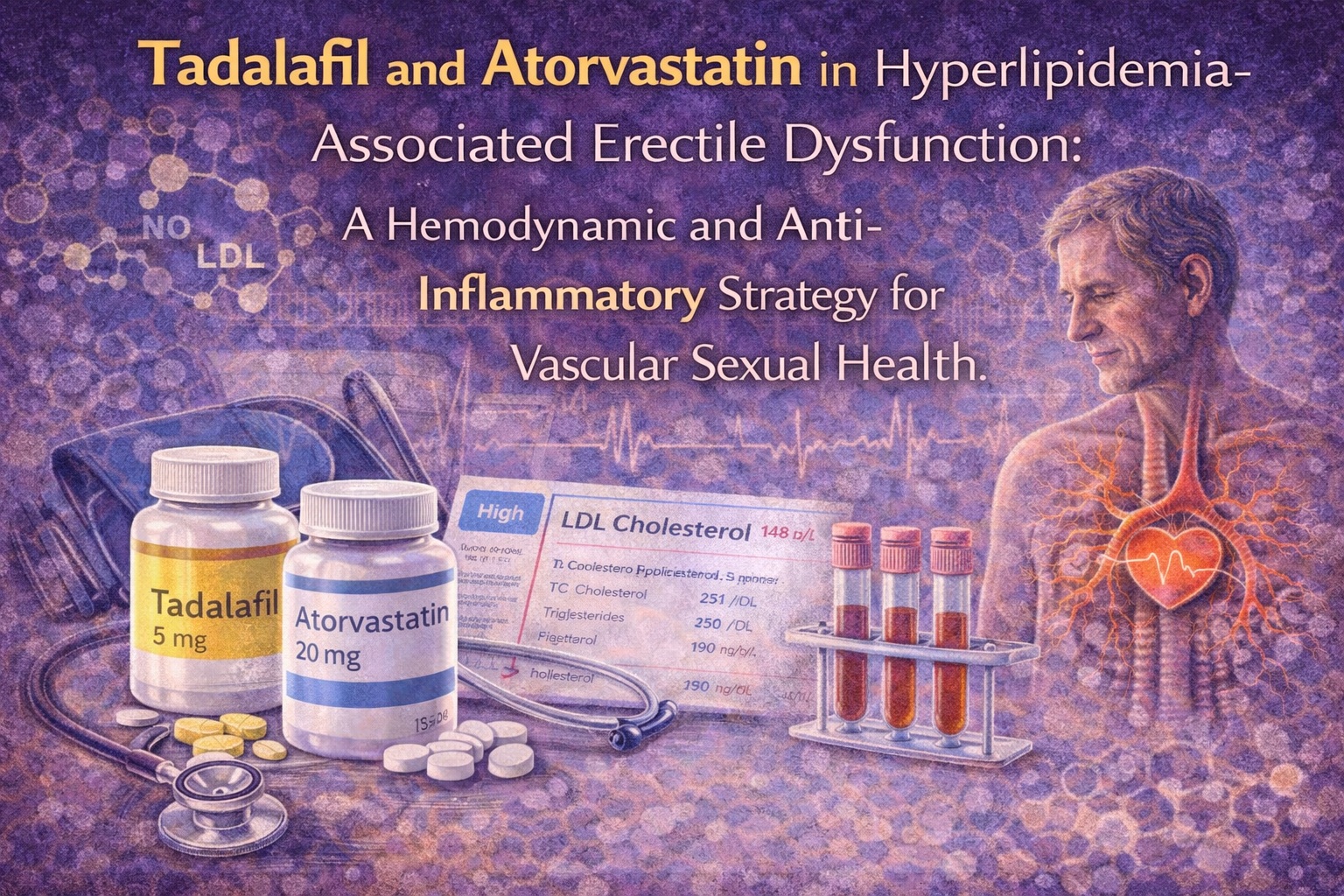
In this context, treatment strategies that address only erectile symptoms without correcting the underlying vascular pathology are inherently limited. The combination of tadalafil, a phosphodiesterase type 5 (PDE5) inhibitor, and atorvastatin, a potent lipid-lowering agent, represents a rational attempt to intervene at multiple levels of the disease process. Rather than merely restoring erectile function temporarily, this approach seeks to improve hemodynamics, reduce inflammation, and enhance endothelial health.
Hyperlipidemia and Erectile Dysfunction: A Pathophysiological Continuum
Hyperlipidemia contributes to erectile dysfunction through several interrelated mechanisms. Elevated levels of total cholesterol and triglycerides, combined with reduced high-density lipoprotein cholesterol, promote endothelial dysfunction by impairing nitric oxide bioavailability. Oxidized low-density lipoprotein particles trigger oxidative stress, endothelial inflammation, and reduced vasodilatory capacity.
Beyond structural atherosclerosis, hyperlipidemia alters blood rheology. Increased plasma viscosity, elevated hematocrit, and changes in erythrocyte deformability collectively impair microcirculatory flow. In the penile vasculature, where rapid arterial inflow and efficient venous occlusion are required for erection, these rheological disturbances have disproportionate clinical impact.
Chronic inflammation further amplifies these effects. Pro-inflammatory cytokines such as tumor necrosis factor-alpha, interleukin-6, and C-reactive protein directly impair endothelial nitric oxide synthase activity and promote vascular fibrosis. Over time, the penile vasculature transitions from a functional disorder to a structurally compromised system, reducing responsiveness to single-agent therapy.
Atorvastatin: Beyond Lipid Lowering
Atorvastatin is widely prescribed for the management of hyperlipidemia, but its therapeutic effects extend well beyond cholesterol reduction. By inhibiting HMG-CoA reductase, atorvastatin reduces hepatic cholesterol synthesis, leading to decreased circulating low-density lipoprotein levels. However, its so-called pleiotropic effects may be equally relevant in the context of erectile dysfunction.
Statins improve endothelial function by upregulating endothelial nitric oxide synthase expression and activity. They reduce oxidative stress by limiting the production of reactive oxygen species and attenuate vascular inflammation by suppressing pro-inflammatory cytokine signaling. These effects occur independently of lipid lowering and contribute directly to improved vascular reactivity.
In patients with hyperlipidemia-associated ED, atorvastatin monotherapy has demonstrated modest improvements in erectile function. However, the clinical response is often incomplete, reflecting the multifactorial nature of ED. Lipid correction alone cannot fully reverse established endothelial dysfunction or restore adequate cavernosal smooth muscle relaxation.
Tadalafil: Hemodynamic and Endothelial Modulation
Tadalafil, a long-acting PDE5 inhibitor, exerts its primary effect by enhancing the nitric oxide–cyclic guanosine monophosphate pathway. By inhibiting the degradation of cGMP, tadalafil promotes sustained smooth muscle relaxation in the corpus cavernosum, facilitating increased arterial inflow and improved erectile rigidity.
Unlike short-acting PDE5 inhibitors, tadalafil’s prolonged half-life allows for once-daily administration, resulting in continuous endothelial support rather than episodic pharmacological intervention. This dosing strategy has been associated with improved endothelial function, increased vascular compliance, and enhanced hemodynamic stability over time.
Importantly, tadalafil’s effects are not limited to the penile vasculature. Systemic improvements in microcirculation, reductions in vascular resistance, and anti-inflammatory actions mediated through cGMP signaling have been documented. These properties position tadalafil as a vascular modulator rather than a purely symptomatic agent.
Rationale for Combination Therapy: Synergy Rather Than Redundancy
The combination of tadalafil and atorvastatin is not an example of therapeutic overlap, but of mechanistic complementarity. Atorvastatin addresses upstream metabolic and inflammatory drivers of vascular dysfunction, while tadalafil amplifies downstream nitric oxide signaling and smooth muscle responsiveness.
By reducing lipid-induced endothelial injury, atorvastatin enhances the substrate upon which tadalafil acts. Simultaneously, tadalafil improves hemodynamics and microcirculatory flow, potentially accelerating the functional benefits of lipid correction. Together, these agents create a synergistic environment conducive to vascular recovery.
This dual approach is particularly relevant in middle-aged and elderly patients, where ED rarely results from a single etiological factor. In such populations, combination therapy may overcome the limitations of monotherapy and produce clinically meaningful improvements across multiple domains.
Hemodynamic Improvements: Clinical Significance Beyond Numbers
Hemodynamic parameters such as whole blood viscosity, plasma viscosity, hematocrit, and erythrocyte sedimentation rate provide insight into the rheological environment of the vasculature. Elevated values are associated with impaired microcirculation and increased vascular resistance, both of which compromise penile perfusion.
Combination therapy with tadalafil and atorvastatin has been shown to significantly improve these parameters compared with lipid-lowering therapy alone. Reductions in high-shear and low-shear blood viscosity suggest enhanced flow characteristics, while improvements in plasma viscosity and erythrocyte sedimentation rate reflect reduced inflammatory burden.
From a clinical perspective, these changes are highly relevant. Improved blood rheology facilitates more efficient arterial inflow during sexual arousal and supports the veno-occlusive mechanism necessary for erection maintenance. These benefits extend beyond erectile function, potentially influencing overall cardiovascular health.
Anti-Inflammatory Effects: A Shared Therapeutic Target
Chronic low-grade inflammation is a unifying feature of hyperlipidemia, metabolic syndrome, and erectile dysfunction. Both atorvastatin and tadalafil exhibit anti-inflammatory properties, though through distinct mechanisms.
Atorvastatin suppresses inflammatory signaling pathways at the transcriptional level, reducing circulating levels of pro-inflammatory cytokines. Tadalafil, through cGMP-mediated pathways, indirectly modulates inflammatory responses by improving endothelial function and reducing oxidative stress.
When combined, these effects appear additive. Significant reductions in tumor necrosis factor-alpha, interleukin-6, and C-reactive protein have been observed with combination therapy, exceeding those achieved with statin monotherapy. This anti-inflammatory synergy may play a crucial role in restoring endothelial health and improving erectile function.
Sexual Function Outcomes: Functional and Objective Gains
Improvements in erectile function with combination therapy are reflected not only in patient-reported outcomes but also in objective measures. Enhanced scores on the International Index of Erectile Function indicate improved rigidity, satisfaction, and overall sexual performance.
Objective assessments, such as nocturnal penile tumescence testing, demonstrate increases in erection frequency, duration, and maintenance of sufficient rigidity. These findings suggest that combination therapy improves both the psychological and physiological components of erectile function.
Importantly, these gains are achieved without a significant increase in adverse events. While mild side effects such as flushing or gastrointestinal discomfort may occur, their incidence does not differ substantially from statin monotherapy, supporting the tolerability of the combined regimen.
Safety and Tolerability in an Elderly Population
Middle-aged and elderly patients often present with multiple comorbidities and are particularly vulnerable to drug-related adverse effects. Any combination therapy in this population must therefore demonstrate a favorable safety profile.
The available evidence indicates that tadalafil combined with atorvastatin is generally well tolerated. The incidence of adverse drug reactions does not increase significantly, and serious cardiovascular events are not observed at higher rates. This safety profile is consistent with the known pharmacology of both agents when used appropriately.
Nevertheless, careful patient selection remains essential. Individuals with contraindications to PDE5 inhibitors or advanced cardiovascular disease require individualized assessment. In appropriately selected patients, however, the risk–benefit balance appears favorable.
Clinical Implications: Toward Integrated Vascular Sexual Medicine
The combination of tadalafil and atorvastatin exemplifies a shift toward integrated management of erectile dysfunction. Rather than treating ED as an isolated symptom, this approach acknowledges its vascular and metabolic underpinnings and addresses them directly.
For clinicians, this strategy offers an opportunity to improve sexual function while simultaneously targeting cardiovascular risk factors. This dual benefit may enhance patient adherence, as improvements in quality of life reinforce commitment to long-term metabolic therapy.
From a broader perspective, such combination therapy aligns with preventive cardiology principles. By improving endothelial function and reducing inflammation, treatment may contribute to long-term vascular health beyond the immediate goal of erectile restoration.
Limitations and Future Directions
Despite promising results, current evidence is limited by relatively small sample sizes and short follow-up periods. Long-term studies are needed to determine whether hemodynamic and inflammatory improvements translate into sustained erectile function and reduced cardiovascular events.
Future research should explore optimal dosing strategies, duration of therapy, and patient subgroups most likely to benefit. Additionally, studies incorporating imaging and molecular biomarkers may further elucidate the mechanisms underlying therapeutic synergy.
As understanding of vascular sexual medicine evolves, combination therapies targeting both metabolic and endothelial pathways are likely to become increasingly prominent.
Conclusion
Erectile dysfunction in the context of hyperlipidemia represents a manifestation of systemic vascular disease rather than a purely sexual disorder. The combination of tadalafil and atorvastatin addresses this reality by integrating lipid management, endothelial modulation, hemodynamic improvement, and anti-inflammatory action.
Evidence suggests that this dual approach offers superior benefits compared with statin monotherapy, improving both objective vascular parameters and subjective sexual function without compromising safety. For middle-aged and elderly patients with hyperlipidemia-associated ED, combination therapy represents a rational, pathophysiologically grounded treatment strategy.
As medicine moves toward more holistic and mechanism-based care, such integrated approaches may redefine the standard of erectile dysfunction management in metabolically compromised populations.
FAQ
Does combination therapy work better than statins alone for erectile dysfunction?
Yes. Available evidence indicates that adding tadalafil to atorvastatin results in greater improvements in hemodynamics and erectile function than statin monotherapy.
Is this combination safe for older patients?
In appropriately selected patients, the combination is generally well tolerated and does not significantly increase adverse events.
Should all patients with hyperlipidemia and ED receive combination therapy?
Not necessarily. Treatment should be individualized based on cardiovascular risk, severity of ED, comorbidities, and contraindications.
