

Introduction: A New Perspective in Male Urological Health
Benign prostatic hyperplasia (BPH) and late-onset hypogonadism (LOH) are two common and often interlinked disorders that afflict aging men worldwide. Lower urinary tract symptoms (LUTS) — including nocturia, urgency, weak stream, and incomplete bladder emptying — are among the most prevalent clinical complaints in urology, and they significantly impair quality of life. For decades, the management of LUTS associated with BPH relied primarily on α-blockers and 5α-reductase inhibitors. However, this traditional approach often fails to address the overlapping hormonal and vascular mechanisms underlying both BPH and LOH.
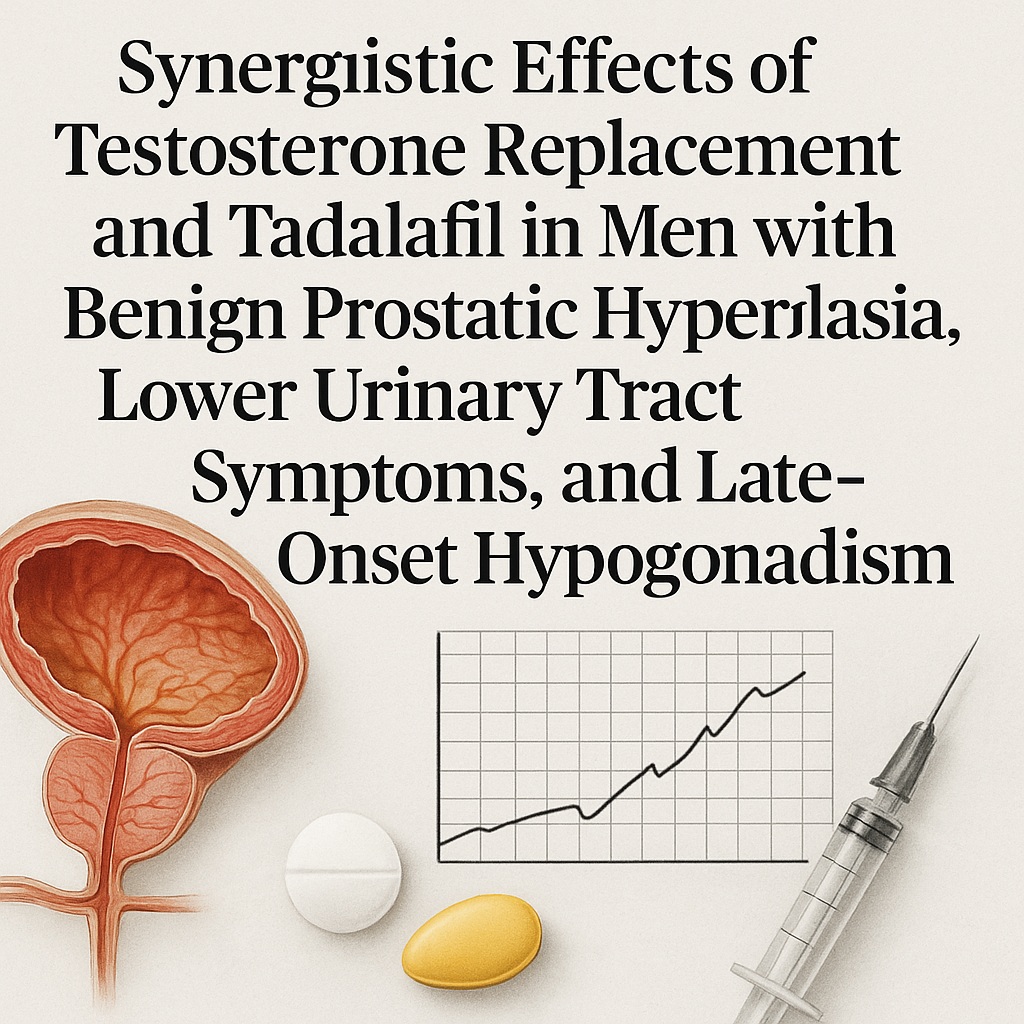
Recent evidence has introduced a paradigm shift in the treatment of these overlapping pathologies. The combination of tadalafil, a phosphodiesterase type 5 inhibitor (PDE5i), and testosterone replacement therapy (TRT), traditionally used for erectile dysfunction and hypogonadism respectively, has demonstrated notable synergistic effects on urinary and sexual function. The 2020 study by Park et al. in European Urology Open Science highlights this dual approach, demonstrating that restoring testosterone levels enhances the therapeutic efficacy of tadalafil in men with BPH, LUTS, and LOH.
The integration of hormonal modulation with vascular-targeted pharmacotherapy represents not just a therapeutic evolution, but a holistic rethinking of male health — where andrology meets urology, and endocrine balance becomes a central pillar of urinary symptom management.
Pathophysiological Triad: Linking BPH, LUTS, and Hypogonadism
Understanding the interplay between testosterone deficiency, prostate enlargement, and LUTS requires a step back into the physiology of the aging male. Testosterone exerts a multitude of effects beyond reproductive function — it influences smooth muscle tone, endothelial function, metabolic balance, and even bladder physiology. Declining testosterone levels, a hallmark of LOH, disrupt this equilibrium in several ways.
Hormonal Decline and Prostatic Growth
Contrary to early assumptions, testosterone is not solely a proliferative driver of prostatic tissue. In fact, low testosterone levels may contribute to chronic prostatic inflammation, reduced smooth muscle relaxation, and increased collagen deposition. These changes culminate in stromal rigidity and impaired dynamic control of bladder outlet resistance, aggravating LUTS.
Moreover, hypogonadism alters the ratio of testosterone to dihydrotestosterone (DHT), favoring the local overactivation of androgen receptors and contributing to a maladaptive prostatic response. The net result is not only volumetric enlargement but also functional obstruction at the bladder neck.
Endothelial Dysfunction and Nitric Oxide Pathway Impairment
The nitric oxide (NO)-cGMP pathway plays a crucial role in modulating smooth muscle tone within both penile and lower urinary tract tissues. Testosterone deficiency attenuates endothelial nitric oxide synthase (eNOS) expression, leading to diminished cGMP signaling and increased smooth muscle contractility. This pathophysiologic overlap explains why many men with LUTS also experience erectile dysfunction — both conditions share an underlying vascular and neuroendocrine mechanism.
Metabolic and Systemic Interactions
Testosterone deficiency also correlates strongly with metabolic syndrome, insulin resistance, and obesity — all of which independently exacerbate LUTS and erectile dysfunction. Thus, the triad of LOH–BPH–LUTS is not a coincidence but a multidirectional interaction among hormonal imbalance, metabolic dysfunction, and local vascular compromise.
Tadalafil in the Management of LUTS and BPH
Tadalafil, widely known for its role in the treatment of erectile dysfunction, has become a cornerstone therapy in the management of LUTS associated with BPH. Its mechanism transcends penile hemodynamics, extending into the domain of lower urinary tract physiology.
Mechanism of Action Beyond the Cavernosal Tissue
By inhibiting phosphodiesterase type 5, tadalafil prevents the degradation of cyclic guanosine monophosphate (cGMP), a second messenger that mediates smooth muscle relaxation. Within the prostate, bladder, and urethra, this mechanism facilitates improved blood flow, reduced sympathetic tone, and enhanced detrusor muscle compliance.
Clinical studies have consistently shown that daily tadalafil (5 mg) improves both International Prostate Symptom Score (IPSS) and Quality of Life Index (QoL) without significantly affecting prostate volume or serum prostate-specific antigen (PSA) levels. Its dual benefit on urinary and sexual function has made it an appealing alternative or adjunct to traditional agents like α-blockers.
Limitations of Monotherapy
Despite these benefits, not all patients respond adequately to tadalafil monotherapy. Approximately 30–40% of men show suboptimal improvement in LUTS or persistent erectile dysfunction. The heterogeneity of response suggests that tadalafil’s efficacy depends partly on the integrity of the NO-cGMP signaling pathway — a pathway that is hormonally dependent on sufficient testosterone levels.
Thus, in men with concomitant hypogonadism, the impaired NO signaling limits tadalafil’s full therapeutic potential, providing the biological rationale for combined therapy with testosterone replacement.
Testosterone Replacement: Restoring the Missing Link
Testosterone replacement therapy (TRT) aims to restore serum testosterone to physiological levels, thereby correcting the neurovascular, metabolic, and structural abnormalities that accompany hypogonadism. Beyond libido and energy, TRT exerts measurable benefits on vascular tone, urinary function, and quality of life.
Testosterone and the Lower Urinary Tract
Contrary to longstanding fears that TRT may worsen BPH, contemporary evidence supports the opposite. Testosterone enhances nitric oxide synthase activity in the prostate and bladder neck, facilitating smooth muscle relaxation. It also modulates the expression of PDE5, potentially augmenting the sensitivity of these tissues to PDE5 inhibitors like tadalafil.
Moreover, TRT has been shown to reduce urinary urgency and nocturia through central nervous system modulation, particularly within hypothalamic-pontine pathways involved in micturition control. Thus, testosterone acts both peripherally and centrally, influencing bladder dynamics and detrusor overactivity.
Metabolic and Cardiovascular Benefits
Restoring testosterone levels also improves insulin sensitivity, endothelial function, and lipid profiles, indirectly reducing vascular stiffness and optimizing perfusion to the pelvic organs. These systemic effects complement tadalafil’s local action, creating a pharmacologic synergy that benefits both LUTS and sexual function.
The Park et al. Study: Clinical Evidence for Synergy
The 2020 prospective study by Park and colleagues sought to clarify whether testosterone therapy could enhance tadalafil’s efficacy in men with BPH/LUTS and late-onset hypogonadism. The investigators enrolled patients aged 50 years or older who had both moderate-to-severe LUTS and low serum testosterone (<300 ng/dL).
All participants received daily tadalafil 5 mg, while one group additionally underwent testosterone replacement therapy for 12 months. Key outcome measures included the International Prostate Symptom Score (IPSS), International Index of Erectile Function (IIEF), peak urinary flow rate (Qmax), and serum hormone levels.
Results: A Dual-Pathway Success
At the study’s conclusion, the combination therapy group exhibited significantly greater improvements in:
- Total IPSS (mean reduction greater than with tadalafil alone),
- IIEF-5 scores, indicating better erectile function,
- Qmax, reflecting improved urinary flow, and
- Overall patient satisfaction, with fewer reports of persistent LUTS.
Importantly, prostate volume and PSA levels did not increase significantly, dispelling fears of androgen-induced hyperplasia. No severe adverse effects or cardiovascular complications were reported.
These results substantiate the hypothesis that testosterone repletion restores the physiological responsiveness to tadalafil, transforming partial responders into clinical successes. In essence, TRT reinstates the hormonal foundation upon which PDE5 inhibition can act effectively.
Mechanistic Rationale: Two Pathways, One Therapeutic Target
The synergy between testosterone and tadalafil is rooted in their complementary modulation of the nitric oxide–cGMP axis and androgen receptor signaling.
- Testosterone Upregulates NO Synthesis – It increases both neuronal and endothelial nitric oxide synthase expression, thereby elevating intracellular cGMP production.
- Tadalafil Prevents cGMP Degradation – By blocking PDE5, tadalafil preserves the cGMP levels generated under testosterone’s influence.
- Mutual Reinforcement of Smooth Muscle Relaxation – Together, they amplify vasodilation, reduce smooth muscle tone in the bladder neck and prostate, and enhance perfusion in cavernosal tissue.
This biochemical partnership translates into improved urinary flow, reduced storage symptoms, and enhanced erectile function — the trifecta of therapeutic goals in aging men with BPH, LUTS, and LOH.
Clinical Implications: Redefining Treatment Algorithms
The implications of this combined approach extend well beyond symptom control. It challenges the outdated dichotomy between “urological” and “andrological” disorders, instead presenting a unified model of hormone-vascular interaction.
Personalized Therapeutic Strategy
The identification of testosterone deficiency as a modifiable factor in LUTS reframes clinical evaluation. Men presenting with moderate-to-severe LUTS should undergo endocrine assessment, including serum testosterone measurement, especially if they exhibit fatigue, loss of libido, or metabolic syndrome.
Patients with both hypogonadism and LUTS can then be stratified for dual therapy, optimizing symptom relief while improving systemic health outcomes. This strategy represents a precision-medicine approach to male aging, targeting the root causes rather than merely the symptoms.
Safety Considerations
The integration of TRT with PDE5 inhibition must be approached judiciously. Regular monitoring of hematocrit, PSA, and cardiovascular parameters remains essential. However, current evidence shows no increase in prostate cancer incidence or cardiovascular events when TRT is used responsibly under clinical supervision.
In fact, maintaining physiological testosterone levels may offer cardiometabolic protection — a concept that continues to overturn decades of unfounded concern.
Translational Perspective: Beyond the Prostate
The implications of testosterone-tadalafil synergy may extend to other urological and systemic domains. Preliminary studies suggest potential benefits in:
- Overactive bladder, through modulation of detrusor overactivity,
- Chronic pelvic pain syndrome, due to improved pelvic microcirculation,
- Endothelial dysfunction in metabolic syndrome, and
- Sexual recovery after prostatectomy, through enhanced neurovascular regeneration.
These avenues warrant further investigation, potentially establishing this combination as a cornerstone in men’s health therapeutics rather than a niche intervention.
Limitations and Future Research
Despite the promising findings, several limitations temper the conclusions of Park et al.’s study. The sample size was modest, and the study was conducted in a single ethnic cohort, limiting generalizability. Furthermore, the trial duration, though adequate for symptom evaluation, may not fully capture long-term outcomes such as cardiovascular risk or prostate histologic changes.
Future research should aim to:
- Conduct multicenter, randomized, placebo-controlled trials across diverse populations.
- Evaluate longitudinal metabolic and cardiovascular effects of combined therapy.
- Explore molecular biomarkers predictive of response to hormonal and PDE5 modulation.
- Assess psychological and cognitive impacts of therapy, given the neuroendocrine role of testosterone.
These efforts would not only validate the therapeutic synergy but also define its place within broader health optimization frameworks for aging men.
Conclusion: The Emerging Standard of Integrated Male Care
The combination of testosterone replacement therapy and tadalafil represents a significant advancement in the management of benign prostatic hyperplasia, lower urinary tract symptoms, and late-onset hypogonadism. By addressing both the hormonal deficiency and the vascular dysfunction underlying these conditions, this dual approach provides superior symptomatic and functional outcomes compared to monotherapy.
The evidence affirms that testosterone is not an adversary of the prostate but a physiological ally when maintained within normal limits. When paired with tadalafil, it transforms urological management into a multidimensional strategy that restores vitality, reverses vascular compromise, and enhances quality of life.
As clinical paradigms evolve, the future of male health will likely embrace this integrated model of care — where the prostate, the vasculature, and the endocrine system are treated not as separate entities but as parts of one cohesive whole.
FAQ
1. Does testosterone replacement increase the risk of prostate cancer or BPH progression?
Current evidence indicates that physiological testosterone replacement does not increase prostate cancer risk or significantly enlarge the prostate. Careful patient selection and regular monitoring of PSA levels ensure safety.
2. Why does combining testosterone with tadalafil work better than using tadalafil alone?
Testosterone enhances nitric oxide synthesis and upregulates PDE5 expression, creating the ideal biochemical environment for tadalafil to act. This synergy improves both urinary and erectile function beyond what either therapy achieves alone.
3. Who are the best candidates for combined therapy?
Men over 50 with moderate-to-severe LUTS, confirmed hypogonadism (testosterone <300 ng/dL), and coexisting erectile dysfunction derive the greatest benefit. Those with controlled cardiovascular status and no prostate malignancy are ideal candidates.
