

Introduction: When the Bladder and the Penis Share the Same Pathway
Lower urinary tract symptoms (LUTS) and erectile dysfunction (ED) are two of the most common and most underestimated conditions affecting aging men. Individually, they reduce quality of life; together, they often create a silent but profound burden. Add metabolic syndrome (MetS) to the equation, and the clinical picture becomes even more complex.
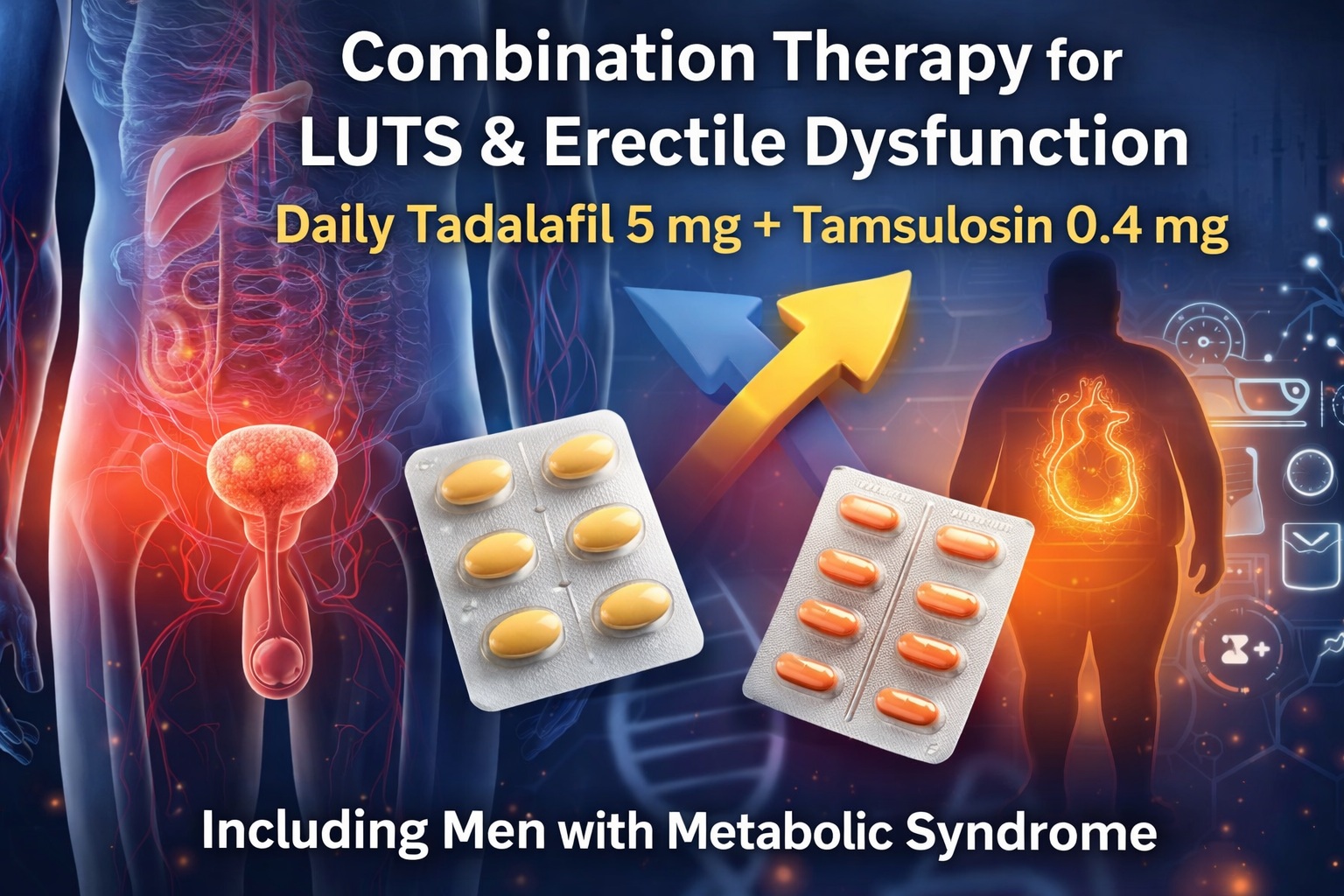
The study published in Minerva Urology and Nephrology (2021) examined the outcomes of combination therapy with daily tadalafil 5 mg and tamsulosin 0.4 mg in men with LUTS and ED, stratified by the presence or absence of metabolic syndrome . Its findings are clinically relevant: while men with MetS present with more severe baseline symptoms, combination therapy appears to level the playing field—particularly in terms of erectile function and overactive bladder symptoms.
This article explores the pathophysiological background, therapeutic rationale, and clinical implications of these findings. We will examine why MetS worsens both LUTS and ED, how tadalafil and tamsulosin interact mechanistically, and what this means for everyday urological practice.
The Triad: LUTS, ED, and Metabolic Syndrome
The coexistence of LUTS and ED is not accidental. Epidemiological evidence consistently demonstrates that men with moderate to severe LUTS are significantly more likely to report erectile dysfunction. The relationship persists even after adjusting for age and comorbidities, suggesting a shared biological substrate rather than mere coincidence.
Metabolic syndrome introduces an additional layer of complexity. Defined by central obesity, hypertension, dyslipidemia, and impaired glucose metabolism, MetS creates a pro-inflammatory, pro-atherogenic, and insulin-resistant environment. These systemic alterations directly affect vascular function, endothelial integrity, smooth muscle tone, and autonomic balance.
From a mechanistic standpoint, several interconnected pathways explain the overlap:
- Impairment of the nitric oxide (NO)–cGMP pathway
- Increased RhoA/Rho kinase activity promoting smooth muscle contraction
- Pelvic ischemia due to atherosclerotic changes
- Chronic low-grade inflammation and oxidative stress
- Autonomic hyperactivity
In men with MetS, these mechanisms do not operate in isolation. They reinforce one another. The bladder neck, prostate, penile corpora cavernosa, and pelvic vasculature are all exposed to the same hostile metabolic environment. The result is predictable: worse LUTS, more severe ED, and reduced responsiveness to monotherapy.
Why Combination Therapy Makes Physiological Sense
For decades, alpha-blockers such as tamsulosin have been the cornerstone of LUTS management related to benign prostatic obstruction. By antagonizing α1-adrenergic receptors in the bladder neck and prostate, they reduce smooth muscle tone and improve urinary flow.
Phosphodiesterase type 5 inhibitors (PDE5-Is), including tadalafil, were originally introduced for ED. Their mechanism—enhancing the NO–cGMP pathway—promotes smooth muscle relaxation and penile erection. However, their role extends beyond the corpora cavernosa.
Daily tadalafil exerts several actions relevant to LUTS:
- Relaxation of the bladder neck and prostatic smooth muscle
- Improved pelvic and prostatic perfusion
- Modulation of afferent bladder signaling
- Anti-inflammatory effects via cGMP-dependent pathways
- Reduction of fibrosis and oxidative stress
The synergism between tamsulosin and tadalafil is not merely additive; it is complementary. While tamsulosin targets adrenergic-mediated contraction, tadalafil enhances vasodilation and reduces inflammatory remodeling. Together, they address both dynamic obstruction and underlying tissue dysfunction.
Importantly, tadalafil 5 mg plus tamsulosin 0.4 mg is the only PDE5-I and alpha-blocker combination approved by the FDA for this indication. This regulatory endorsement reflects accumulated evidence of efficacy and safety.
Study Design and Baseline Differences: The Weight of Metabolic Syndrome
The referenced prospective study enrolled 50 men with moderate-to-severe LUTS and ED after screening 75 candidates . Participants were divided into two groups based on the presence of metabolic syndrome, according to NCEP ATP III criteria.
Several observations at baseline deserve attention.
First, men with MetS demonstrated significantly worse total IPSS scores, poorer quality-of-life indices, higher OAB-q scores, and lower IIEF-5 scores compared to those without MetS . In other words, metabolic syndrome amplified both urinary and sexual symptom severity.
Second, objective uroflowmetry parameters (Qmax and PVR) were similar between groups at baseline. This finding suggests that the symptomatic burden in MetS is not explained solely by mechanical obstruction. Functional and inflammatory factors likely play a central role.
Third, the metabolic profile in the MetS group revealed higher BMI, larger waist circumference, elevated triglycerides, and higher systolic blood pressure . These are not abstract laboratory findings; they are markers of vascular dysfunction, endothelial injury, and tissue hypoxia.
In clinical practice, this translates to a patient who not only voids poorly and struggles with erections but also carries systemic cardiovascular risk. The urologist, therefore, stands at a critical crossroads between symptom management and broader health intervention.
Twelve Weeks Later: Does MetS Limit Therapeutic Response?
After 12 weeks of daily tadalafil 5 mg plus tamsulosin 0.4 mg, both groups showed statistically significant improvements in LUTS, erectile function, and uroflowmetry parameters . This is the first key message: combination therapy works regardless of metabolic status.
However, a deeper look reveals important nuances.
Improvement in LUTS
Total IPSS scores decreased significantly in both groups. The magnitude of improvement (ΔIPSS) was comparable between men with and without MetS. Voiding and storage subscores improved similarly.
Interestingly, although men without MetS maintained better absolute scores at 12 weeks, the relative improvement was not inferior in the MetS group. This indicates that metabolic syndrome does not blunt responsiveness to combination therapy in a clinically meaningful way.
Overactive Bladder Symptoms
One particularly notable finding was the greater improvement in OAB-q scores among men with MetS . This suggests that tadalafil’s vascular and anti-inflammatory properties may have amplified effects in a metabolically compromised environment.
Given that MetS is associated with pelvic ischemia and oxidative stress, improved oxygenation and cGMP-mediated smooth muscle relaxation may disproportionately benefit this subgroup. The bladder, after all, is highly sensitive to ischemic and inflammatory stimuli.
Erectile Function
Despite worse baseline IIEF-5 scores in the MetS group, erectile function at 12 weeks became statistically similar between groups . This is a clinically meaningful result.
Metabolic syndrome is often associated with endothelial dysfunction, hypogonadism, and impaired NO bioavailability. The fact that daily tadalafil normalized outcomes across groups reinforces its broader vascular and anti-inflammatory role beyond simple PDE5 inhibition.
In practical terms, combination therapy appears capable of “catching up” men with MetS in terms of erectile performance.
Safety Profile: A Reassuring Picture
Safety is a legitimate concern when combining vasodilatory and alpha-adrenergic blocking agents, particularly in patients with cardiovascular risk factors.
In this study, no serious adverse events were reported . Mild to moderate side effects included headache, back pain, dizziness, dyspepsia, and ejaculatory dysfunction. Importantly, there were no significant differences in adverse events between groups.
No episodes of urinary retention occurred. Vital signs and laboratory parameters remained stable. This is particularly reassuring in the MetS population, where baseline cardiovascular risk is elevated.
Thus, the combination demonstrates a favorable tolerability profile even in metabolically vulnerable patients.
Clinical Implications: Beyond Symptom Relief
The findings carry several important clinical messages.
First, metabolic syndrome should not deter clinicians from prescribing combination therapy with tadalafil and tamsulosin. The therapeutic response in terms of LUTS and ED is robust and comparable to non-MetS patients.
Second, men with MetS often present with more severe symptoms at baseline. This suggests the need for earlier identification and intervention. Waiting until symptoms become intolerable may delay effective therapy and worsen quality of life.
Third, urologists must adopt a multidisciplinary mindset. When encountering a patient with LUTS and ED, particularly in the presence of central obesity or hypertension, screening for metabolic syndrome should become routine. Treating the prostate without addressing metabolic health is incomplete care.
Fourth, the greater improvement in OAB symptoms among MetS patients hints at the possibility that PDE5-Is may exert disease-modifying effects through anti-inflammatory and vascular pathways. This warrants further long-term investigation.
Limitations and the Road Ahead
The study was prospective but observational, with a relatively small sample size and a 12-week follow-up period . While statistically significant findings were observed, larger randomized controlled trials are needed to confirm these results and evaluate long-term outcomes.
Moreover, the absence of a placebo or monotherapy arm limits direct comparison of additive versus synergistic effects. Future studies should explore whether combination therapy alters the natural progression of LUTS in metabolically compromised patients.
Despite these limitations, the consistency of improvement across symptom domains and the reassuring safety profile strengthen the practical relevance of the findings.
Practical Takeaways for Clinicians
- Men with metabolic syndrome present with more severe LUTS and ED at baseline.
- Daily tadalafil 5 mg plus tamsulosin 0.4 mg significantly improves urinary and sexual function in both MetS and non-MetS patients.
- Erectile outcomes become comparable between groups after 12 weeks of therapy.
- Overactive bladder symptoms may improve even more in patients with MetS.
- The safety profile remains favorable regardless of metabolic status.
In short, combination therapy does not merely treat symptoms—it compensates for metabolic disadvantage.
Conclusion: Restoring Balance in a Metabolically Challenged Population
Lower urinary tract symptoms and erectile dysfunction share more than anatomical proximity. They are linked by vascular health, inflammatory burden, and smooth muscle physiology. Metabolic syndrome amplifies dysfunction across these systems, worsening symptom severity and quality of life.
Yet the data show something encouraging: targeted pharmacological synergy can overcome metabolic adversity. The combination of daily tadalafil 5 mg and tamsulosin 0.4 mg effectively improves LUTS and ED regardless of metabolic status, with particularly notable gains in erectile function and overactive bladder symptoms.
If there is irony here, it lies in the fact that two drugs originally developed for separate indications—urinary flow and penile erection—together address a deeper shared pathology. The lesson for modern urology is clear: treat the system, not just the symptom.
FAQ
1. Does metabolic syndrome reduce the effectiveness of tadalafil and tamsulosin?
No. Although men with metabolic syndrome start with more severe symptoms, combination therapy produces similar improvements in LUTS and erectile function compared to men without MetS. Erectile outcomes at 12 weeks are comparable between groups.
2. Why do overactive bladder symptoms improve more in patients with metabolic syndrome?
Metabolic syndrome is associated with pelvic ischemia and inflammation. Tadalafil enhances blood flow, improves oxygenation, and reduces inflammatory signaling. These mechanisms may provide amplified benefits in metabolically compromised tissues.
3. Is combination therapy safe in patients with cardiovascular risk factors?
In the referenced study, no serious adverse events were reported, and side effects were mild to moderate. The safety profile was comparable in patients with and without metabolic syndrome, making it a viable option in appropriately selected individuals.
