

Introduction: Erectile Dysfunction Beyond Sexual Performance
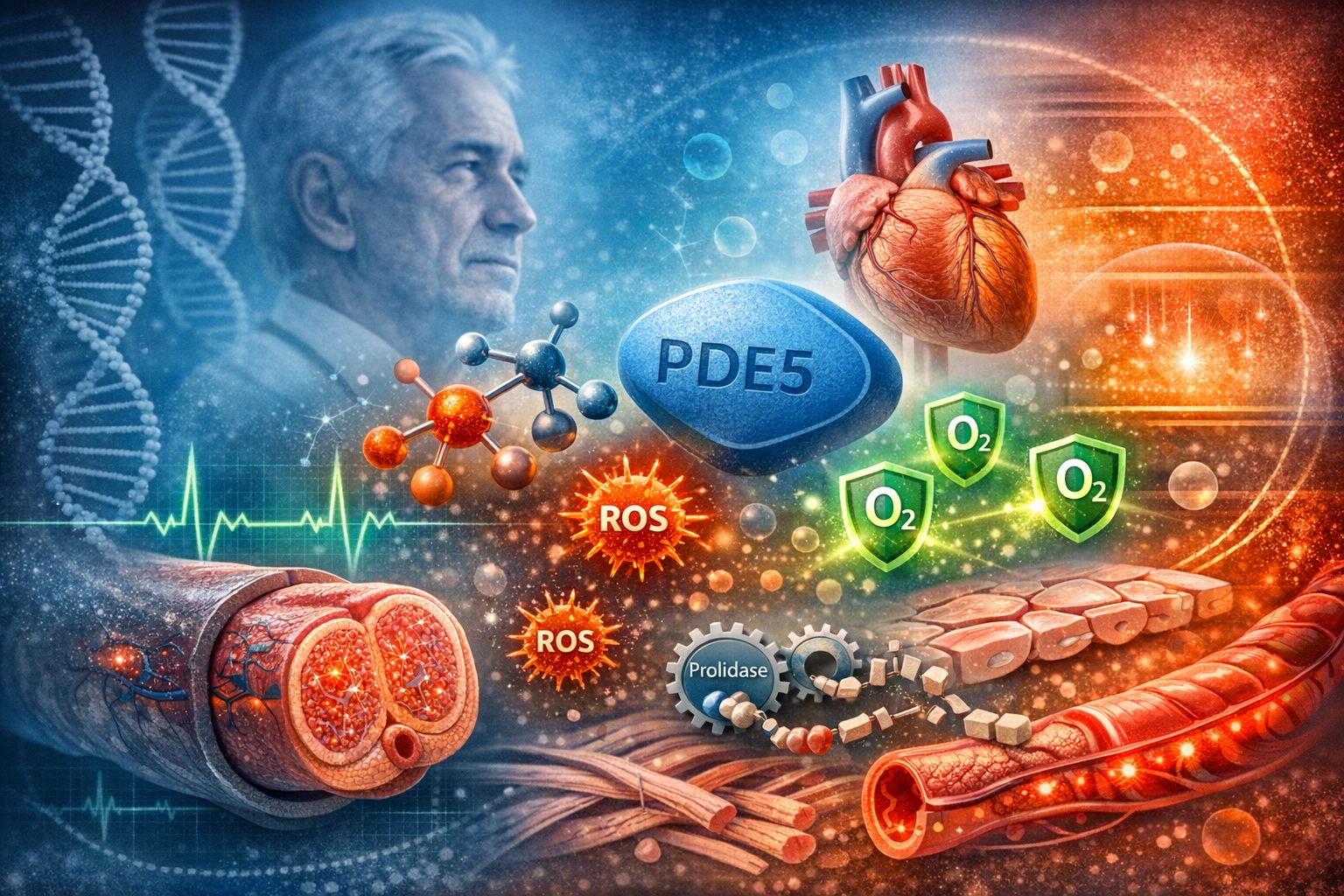
Erectile dysfunction (ED) has long ceased to be viewed merely as a disorder of sexual performance. In modern clinical medicine, ED is increasingly recognized as a sentinel marker of systemic vascular pathology, often preceding overt cardiovascular disease by several years. This paradigm shift has reframed ED as an early manifestation of endothelial dysfunction, oxidative stress imbalance, and pathological remodeling of vascular and connective tissues.
Phosphodiesterase type 5 (PDE5) inhibitors, initially introduced as symptomatic therapy to restore penile erection, now occupy a far broader therapeutic landscape. Their ability to enhance nitric oxide–cyclic guanosine monophosphate (NO–cGMP) signaling has positioned them as agents with potential vasculoprotective, anti-inflammatory, and antioxidative properties. Yet, despite their widespread clinical use, the acute biochemical effects of PDE5 inhibitors on systemic oxidative balance and connective tissue metabolism remain underexplored.
This article examines erectile dysfunction through the lens of oxidative stress and collagen turnover, focusing on the acute biochemical consequences of PDE5 inhibition. By integrating clinical biochemistry with vascular pathophysiology, it aims to clarify why drugs like tadalafil may influence far more than penile rigidity—and why this matters for everyday clinical practice.
Oxidative Stress as a Central Mechanism in Vasculogenic Erectile Dysfunction
Oxidative stress arises from an imbalance between reactive oxygen species (ROS) production and the body’s antioxidant defense systems. In vascular tissues, excessive ROS directly impair endothelial nitric oxide availability, disrupt smooth muscle relaxation, and accelerate inflammatory and fibrotic processes. In the penis, where erection depends on rapid and finely tuned vasodilation, these effects are particularly detrimental.
Patients with vasculogenic ED consistently demonstrate elevated systemic oxidative burden alongside diminished antioxidant capacity. This biochemical environment fosters endothelial dysfunction, compromises arterial inflow, and interferes with the veno-occlusive mechanism essential for maintaining erection. Importantly, oxidative stress does not act in isolation; it interacts with metabolic disorders, hypertension, diabetes mellitus, smoking, and aging, creating a cumulative vascular insult.
Clinical studies have shown that markers of oxidative damage correlate with the severity of ED. This association supports the concept that erectile dysfunction is not merely a localized penile disorder but rather a reflection of generalized vascular oxidative injury. From this perspective, therapies capable of rapidly modifying oxidative status warrant close attention—not only for symptom relief but also for their systemic implications.
Prolidase Activity and Collagen Metabolism: An Underappreciated Axis
While oxidative stress impairs vascular tone, structural remodeling of penile tissue determines the long-term trajectory of erectile function. Central to this remodeling process is collagen metabolism, governed in part by the enzyme prolidase.
Prolidase is a cytosolic peptidase responsible for the final step in collagen degradation, liberating proline and hydroxyproline for reuse in collagen synthesis. Under physiological conditions, prolidase activity supports normal tissue turnover and repair. However, in states of chronic oxidative stress, prolidase activity becomes dysregulated, reflecting accelerated collagen turnover and pathological fibrosis.
In men with vasculogenic ED, elevated serum prolidase activity has been associated with increased collagen deposition, reduced smooth muscle content, and loss of tissue compliance within the corpora cavernosa. This fibrotic transformation undermines the mechanical properties required for effective veno-occlusion, leading to progressive erectile failure that becomes less responsive to pharmacotherapy over time.
Thus, prolidase serves as both a biochemical marker and a mechanistic link between oxidative stress, fibrosis, and erectile dysfunction. Any intervention capable of modulating prolidase activity may therefore influence not only erectile performance but also the structural integrity of penile tissue.
PDE5 Inhibitors: From Hemodynamic Agents to Biochemical Modulators
The primary pharmacological action of PDE5 inhibitors is well established: inhibition of cGMP degradation, leading to enhanced smooth muscle relaxation and improved penile blood flow. However, emerging evidence indicates that their effects extend into the biochemical domain, particularly concerning oxidative stress regulation.
By restoring endothelial NO signaling, PDE5 inhibitors indirectly suppress ROS generation, reduce oxidative enzyme activation, and support endogenous antioxidant systems. This effect appears to occur rapidly, suggesting that PDE5 inhibitors exert acute antioxidative actions independent of long-term vascular remodeling.
Tadalafil, distinguished by its longer half-life, offers a unique opportunity to observe these acute biochemical changes at peak plasma concentration. Studying its short-term effects provides insight into how PDE5 inhibition may influence oxidative balance and collagen metabolism even after a single dose—an aspect highly relevant to on-demand clinical use.
Acute Effects of PDE5 Inhibition on Systemic Oxidative Balance
Clinical observations demonstrate that men with erectile dysfunction exhibit elevated total oxidant status (TOS) and reduced total antioxidant status (TAS) compared with healthy controls. This imbalance reflects a systemic pro-oxidative environment rather than a localized penile phenomenon.
Following acute administration of a PDE5 inhibitor, a rapid and statistically significant reduction in oxidant burden is observed, accompanied by a parallel increase in antioxidant capacity. These changes occur within hours, underscoring the dynamic nature of oxidative regulation and the capacity of PDE5 inhibitors to influence redox homeostasis in real time.
From a mechanistic standpoint, this effect likely results from improved endothelial NO bioavailability, reduced superoxide production, and enhanced scavenging of free radicals. Clinically, the rapid normalization of oxidative parameters supports the concept that PDE5 inhibitors may offer immediate vascular protection, even before structural changes take place.
Prolidase Suppression and Its Clinical Significance
In parallel with improvements in oxidative status, acute PDE5 inhibition has been shown to reduce serum prolidase activity. This finding is particularly noteworthy, as it suggests an early biochemical shift toward reduced collagen degradation and potentially diminished fibrotic signaling.
Lower prolidase activity in this context likely reflects a decrease in oxidative stress–induced collagen breakdown rather than direct enzyme inhibition. By stabilizing the redox environment, PDE5 inhibitors may indirectly modulate extracellular matrix turnover, favoring tissue preservation over pathological remodeling.
For clinicians, this observation carries important implications. It suggests that PDE5 inhibitors may exert antifibrotic effects at the biochemical level, even with short-term use. While structural reversal of fibrosis requires prolonged intervention, early suppression of maladaptive collagen metabolism may slow disease progression and preserve responsiveness to therapy.
Erectile Dysfunction as a Window into Systemic Vascular Health
The biochemical changes observed following PDE5 inhibition reinforce the concept that erectile dysfunction is deeply intertwined with systemic vascular health. Improvements in oxidative balance and prolidase activity are not confined to the penis; they reflect broader endothelial and connective tissue effects.
This perspective aligns with epidemiological data linking ED to cardiovascular disease, hypertension, and metabolic syndrome. In many patients, erectile dysfunction precedes myocardial infarction or stroke, offering a valuable opportunity for early intervention. PDE5 inhibitors, by virtue of their systemic biochemical effects, may therefore serve as both therapeutic and diagnostic tools in vascular medicine.
Importantly, these findings challenge the notion that PDE5 inhibitors are purely symptomatic agents. Instead, they support a more nuanced view in which these drugs participate in modifying disease-relevant pathways, particularly those related to oxidative stress and tissue remodeling.
Clinical Implications and Therapeutic Perspectives
The demonstration of acute antioxidative and antiprolidase effects invites reconsideration of how PDE5 inhibitors are prescribed and evaluated. Beyond on-demand symptom relief, their potential role in vascular risk modulation deserves attention, particularly in patients with early or mild vasculogenic ED.
While acute biochemical improvements do not equate to long-term disease modification, they provide a rationale for further investigation into chronic dosing strategies. Regular PDE5 inhibition may offer sustained suppression of oxidative stress and collagen dysregulation, potentially slowing the progression of erectile dysfunction and associated vascular conditions.
Nevertheless, caution is warranted. Acute effects cannot be extrapolated directly to long-term outcomes without robust longitudinal data. Future studies should explore whether repeated modulation of oxidative and prolidase pathways translates into measurable improvements in tissue structure, endothelial function, and cardiovascular risk profiles.
Limitations and Directions for Future Research
Despite promising biochemical insights, several limitations must be acknowledged. Acute studies capture transient changes but do not address durability or clinical endpoints such as fibrosis regression or cardiovascular event reduction. Additionally, serum markers provide indirect information and may not fully reflect tissue-level processes within the penile vasculature.
Future research should focus on:
- Long-term PDE5 inhibitor administration and sustained oxidative modulation
- Direct assessment of endothelial and smooth muscle remodeling
- Correlation between biochemical markers and imaging or functional outcomes
Such studies would clarify whether the acute benefits observed represent a fleeting pharmacological effect or the first step in meaningful disease modification.
Conclusion
Erectile dysfunction is a complex vascular disorder rooted in oxidative stress, endothelial dysfunction, and pathological collagen metabolism. Acute inhibition of phosphodiesterase type 5 produces rapid and measurable improvements in systemic oxidative balance and prolidase activity, highlighting previously underappreciated biochemical effects of these agents.
These findings reinforce the view that PDE5 inhibitors act on fundamental pathophysiological pathways, extending their relevance beyond symptomatic treatment. While further research is essential, current evidence suggests that even short-term PDE5 inhibition can favorably influence processes central to vascular and connective tissue health.
In modern medicine, where erectile dysfunction is increasingly recognized as an early warning signal, such insights are not merely academic—they are clinically consequential.
FAQ
1. Does improvement in oxidative status directly translate into better erectile function?
Improved oxidative balance enhances endothelial nitric oxide availability, which is essential for erection. While acute biochemical changes support better vascular function, sustained clinical improvement depends on long-term tissue health and underlying risk factors.
2. Why is prolidase activity important in erectile dysfunction?
Prolidase reflects collagen turnover and fibrosis. Elevated activity is associated with pathological remodeling of penile tissue, reduced compliance, and progressive erectile dysfunction.
3. Can PDE5 inhibitors be considered protective rather than purely symptomatic drugs?
Current evidence suggests they may exert antioxidative and antifibrotic effects. However, definitive conclusions about long-term protection require further controlled clinical studies.
