

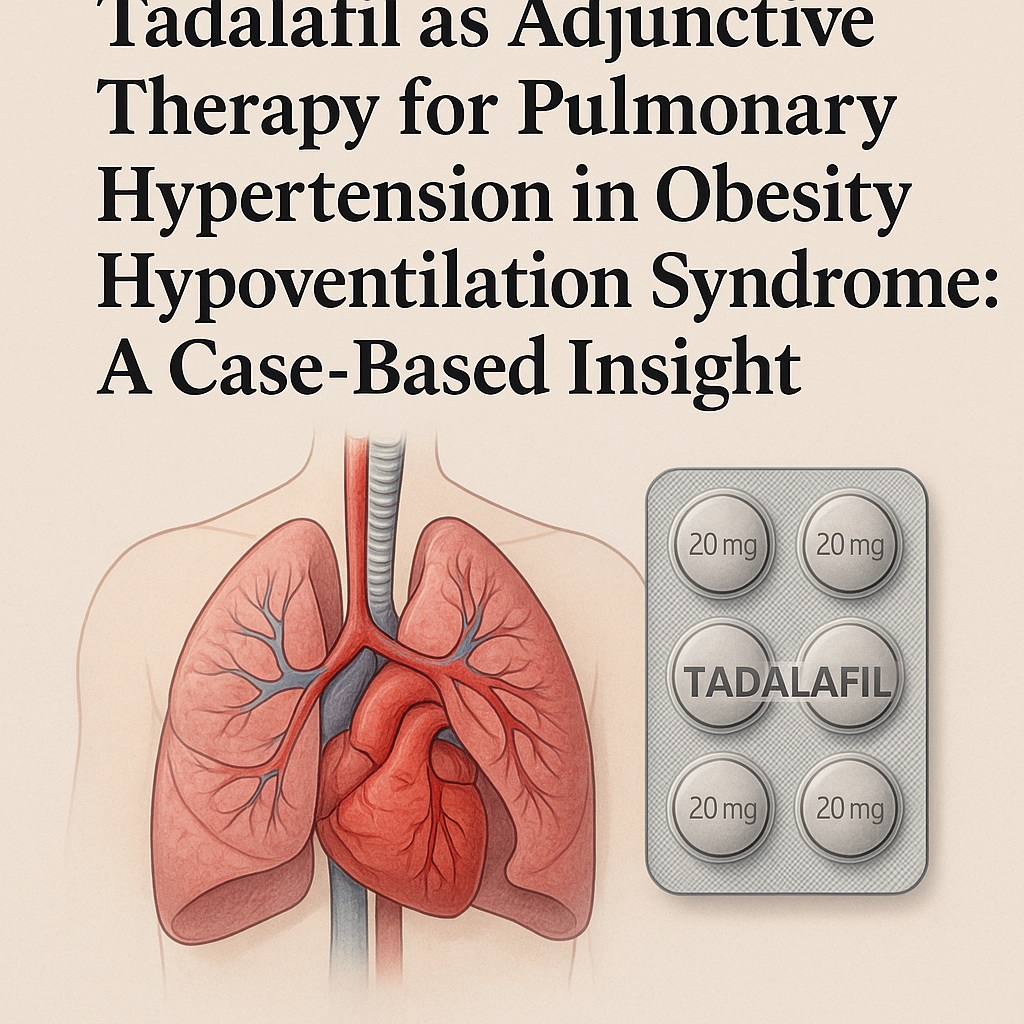
Introduction: Where Obesity Meets Hypoventilation and Pulmonary Stress
Obesity hypoventilation syndrome (OHS) represents a complex and multifaceted disorder that bridges the gap between metabolic dysfunction and respiratory failure. Defined by the triad of obesity (BMI ≥ 30 kg/m²), chronic daytime hypercapnia (PaCO₂ > 45 mmHg), and the absence of alternative causes of hypoventilation, OHS poses a unique clinical challenge. The condition is often accompanied by pulmonary hypertension (PH), a severe cardiovascular complication that significantly worsens prognosis and quality of life.
Traditionally, management of OHS focuses on weight reduction and noninvasive ventilation therapies, particularly bi-level positive airway pressure (BiPAP), which aim to reverse chronic hypoventilation and correct oxygen-carbon dioxide imbalances. However, in many cases, these interventions fail to sufficiently reduce pulmonary arterial pressures, necessitating adjunctive pharmacologic therapies.
One such emerging therapy is tadalafil, a long-acting phosphodiesterase type 5 (PDE5) inhibitor, originally developed for erectile dysfunction and later approved for pulmonary arterial hypertension (PAH). Its mechanism — enhancing the vasodilatory effects of nitric oxide (NO) by preventing cyclic guanosine monophosphate (cGMP) breakdown — offers a compelling pathophysiological rationale in the setting of OHS-associated PH.
The case presented by Katsuragi et al. (2011) in Journal of Cardiology Cases is particularly illustrative. It documents the successful application of tadalafil as adjunctive therapy in a patient with severe OHS-related PH, demonstrating marked hemodynamic improvement when added to standard therapy. This report offers a fascinating lens through which to explore the interplay between obesity, ventilation, and pulmonary vascular tone.
Pathophysiological Background: The Vicious Circle of Obesity and Pulmonary Hypertension
The pathogenesis of pulmonary hypertension in obesity hypoventilation syndrome is multifactorial, involving mechanical, metabolic, and vascular components. Excessive adipose tissue impairs thoracic compliance, reduces lung volumes, and increases upper airway resistance, creating a chronic state of hypoventilation. The resulting hypoxemia and hypercapnia trigger pulmonary vasoconstriction, endothelial dysfunction, and ultimately vascular remodeling.
At the molecular level, chronic hypoxia leads to downregulation of endothelial nitric oxide synthase (eNOS) and reduced bioavailability of nitric oxide (NO) — the body’s most potent endogenous vasodilator. The loss of NO signaling not only increases pulmonary vascular resistance but also promotes inflammation and thrombosis within the pulmonary circuit.
Furthermore, obesity is a pro-inflammatory state, characterized by elevated levels of interleukin-6 (IL-6), tumor necrosis factor-alpha (TNF-α), and leptin, all of which contribute to vascular dysfunction. These processes synergistically elevate pulmonary arterial pressures (PAP), often exceeding the compensatory capacity of the right ventricle and leading to right heart failure.
Thus, the introduction of a PDE5 inhibitor like tadalafil offers a targeted pharmacologic countermeasure — one that directly augments the NO–cGMP signaling pathway disrupted in OHS-associated PH.
Case Overview: When Conventional Therapy Isn’t Enough
The patient described in the report was a 76-year-old woman with a long-standing history of untreated obesity hypoventilation syndrome. Upon admission, she presented with daytime somnolence, lower limb edema, and signs of right heart failure. Her BMI was 38.6 kg/m², and arterial blood gas analysis revealed profound hypercapnia (PaCO₂ 86.5 mmHg) and respiratory acidosis (pH 7.19).
Initial management included:
- Bi-level positive airway pressure (BiPAP) with supplemental oxygen,
- Diuretics (furosemide 40 mg/day) to manage right heart failure,
- Anticoagulation (warfarin 3 mg/day),
- Antihypertensive and statin therapy for comorbid cardiovascular risk factors, and
- Calorie-restricted diet (1000 kcal/day) with supervised exercise for weight reduction.
After one month of therapy, her BMI decreased modestly (from 38.6 to 32.3), and arterial blood gases improved significantly, but right heart catheterization (RHC) confirmed persistent pulmonary hypertension, with mean PAP of 30 mmHg and pulmonary vascular resistance (PVR) of 168 dyn·s·cm⁻⁵.
At this point, the clinicians introduced tadalafil 40 mg daily as adjunctive therapy. Over the following two months, her clinical and hemodynamic parameters improved markedly:
- Mean PAP decreased from 30 to 21 mmHg,
- PVR dropped from 168 to 114 dyn·s·cm⁻⁵, and
- Systemic blood pressure fell modestly, reflecting peripheral vasodilatory effects.
By three months, the patient’s oxygenation improved, hypercapnia resolved (PaCO₂ 39.4 mmHg), and her weight decreased further to 68.5 kg (BMI 30.0). Importantly, these improvements occurred without adverse effects, and the patient remained clinically stable.
This outcome provided the first documented evidence of tadalafil’s therapeutic potential in OHS-related pulmonary hypertension — a domain previously uncharted in clinical literature.
Mechanism of Action: The Pulmonary Vascular Logic Behind Tadalafil
Tadalafil’s pharmacologic foundation lies in its inhibition of phosphodiesterase type 5, the enzyme responsible for degrading cGMP in vascular smooth muscle cells. By preserving cGMP, tadalafil amplifies the vasodilatory effect of nitric oxide, relaxing pulmonary arterial smooth muscle and reducing pulmonary vascular resistance.
In OHS-associated PH, this mechanism is particularly relevant because:
- Chronic hypoxia suppresses NO production,
- Endothelial dysfunction limits vasodilatory reserve, and
- Recurrent hypoventilation causes persistent vasoconstriction.
By restoring NO-mediated vasodilation, tadalafil counteracts these processes, improving oxygen delivery and cardiac output. Furthermore, its long half-life (~17.5 hours) allows once-daily dosing, maintaining steady vasodilatory tone and reducing fluctuations in pulmonary pressures — a pharmacokinetic advantage over shorter-acting PDE5 inhibitors.
Interestingly, the study also reported a 23 mmHg reduction in systemic systolic blood pressure, suggesting a broader vascular effect beyond the pulmonary circuit. This observation aligns with emerging evidence that tadalafil exerts anti-inflammatory and endothelial-protective effects, possibly through cGMP-dependent inhibition of leukocyte adhesion and oxidative stress.
Integrating Bi-Level Positive Airway Pressure and Tadalafil
The cornerstone of OHS management remains ventilatory support through noninvasive positive airway pressure (PAP) therapy. Bi-level PAP corrects alveolar hypoventilation by augmenting tidal volume, reducing carbon dioxide retention, and improving oxygenation. However, its impact on pulmonary vascular remodeling is limited.
When BiPAP and weight reduction alone fail to normalize pulmonary pressures, adjunctive pharmacotherapy becomes a logical extension. In this case, tadalafil acted synergistically with BiPAP — the former enhancing pulmonary vasodilation, the latter correcting hypoventilation.
Together, they addressed both sides of the pathophysiological equation:
- Mechanical correction (BiPAP reduced airway resistance and thoracic load),
- Vascular modulation (tadalafil improved endothelial function and reduced vasoconstriction).
This integrative approach led to a dramatic reduction in pulmonary pressures within three months, emphasizing the importance of a multimodal therapeutic strategy in complex respiratory-cardiovascular syndromes.
Clinical Implications: Expanding the Therapeutic Horizon
1. Tadalafil as a Pulmonary Therapeutic Tool
While initially designed for erectile dysfunction, tadalafil has proven efficacy in pulmonary arterial hypertension (PAH), supported by large randomized trials such as PHIRST (Pulmonary Hypertension and Sildenafil/Tadalafil Research Study). Its favorable pharmacokinetics — prolonged half-life and stable hemodynamic effect — make it particularly suitable for chronic management.
In OHS-associated PH, where intermittent hypoxia and hypercapnia drive vascular remodeling, tadalafil’s continuous effect provides a therapeutic buffer, stabilizing endothelial tone and preventing further progression of PH.
2. Overlapping Mechanisms with Sleep-Disordered Breathing
Patients with OHS often exhibit features of obstructive sleep apnea (OSA). Both conditions share intermittent hypoxia, which suppresses NO bioavailability. Previous studies have shown that continuous positive airway pressure (CPAP) therapy can restore circulating NO levels in OSA patients. Tadalafil may therefore act as a pharmacologic surrogate for persistent endothelial dysfunction, complementing the mechanical benefits of PAP therapy.
3. Potential Cardiometabolic Benefits
Beyond the pulmonary circuit, tadalafil’s systemic vasodilatory and metabolic effects may contribute to improved insulin sensitivity, enhanced peripheral perfusion, and attenuation of inflammatory markers — factors that collectively benefit obese patients with cardiometabolic disease.
Safety Considerations and Limitations
The safety profile of tadalafil is well-established across multiple therapeutic contexts. Common side effects — headache, flushing, dyspepsia, and nasal congestion — are generally mild and self-limited. In this case, no adverse reactions were reported, and the patient tolerated therapy well.
Nevertheless, caution remains essential in specific populations:
- Patients with severe systemic hypotension or nitrate therapy should avoid PDE5 inhibitors due to the risk of profound vasodilation.
- Renal and hepatic impairment may necessitate dose adjustments.
- The elderly and polypharmacy-exposed patients require close monitoring for drug interactions, particularly with antihypertensives.
From a methodological standpoint, this report represents a single-patient observation. While compelling, its findings must be interpreted cautiously. Controlled prospective studies are needed to validate tadalafil’s efficacy and define optimal dosing regimens in OHS-associated PH.
The Broader Context: PDE5 Inhibition Beyond Traditional Boundaries
The success of tadalafil in this context echoes a broader movement within cardiovascular and respiratory medicine — repurposing existing drugs based on shared pathophysiologic pathways. PDE5 inhibitors, once confined to sexual medicine, have demonstrated therapeutic potential across an expanding spectrum of diseases, including:
- Pulmonary arterial hypertension,
- Heart failure with preserved ejection fraction (HFpEF),
- Raynaud’s phenomenon, and
- Chronic mountain sickness.
Their dual action — vasodilation and endothelial protection — positions them uniquely within cardiopulmonary therapeutics. In OHS, where vascular dysfunction arises from systemic metabolic stress, tadalafil may bridge the gap between symptom control and vascular restoration.
Future Directions: Toward Evidence-Based Integration
This pioneering case invites several avenues for future research. Key questions include:
- Can tadalafil improve long-term survival or right ventricular function in OHS-associated PH?
- What is the optimal combination strategy with PAP therapy and weight reduction?
- Could biomarkers of endothelial function (e.g., circulating NO metabolites, endothelin-1) guide treatment selection?
Prospective trials integrating hemodynamic assessment (via RHC) with sleep studies and metabolic profiling could yield valuable insights. Furthermore, leveraging digital monitoring technologies — including wearable oximetry and telemedicine-based adherence tracking — may facilitate larger-scale evaluation in real-world settings.
Ultimately, a multidisciplinary approach involving cardiology, pulmonology, and metabolic medicine will be essential to refine and expand this therapeutic paradigm.
Conclusion: Rethinking Pulmonary Hypertension in Obesity Hypoventilation
This case underscores a critical insight: in complex syndromes like OHS, success often lies not in singular interventions but in strategic combination therapy. Tadalafil, when added to BiPAP and lifestyle modification, produced striking hemodynamic improvement in an elderly patient previously unresponsive to standard care.
Mechanistically, the drug restored the delicate balance of pulmonary vascular tone through sustained enhancement of nitric oxide–mediated vasodilation, addressing a root cause of OHS-related PH. The findings highlight a paradigm shift — from viewing pulmonary hypertension as an irreversible consequence of obesity to seeing it as a modifiable vascular dysfunction responsive to tailored intervention.
As medicine moves toward individualized and mechanism-based therapy, tadalafil’s role in obesity-related pulmonary hypertension deserves deeper exploration. It is a reminder that even well-known molecules can yield novel benefits when applied with scientific imagination and clinical precision.
FAQ
1. Why was tadalafil chosen for this patient’s pulmonary hypertension?
Tadalafil was selected because it enhances nitric oxide–mediated vasodilation by inhibiting PDE5. In obesity hypoventilation syndrome, chronic hypoxia reduces NO availability, leading to pulmonary vasoconstriction. Tadalafil helps reverse this process, improving hemodynamics and oxygenation.
2. Can tadalafil replace BiPAP therapy in OHS management?
No. Tadalafil should be viewed as an adjunct, not a substitute. BiPAP remains the cornerstone of therapy, correcting hypoventilation and improving gas exchange. Tadalafil complements this by targeting pulmonary vascular tone.
3. Is tadalafil safe for long-term use in elderly patients with obesity?
In general, yes — when appropriately monitored. It has a favorable safety profile, but clinicians should be cautious with co-administered antihypertensives, nitrates, or severe hepatic/renal dysfunction. Regular follow-up and hemodynamic monitoring are advised.
