

Introduction
Chemotherapy remains one of the most powerful weapons against malignancy, yet its therapeutic success is often undermined by collateral damage. Among the most distressing adverse effects is oxaliplatin-induced peripheral neuropathy (OIPN), a condition that erodes patients’ quality of life and sometimes dictates premature discontinuation of life-saving therapy. Up to 90% of patients exposed to oxaliplatin experience acute neuropathic symptoms, most prominently cold hypersensitivity, while nearly half develop a cumulative form of neuropathy characterized by numbness, dysesthesia, and pain in distal extremities.
Despite decades of research, effective strategies to prevent OIPN remain elusive. Analgesics and neuropathic pain drugs offer partial relief, but none prevent the progression of sensory dysfunction or axonal damage. This frustrating therapeutic gap has led researchers to revisit a fundamental question: is neuropathy simply a direct consequence of neurotoxic injury, or is it at least partly vascular in nature?
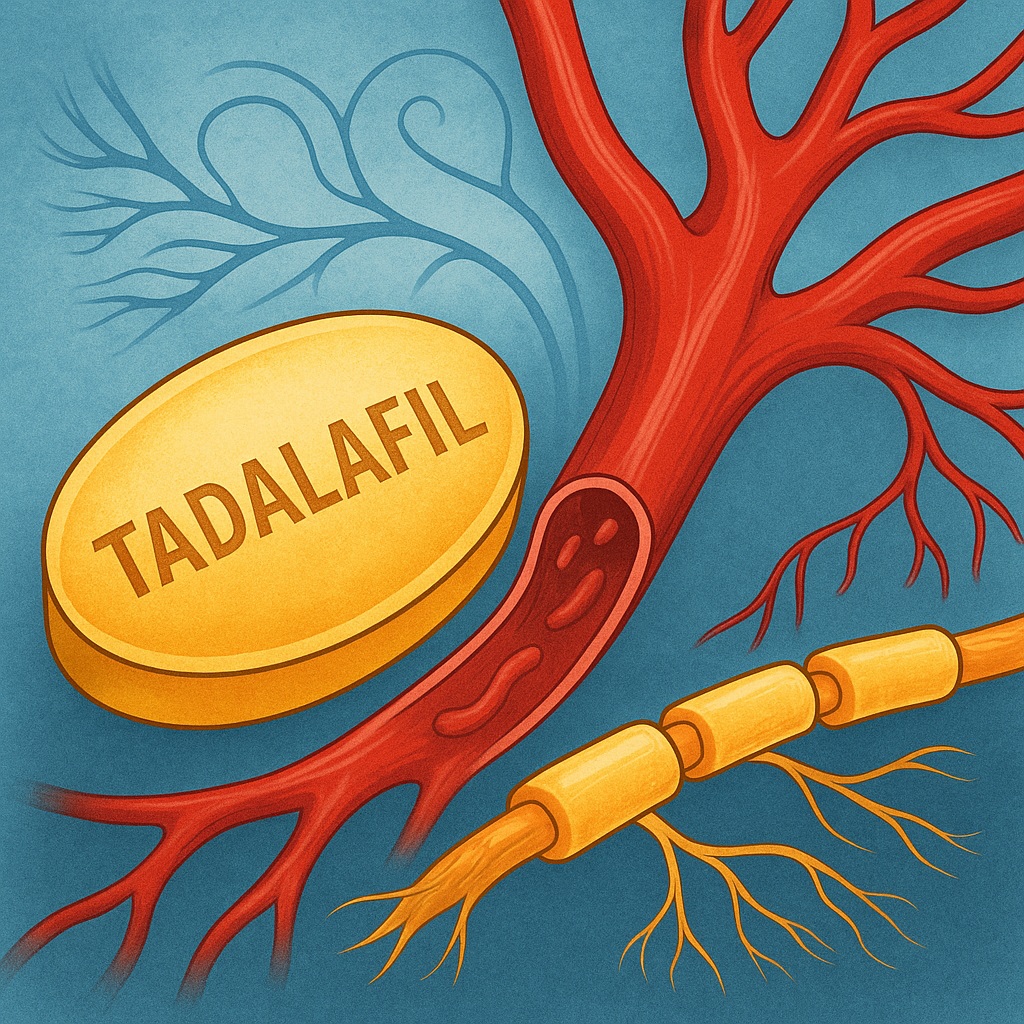
Emerging evidence suggests that peripheral vascular impairment contributes significantly to neuropathic development. Reduced microcirculation, endothelial dysfunction, and resultant perineural hypoxia precede and exacerbate nerve injury. Within this framework, vasodilators such as phosphodiesterase type 5 (PDE5) inhibitors become intriguing candidates. The study under review examined tadalafil, a PDE5 inhibitor better known for treating erectile dysfunction, as a potential preventive therapy for OIPN.
Acute Effects of Tadalafil in Oxaliplatin-Treated Mice
The experimental design initially evaluated whether a single administration of vasodilators could alleviate acute neuropathic symptoms induced by oxaliplatin. Mice received weekly oxaliplatin injections and were tested for cold hypersensitivity and blood flow reduction.
Tadalafil, alongside other vasodilators such as limaprost and bosentan, significantly restored blood flow in the hindpaws of oxaliplatin-treated mice. This effect was rapid, measurable within one hour of administration. Interestingly, tadalafil also alleviated cold hypersensitivity, a hallmark symptom of oxaliplatin exposure. Mice demonstrated fewer licking and shaking responses to acetone application, an established behavioral marker of cold discomfort.
However, tadalafil showed no immediate benefit for mechanical hypersensitivity, as measured by von Frey filaments. This discrepancy underscores the complex interplay of neuropathic mechanisms: while cold sensitivity appears linked to vascular dysfunction and hypoxia-induced TRPA1 sensitization, mechanical hypersensitivity likely involves direct neuronal excitability changes less amenable to short-term vasodilation.
In sum, the acute phase experiments suggest that tadalafil exerts partial but meaningful symptomatic relief, particularly against cold-induced neuropathic behavior.
Long-Term Administration: Preserving Blood Flow and Nerve Function
The true potential of tadalafil was revealed in the long-term administration model, where mice were fed chow containing tadalafil for the entire 8-week course of oxaliplatin treatment.
Oxaliplatin caused a progressive decline in skin blood flow and surface temperature of the hindpaw. This was paralleled by worsening cold hypersensitivity, reduced withdrawal thresholds to mechanical stimuli, increased current sensitivity across C, Ad, and Ab fibers, and eventually thermal hypoesthesia. Taken together, these symptoms reflect the gradual onset of cumulative OIPN.
Remarkably, long-term tadalafil administration prevented or attenuated all of these abnormalities. The drug sustained peripheral circulation, preserved skin warmth, and significantly reduced behavioral markers of neuropathy. Importantly, these benefits occurred without altering oxaliplatin’s pharmacokinetics: platinum concentrations in blood, sciatic nerves, and dorsal root ganglia remained unchanged. This finding alleviates a common concern that vasodilators might alter drug distribution or reduce anticancer efficacy.
From a mechanistic standpoint, tadalafil’s sustained vascular support appears critical. Continuous microcirculatory protection may counteract hypoxia-driven sensitization of nociceptors and prevent the cascade leading to central sensitization, a key driver of chronic pain states.
Protection of Nerve Conduction and Microvascular Integrity
Neuropathy is more than abnormal sensations; it reflects tangible structural and functional injury to peripheral nerves. Oxaliplatin reduced sensory nerve conduction velocity (NCV) in the mouse tail, consistent with clinical findings in patients. Strikingly, tadalafil preserved sensory NCV, preventing one of the most debilitating hallmarks of cumulative OIPN.
Histological analysis reinforced these functional data. Immunohistochemistry revealed that oxaliplatin significantly reduced the density of endoneurial microvessels in sciatic nerves. Tadalafil preserved these vessels, maintaining microvascular density comparable to controls.
Electron microscopy added another layer of evidence: oxaliplatin induced axonal degeneration, with distorted and fragmented myelinated fibers. Long-term tadalafil mitigated these changes, maintaining healthier axonal morphology. These findings suggest that tadalafil’s benefit is not merely symptomatic but extends to structural preservation of neural integrity.
No Interference with Antitumor Activity
A legitimate concern when introducing supportive therapies in oncology is whether they compromise the efficacy of chemotherapy. To address this, in vitro experiments were conducted on human colorectal and gastric cancer cell lines.
Tadalafil, even at concentrations up to 10 μM, did not impair the cytotoxicity of oxaliplatin. Cancer cell viability remained unaffected when tadalafil was co-administered. Thus, tadalafil’s protective vascular effects appear to be selectively beneficial for peripheral nerves without shielding cancer cells from chemotherapy.
This distinction is crucial: a neuroprotective agent that compromises oncologic efficacy would be clinically unacceptable. By contrast, tadalafil seems to offer a safe adjunctive strategy.
Mechanistic Insights: Linking Vascular Function and Neuropathy
The study’s findings reinforce a central concept: neuropathy is not solely neuronal but neurovascular in origin. Endoneurial hypoxia, triggered by reduced microcirculation, leads to oxidative stress, ion channel dysregulation, and ultimately axonal degeneration.
Oxaliplatin-induced cold hypersensitivity appears mediated by oxalate metabolites sensitizing TRPA1 receptors. Yet the persistence and worsening of symptoms over weeks align with cumulative vascular impairment. By preserving microvascular flow, tadalafil likely prevents hypoxia-induced sensitization, reduces oxidative stress, and maintains nutrient supply to axons.
Furthermore, the cyclical relationship between oxidative stress and vascular injury may be interrupted by tadalafil. By stabilizing microcirculation, it may blunt the vicious feedback loop of ischemia, hypoxia, and progressive nerve damage.
This mechanistic rationale positions PDE5 inhibitors as disease-modifying agents rather than mere analgesics. While duloxetine or gabapentinoids reduce pain perception, they do not halt the structural progression of neuropathy. Tadalafil, in contrast, may actively preserve neural health.
Translational Challenges and Clinical Implications
Despite the compelling preclinical evidence, several hurdles remain before tadalafil can be recommended for clinical use against OIPN.
First, the animal model, while rigorous, may not capture the full spectrum of human neuropathic experience. For example, mice required relatively high oxaliplatin doses to develop thermal hypoesthesia and axonal degeneration, which may not directly translate to clinical regimens.
Second, vascular modulation during chemotherapy requires careful timing. Increasing blood flow during peak plasma concentrations of oxaliplatin could theoretically enhance drug distribution to peripheral nerves, potentially worsening toxicity. Thus, scheduling tadalafil away from infusion windows may be necessary.
Third, clinical trials would need to establish optimal dosing. The mouse model used a chow concentration equivalent to continuous exposure. In humans, tadalafil’s long half-life might simplify administration, but the balance between efficacy and tolerability must be carefully assessed.
Nevertheless, the implications are promising. If PDE5 inhibitors can be safely integrated into chemotherapy protocols, patients may retain both oncologic outcomes and neurological quality of life. Given that tadalafil is already an approved and well-characterized drug, repurposing it for OIPN could accelerate translation compared to developing novel neuroprotectants from scratch.
Future Research Directions
Several avenues deserve exploration:
- Clinical trials: Randomized studies in colorectal cancer patients receiving oxaliplatin should test tadalafil’s preventive efficacy on neuropathy outcomes. Endpoints must include both patient-reported symptoms and objective measures such as nerve conduction studies.
- Mechanistic biomarkers: Assessing circulating markers of endothelial injury and oxidative stress may clarify whether tadalafil’s benefit stems from vascular protection, direct neuronal effects, or both.
- Combination therapies: Tadalafil could be tested alongside established neuropathic pain agents such as duloxetine, exploring whether dual strategies provide additive or synergistic protection.
- Oncology-specific pharmacodynamics: Studies should confirm that long-term tadalafil use does not alter oxaliplatin distribution in tumor-bearing models. While in vitro safety was demonstrated, in vivo tumor pharmacokinetics may differ.
Ultimately, the question is not whether OIPN can be reduced, but whether it can be prevented without sacrificing oncologic efficacy. Tadalafil represents one of the most promising candidates to date.
Conclusion
Oxaliplatin-induced peripheral neuropathy remains a formidable clinical challenge, undermining chemotherapy success and patient well-being. The study under review provides strong preclinical evidence that tadalafil, through preservation of peripheral vascular integrity, prevents both functional and structural hallmarks of neuropathy. Unlike symptomatic agents, tadalafil demonstrates the potential to modify disease progression, protecting nerve conduction, axonal architecture, and microvascular density.
Importantly, these benefits occur without reducing oxaliplatin’s cytotoxic efficacy, preserving its antitumor potential. While clinical translation requires caution and rigorous testing, the concept of vascular protection as a therapeutic strategy against neuropathy is both biologically plausible and clinically urgent.
If validated in human trials, tadalafil may one day serve a dual purpose: restoring intimacy for some, and preserving sensation and independence for cancer patients navigating chemotherapy. Few drugs can claim such diverse and meaningful contributions to quality of life.
FAQ
1. Does tadalafil interfere with the anticancer effects of oxaliplatin?
No. In vitro studies on human colorectal and gastric cancer cell lines showed that tadalafil did not alter the cytotoxicity of oxaliplatin. Its protective effects appear limited to peripheral nerves without reducing antitumor efficacy.
2. Can tadalafil completely prevent chemotherapy-induced neuropathy?
In animal models, long-term tadalafil prevented or significantly reduced most neuropathic symptoms, including cold hypersensitivity, mechanical hypersensitivity, and conduction deficits. However, whether it can completely prevent neuropathy in humans remains to be determined through clinical trials.
3. Is tadalafil already recommended for patients receiving oxaliplatin?
Not yet. The current evidence is preclinical. While tadalafil is widely used for other conditions, its use in chemotherapy patients should only occur within clinical trial settings until safety, dosing, and efficacy are confirmed in humans.
