

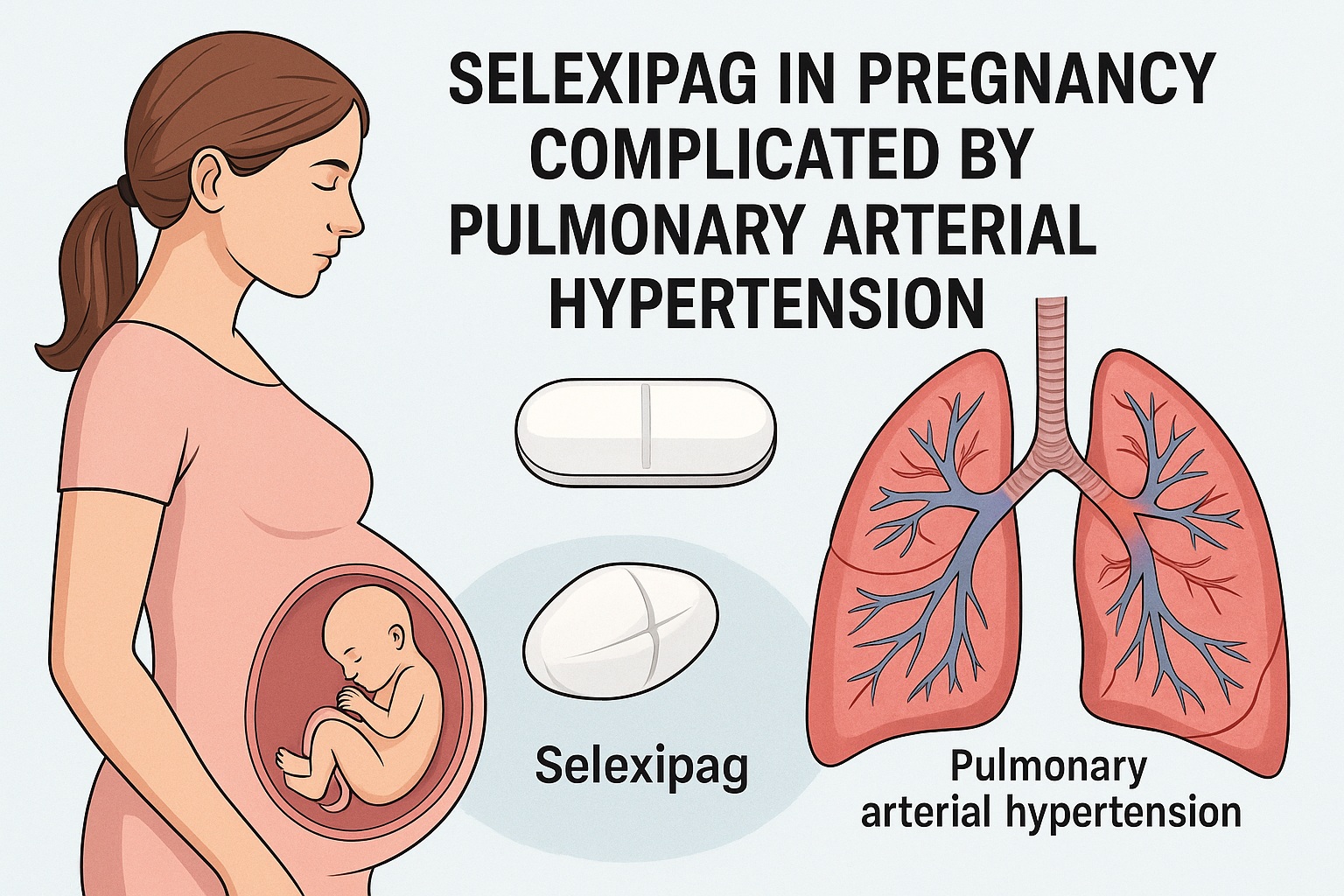
Pulmonary arterial hypertension (PAH) has long existed as one of the final frontiers of cardiovascular medicine where pregnancy is concerned. Historically regarded as a nearly absolute contraindication, PAH dramatically elevates maternal and fetal risks due to the physiologic demands of gestation that even healthy cardiopulmonary systems struggle to accommodate. For decades, the medical community approached such pregnancies with a mixture of trepidation and resignation: a sense that physiology leaves little room for negotiation. Yet case-based experience and evolving therapeutic availability challenge the notion that pregnancy in patients with PAH must always end in unavoidable catastrophe.
The case described within the cited report offers a compelling lens through which to reconsider modern management decisions. It details the journey of a 30-year-old woman with severe PAH, an unrepaired atrial septal defect (ASD), and a history of previous counseling toward pregnancy termination who chose to continue with her second pregnancy. Her clinical course, including the introduction of selexipag—a prostacyclin receptor agonist with limited pregnancy data—invites deeper reflection on where evidence ends and clinical judgment begins. Through this discussion, we explore how selexipag may serve as an adjunctive tool in cases where conventional therapies reach their limitations, particularly in resource-constrained environments.
This article synthesizes the scientific rationale, clinical implications, pharmacologic considerations, and broader lessons embedded within this case. While the landscape of pregnancy and PAH remains treacherous, the experience raises a question worth contemplating: When evidence is sparse but clinical need is urgent, how does one balance innovation with prudence?
Understanding the Intersection of Pregnancy Physiology and Pulmonary Arterial Hypertension
Pregnancy induces a profound set of hemodynamic transformations designed to support fetal development. Blood volume increases by nearly 40%, systemic vascular resistance decreases, cardiac output rises by 30–50%, and oxygen demand steadily expands throughout gestation. In a healthy cardiopulmonary system, these shifts are well tolerated due to flexible vascular responsiveness and adaptive right ventricular function. In PAH, however, the pulmonary vasculature lacks the capacity to dilate appropriately, and the right ventricle operates under constant strain.
This physiologic mismatch is not subtle; it becomes most apparent in the second and third trimesters when the expanding uterus imposes mechanical effects on the diaphragm, further influencing intrathoracic pressure dynamics. In PAH patients, even a small increase in pulmonary vascular resistance (PVR) or a minor reduction in oxygen saturation can destabilize right ventricular compensation. Page 1 of the PDF highlights that this patient already demonstrated severe PAH, preserved right ventricular function, and WHO functional class II status in early pregnancy—conditions that can shift rapidly as circulating volume expands. The case underscores this trajectory: between weeks 26 and 28, the patient’s NT-pro-BNP (a biomarker of right ventricular strain) rose precipitously, illustrated in Figure 1 on page 2, while her oxygen saturation declined from 96% to 92%.
These laboratory and clinical trends represent the earliest signals of impending decompensation. For clinicians, such movement in NT-pro-BNP and TAPSE (shown in Figure 2) is often a prelude to a pulmonary vascular crisis. Pregnancy thus transforms PAH management into a race against physiology—a race this patient momentarily seemed poised to lose before therapeutic escalation altered the trajectory.
The underlying lesson is clear: in PAH, pregnancy does not merely “worsen symptoms.” It systematically dismantles compensatory mechanisms one trimester at a time. This predictable deterioration forms the basis of traditional guidance discouraging pregnancy in women with PAH, an approach supported by European Society of Cardiology (ESC) and Pulmonary Vascular Research Institute (PVRI) recommendations cited within the article.
Therapeutic Constraints: What We Can and Cannot Use in Pregnancy
Management of PAH in pregnancy presents an unusual paradox. The condition is dangerous precisely because of inadequate vasodilatory reserve, yet many of the most potent pulmonary vasodilators are contraindicated due to teratogenic risk. The article highlights several key therapeutic boundaries:
- Endothelin receptor antagonists (ERAs) such as ambrisentan—effective but contraindicated due to teratogenicity.
- Soluble guanylate cyclase stimulators (riociguat)—also contraindicated.
- Calcium channel blockers—only appropriate in a rare subset of vasoreactive patients with preserved right ventricular function.
This leaves phosphodiesterase-5 inhibitors (PDE5i), such as tadalafil, as the primary medical therapy. In the case described, the patient had been managed chronically with a combination of tadalafil and ambrisentan before pregnancy. Upon self-discontinuation of ambrisentan—which she recognized as teratogenic—she continued tadalafil monotherapy into early gestation. For several weeks, this appeared adequate as her functional status remained favorable.
However, pregnancy physiology inevitably outpaced the therapeutic power of PDE5 inhibition alone. When biomarkers signaled right ventricular strain and oxygenation began to decline, the clinicians faced a familiar dilemma: what next? Inhaled or intravenous prostaglandins, which could provide potent vasodilation, were unavailable in their resource-limited setting. The medical team needed an alternative that was effective, accessible, safe enough to contemplate in pregnancy, and administrable without specialized infusion devices.
Here enters selexipag, a prostacyclin IP receptor agonist approved for PAH but with extremely limited pregnancy data. Animal studies indicate no teratogenic risk, though humans—of course—are rarely so cooperative. Yet in settings where options thin to a dangerous thread, clinicians must sometimes ask: “Is absence of data equivalent to evidence of harm?” The decision to introduce selexipag at 28 weeks was therefore both bold and clinically rational.
Notably, the introduction of selexipag coincided with stabilizing NT-pro-BNP levels and recovery of oxygen saturation. While causation cannot be conclusively proven from a single case, the temporal association offers a compelling argument for therapeutic benefit.
Selexipag: Pharmacologic Rationale and Clinical Interpretation
Selexipag acts as a selective, nonprostanoid agonist of the prostacyclin IP receptor. This receptor, when activated, triggers G-protein–mediated increases in cyclic AMP, resulting in vasodilation of smooth muscle within the pulmonary circulation. Unlike traditional prostacyclin analogues, selexipag is orally available—a substantial advantage for long-term outpatient use or for pregnant patients where infusion therapies may pose substantial logistical challenges.
The article notes that selexipag was titrated from 200 mcg twice daily to 1000 mcg twice daily over a month—a dose range consistent with standard PAH management guidelines outside pregnancy. The patient tolerated this titration without adverse effects, an important detail that addresses concerns of prostacyclin-associated side effects such as jaw pain, flushing, headache, or gastrointestinal upset.
Clinical markers provided supportive feedback:
- NT-pro-BNP levels declined after rising dangerously by week 26.
- TAPSE stabilized, reflecting preserved right ventricular contractile function.
- Oxygen saturation improved from 92% to 95%.
One should resist the temptation to romanticize the drug as a miracle therapy. Instead, the more measured interpretation is this: selexipag expanded the physiological buffer long enough to safely prolong the pregnancy by six weeks, culminating in a controlled delivery at 34 weeks. Considering the maternal mortality historically associated with PAH in pregnancy, extending gestation by even a few weeks can dramatically improve neonatal outcomes.
The newborn’s cleft lip and palate, identified on early fetal ultrasound, was unlikely to be drug-related, as the authors appropriately explain; selexipag was introduced well after organogenesis.
Thus, selexipag’s role in this scenario is best described as a “bridge therapy”—a supportive vasodilator that allowed maternal physiology to keep pace with gestational demands. The postpartum course was not without complication, but the patient recovered fully by postpartum day three, reinforcing that right ventricular vulnerability persists after delivery when fluid shifts are most dramatic.
The Delivery Decision: When Timing Becomes Critical
Delivery in women with PAH occupies an uncomfortable intersection of anesthesiology, cardiology, obstetrics, and critical care. Cesarean section is often preferred due to the ability to better control hemodynamic fluctuations, though this decision must be individualized. In this case, elective cesarean delivery at 34 weeks under epidural anesthesia provided a controlled environment, avoiding the abrupt preload and afterload changes triggered by general anesthesia.
The interdisciplinary coordination detailed in the report is notable. Such pregnancies demand intensive surveillance not only intrapartum but across the entire postpartum period, during which residual hemodynamic stress persists. The postpartum deterioration—falling oxygen saturation, rising biomarkers, and transient right ventricular dysfunction—is a stark reminder that the hemodynamic challenge does not end when the placenta is delivered. Fluid shifts, hormonal changes, and systemic vasodilation during early postpartum days can destabilize even previously compensated patients.
In this case, early recognition and initiation of inotropic support prevented clinical deterioration. After six days of ICU care and gradual recovery, the patient transitioned to the ward and later home with stabilized parameters. The baby, though preterm, had an uneventful course.
The multidisciplinary success of this delivery illustrates a broader principle: pregnancy in PAH remains high-risk but not uniformly fatal when managed intensively, collaboratively, and with individualized therapy.
Lessons for Clinical Practice: Evidence, Gaps, and Responsible Innovation
Although this case portrays selexipag as a potentially valuable adjunctive therapy, it also underscores the limitations of current knowledge. The literature contains only sparse human pregnancy experience with selexipag. The report responsibly emphasizes that the drug should not be broadly adopted for routine pregnancy management in PAH. Instead, it may serve as an option in rare and specific scenarios:
- where first-line therapies are insufficient,
- where prostacyclin infusion therapies are unavailable,
- where right ventricular deterioration is emerging, and
- where maternal autonomy favors continuation of pregnancy despite high risk.
While the absence of teratogenicity in animal studies is reassuring, we must remain cautious. Pregnancy pharmacotherapy depends as much on maternal hemodynamics as on fetal safety, and data scarcity is not a suitable substitute for safety assurance.
This case also reveals a broader reality: PAH in pregnancy is one of the clearest examples of personalized medicine in modern cardiology. No guideline can capture the full nuance required for decisions that must balance maternal survival, fetal maturity, resource limitations, pharmacologic constraints, and ethical considerations.
Ultimately, the clinicians in this case achieved the difficult equilibrium between scientific caution and therapeutic necessity. Their experience contributes meaningful observational data to an area where randomized trials are neither ethical nor feasible.
Conclusion
The management of pulmonary arterial hypertension in pregnancy remains one of the most formidable challenges in cardiovascular and obstetric medicine. This case, however, presents a cautiously optimistic narrative. The introduction of selexipag as an add-on therapy during late pregnancy appeared to stabilize maternal hemodynamics, improve right ventricular function, and prolong gestation long enough to achieve a favorable neonatal outcome.
While selexipag is far from becoming a standard therapy in pregnant women with PAH, the experience suggests it may be a viable option in rare and carefully selected cases, especially in environments where more established prostacyclin therapies are unavailable. It also reinforces the importance of multidisciplinary care, continuous biomarker surveillance, physiologic understanding, and individualized decision-making.
Selexipag’s role, for now, sits at the edge of medical evidence—but in PAH and pregnancy, even the edges can be lifesaving.
FAQ
1. Is selexipag safe to use during pregnancy?
Data are extremely limited. Animal studies show no teratogenicity, and isolated human case reports—including the one summarized here—suggest potential safety when used late in pregnancy. However, it is not approved for pregnancy, and its use should be considered only in exceptional, carefully supervised situations.
2. Why is pregnancy so dangerous for women with pulmonary arterial hypertension?
Pregnancy creates a dramatic increase in blood volume and cardiac output. In PAH, the pulmonary vasculature cannot adapt, causing right ventricular overload. This can rapidly lead to heart failure, decreased oxygenation, and potentially maternal death if inadequately managed.
3. Why not use standard prostacyclin infusions instead of selexipag?
In many regions, intravenous or inhaled prostaglandins are either unavailable or require specialized infrastructure. Selexipag provides oral access to the prostacyclin pathway. While less potent, it offers a pragmatic alternative where other therapies are not feasible.
