

Introduction
Benign prostatic hyperplasia (BPH) is the quiet saboteur of middle age. For millions of men worldwide, it is not merely an anatomical enlargement of the prostate but a chronic, quality-of-life–eroding condition that transforms something as mundane as urination into a daily ordeal. The classic symptoms—hesitancy, weak stream, nocturia, and incomplete emptying—are familiar to every urologist and, unfortunately, to many of their patients.
While benign by name, BPH is far from harmless. Left unmanaged, it may lead to recurrent urinary tract infections, bladder dysfunction, and even renal impairment. The modern therapeutic landscape offers two primary pharmacologic approaches: α1-adrenergic receptor antagonists (like tamsulosin) and phosphodiesterase type 5 inhibitors (PDE5Is, such as tadalafil).
Traditionally, α1-blockers have dominated the field due to their rapid onset and proven efficacy in relaxing smooth muscle tone within the bladder neck and prostate. However, their effect on sexual function has always been ambivalent at best. In contrast, PDE5 inhibitors—originally developed for erectile dysfunction—have gradually emerged as dual-purpose agents, improving both lower urinary tract symptoms (LUTS) and erectile performance.
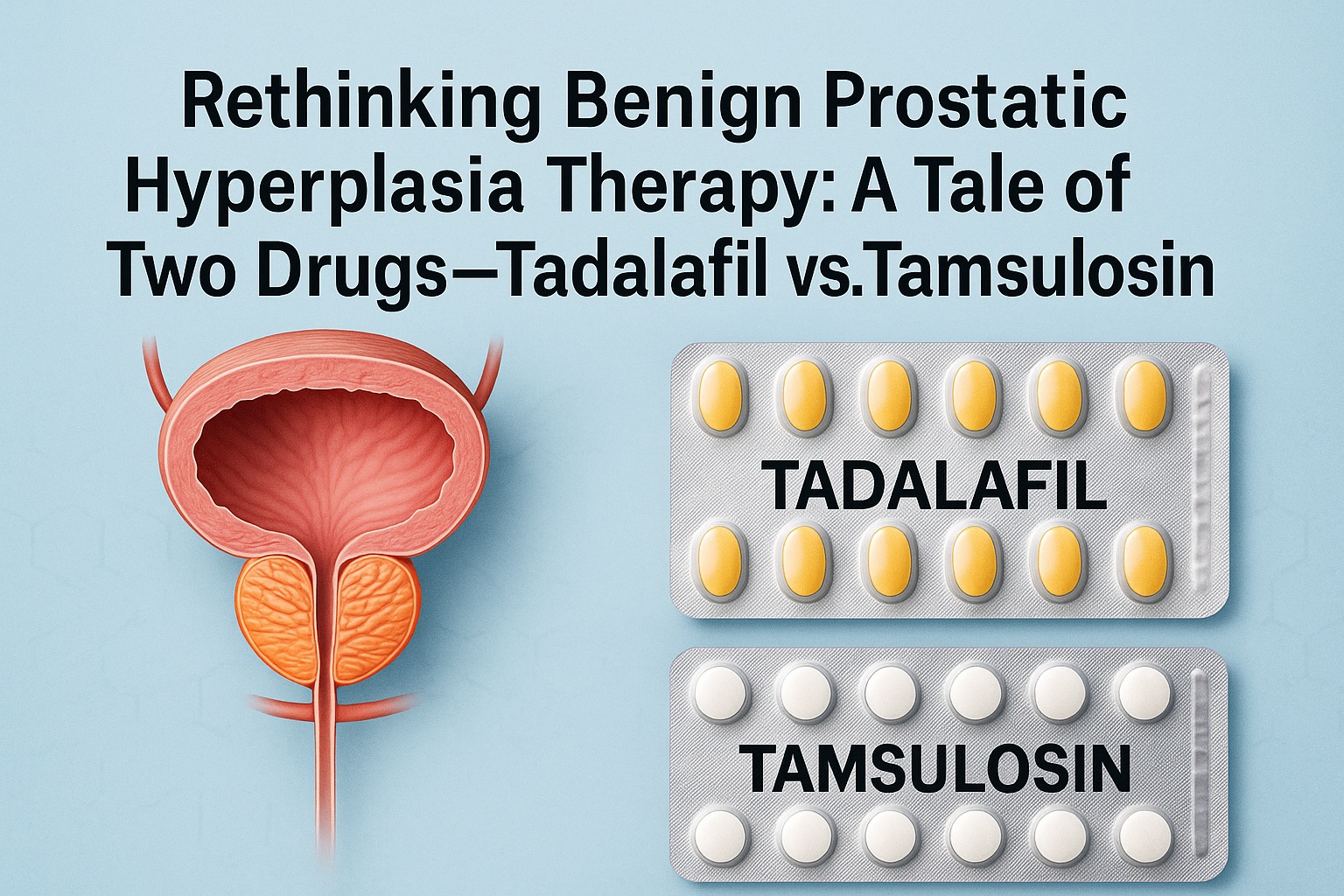
A 2024 study by Fawzi et al. from Iraq’s Al-Mustafa University College undertook a head-to-head comparison of these two pharmacologic powerhouses. It sought to answer a deceptively simple question: If we treat moderate-to-severe BPH for six months, which monotherapy offers the best balance between urological relief and sexual vitality—tamsulosin or tadalafil?
The answer, as it turns out, is nuanced, intriguing, and clinically relevant.
Understanding the Pathophysiology: Why the Prostate Misbehaves
To understand why both tamsulosin and tadalafil can improve BPH symptoms, one must first revisit the complex interplay of factors that drive the condition. BPH is not simply a matter of prostate enlargement—it’s a blend of static and dynamic components.
The static component stems from hyperplasia of stromal and epithelial cells within the transitional zone, leading to mechanical compression of the urethra. The dynamic component, equally significant, arises from increased smooth muscle tone mediated by α1-adrenergic receptors in the prostate and bladder neck.
Herein lies the pharmacologic logic. Tamsulosin targets this adrenergic overactivity, relaxing smooth muscle and improving urinary flow. It is quick, efficient, and well-tolerated. Yet it acts solely on symptoms, not the pathophysiology of vascular or hormonal imbalance.
Tadalafil, on the other hand, operates through a different biochemical lens. By inhibiting phosphodiesterase type 5 (PDE5), it enhances cyclic guanosine monophosphate (cGMP) signaling, leading to smooth muscle relaxation not only in the corpora cavernosa but also in the prostate, bladder neck, and detrusor. Moreover, PDE5 inhibition may improve microvascular perfusion, reduce inflammation, and restore oxygenation to lower urinary tract tissues—all key in long-term symptom control.
In essence, tamsulosin treats the mechanics; tadalafil nurtures the biology.
Study Design and Methodology
The study by Fawzi and colleagues employed a retrospective case–control design involving 100 men aged 45 years or older with moderate-to-severe BPH, diagnosed according to the European Association of Urology (EAU) guidelines. Patients were divided equally into two treatment arms:
- Group A: Tamsulosin 0.4 mg daily
- Group B: Tadalafil 5 mg daily
Treatment continued for six months, the longest monotherapy follow-up to date using this dose of tadalafil. Urological assessments were performed at baseline, 3 months, and 6 months.
Parameters included:
- International Prostate Symptom Score (IPSS) – for LUTS severity.
- Prostate-Specific Antigen (PSA) – as a marker of prostate health.
- Postvoid Residual (PVR) volume and prostatic volume – measured by ultrasound.
- International Index of Erectile Function (IIEF) and number of monthly intercourses – to assess sexual performance.
Statistical analysis employed two-way ANOVA and post hoc Bonferroni testing, ensuring robust comparisons across time points. Ethical approval was secured (Code A321, October 2023), and all participants provided written consent.
The design was elegant in its simplicity: two drugs, identical follow-up, clearly defined outcomes. It addressed not only urinary function but the holistic well-being of men—something too often neglected in urological trials.
Results: What the Data Revealed
Symptom Relief and Functional Outcomes
At first glance, both drugs performed admirably. Over six months, IPSS scores declined significantly in both groups, confirming that both tamsulosin and tadalafil effectively reduced urinary symptoms. However, the statistical comparison revealed no significant difference between the two by the end of the trial (p = 0.448).
This finding is both reassuring and provocative. It demonstrates that tadalafil—long pigeonholed as a sexual medicine—can stand shoulder-to-shoulder with the urologist’s long-time ally, tamsulosin, in alleviating LUTS.
Prostate Size and Residual Volume
Measurements of PSA, PVR, and prostate volume showed comparable results between both groups, with no statistically significant differences. This aligns with previous meta-analyses showing that while both agents improve functional outcomes, neither induces significant anatomical regression of the gland over such a timeframe.
The Sexual Function Dimension
Here lies tadalafil’s decisive advantage. The number of monthly intercourses increased dramatically in the tadalafil group—from an average of 4.2 at baseline to 21.4 after six months (p < 0.001). In contrast, tamsulosin-treated patients remained essentially static (around 3.7).
In a domain where quality of life transcends numeric scores, this distinction is clinically meaningful. Many men view erectile capacity not as luxury but as an integral component of masculinity and health. The capacity of tadalafil to address both urinary and sexual domains positions it uniquely as a “dual benefit” therapy.
Discussion: More Than Numbers — A Shift in Therapeutic Philosophy
The study’s findings resonate with a growing body of evidence challenging the conventional hierarchy of BPH treatments. Historically, α1-blockers were the first line, with PDE5 inhibitors relegated to adjunctive use for patients with comorbid erectile dysfunction. Yet accumulating data suggest that tadalafil’s effects are not secondary—they are systemic, multifactorial, and potentially disease-modifying.
Mechanistic Insights
Tadalafil’s efficacy in LUTS likely extends beyond smooth muscle relaxation. By improving pelvic vascular perfusion, it may enhance oxygen delivery to hypoxic prostate tissue, reducing oxidative stress and inflammation—two underappreciated drivers of hyperplasia. Furthermore, tadalafil’s anti-inflammatory properties (via NF-κB inhibition) and endothelial restoration may contribute to long-term benefits unseen in short-term α-blocker therapy.
Clinical Context
From a patient-centered perspective, tadalafil’s advantage becomes clear when one considers the psychosexual dimension. BPH and erectile dysfunction often coexist, sharing vascular and neurogenic etiologies. Treating one without the other leaves half the problem unsolved. By offering simultaneous relief, tadalafil may enhance adherence, satisfaction, and overall wellness.
Comparative Literature
Fawzi et al.’s results echo prior randomized controlled trials (RCTs) from Iran and India, as well as a 2020 meta-analysis by Guo et al., encompassing 1,601 participants. The consensus: tadalafil and tamsulosin produce comparable improvements in IPSS and flow rates, but tadalafil uniquely enhances sexual performance.
The current study adds novelty through its extended six-month duration, real-world setting, and use of the lower, approved dose (5 mg)—establishing its safety and sustained efficacy for long-term use.
Safety Profile: The Comfort of Familiarity
Adverse events were minimal and predictable. Both agents were well-tolerated, with no major discontinuations due to side effects. Tadalafil’s safety was consistent with previous data—mild headaches, transient flushing, and occasional dyspepsia. Tamsulosin’s side effects were primarily orthostatic dizziness and ejaculatory dysfunction, consistent with its α-blocking pharmacology.
Importantly, no cardiovascular events were reported, affirming the hemodynamic safety of chronic low-dose tadalafil even in older men. This reassurance is critical, given the overlap between BPH and cardiovascular comorbidities in this age group.
Limitations and Future Directions
No study is perfect, and the authors responsibly acknowledge several limitations. The sample size (n=100), while statistically powered, remains modest. The homogeneous population (Iraqi men) limits generalizability to other ethnicities with different genetic or lifestyle factors influencing BPH. Furthermore, the retrospective design carries inherent biases despite careful statistical control.
Future research should aim for larger, multicenter, randomized trials with extended follow-up (12–24 months) to evaluate durability, relapse rates, and long-term safety. Exploration of combination therapy (tadalafil plus tamsulosin) may also prove valuable, as prior evidence suggests synergistic benefits without additive side effects.
The Clinical Takeaway: Two Roads Converge
For decades, urologists and primary care physicians have reached reflexively for tamsulosin when faced with BPH. It’s predictable, effective, and easy to explain to patients. Yet, the landscape is changing.
Tadalafil, once confined to the realm of sexual medicine, is now carving its place in mainstream urology—not as a luxury, but as a legitimate, evidence-based therapy for LUTS. It achieves parity with tamsulosin in symptom control while surpassing it in restoring sexual confidence.
In moderate-to-severe BPH, particularly in men burdened by concurrent erectile dysfunction, tadalafil 5 mg daily represents an elegant monotherapy option—clinically sound, physiologically holistic, and psychologically rewarding.
Conclusion
The study by Fawzi et al. contributes meaningfully to the evolving narrative of BPH management. Over six months of therapy, tadalafil 5 mg daily demonstrated comparable efficacy to tamsulosin 0.4 mg in improving urinary symptoms and urological parameters, while significantly outperforming it in sexual function.
In clinical terms, this means that tadalafil can confidently serve as a first-line monotherapy for men with moderate-to-severe LUTS—particularly those who value sexual vitality as part of their treatment goals. It bridges the gap between urology and andrology, offering not just symptom relief but holistic male health restoration.
As the medical community continues to refine its approach to aging men’s health, one truth stands out: treatment success is not measured solely by flow rates, but by the restoration of dignity, intimacy, and quality of life.
FAQ
1. Can tadalafil replace tamsulosin as first-line therapy for BPH?
In selected patients, yes. Tadalafil offers comparable improvement in urinary symptoms and better outcomes in sexual function, making it ideal for men with concurrent erectile dysfunction. However, in cases of severe obstruction or very large prostates, α-blockers may remain preferable.
2. Is daily tadalafil safe for long-term use in older men?
Yes. Multiple studies, including this six-month trial, confirm its excellent safety profile. Side effects such as headache or flushing are generally mild and transient. Cardiovascular safety has been thoroughly validated in patients with stable comorbidities.
3. Can both drugs be used together?
Combination therapy may provide additive benefits and is supported by meta-analyses. However, it should be prescribed under medical supervision to avoid hypotensive synergy and ensure appropriate patient selection.
