

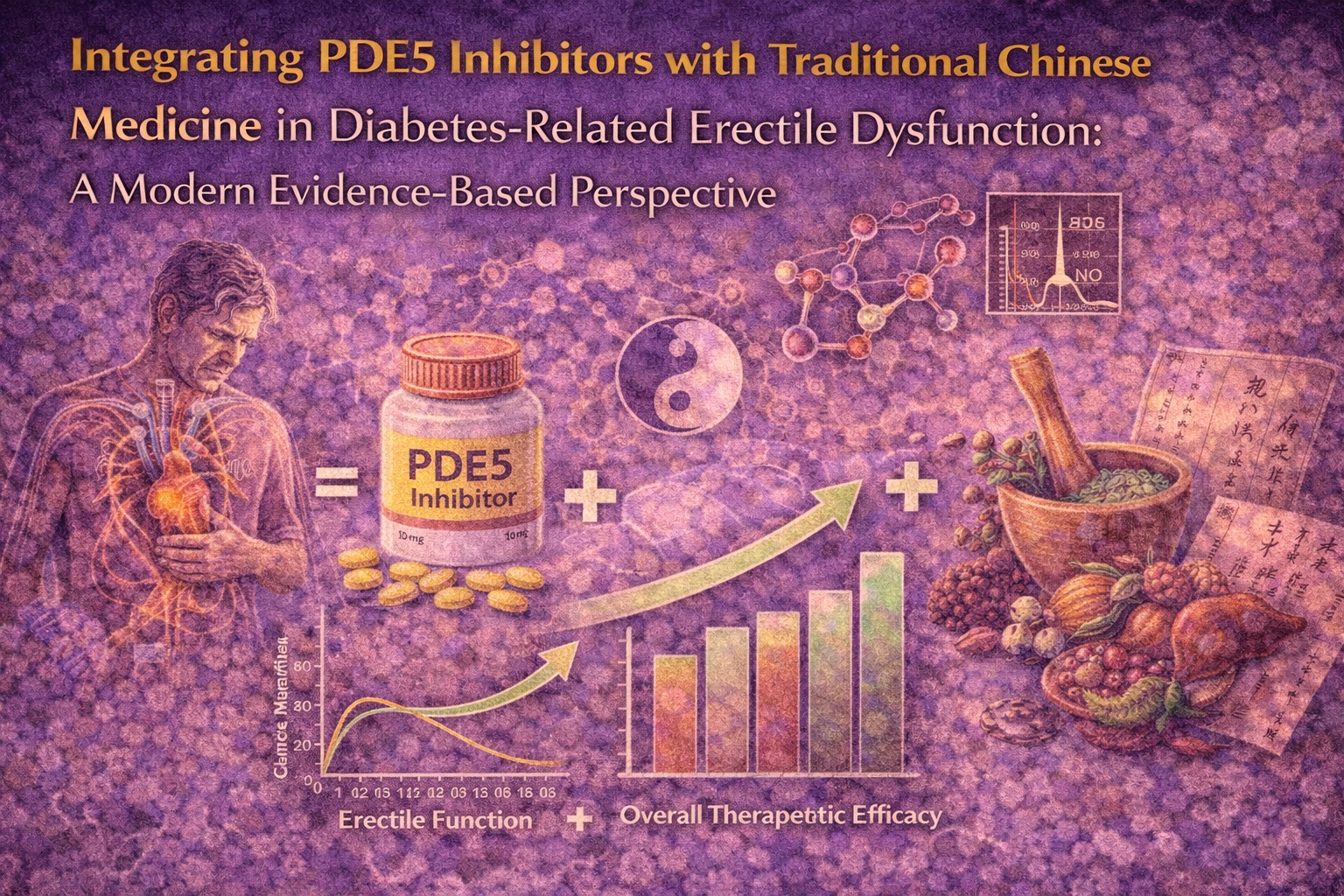
Understanding the Therapeutic Gap in Diabetes-Related Erectile Dysfunction
Erectile dysfunction associated with diabetes mellitus is not merely a variant of classical erectile dysfunction. It is a more resistant, more complex, and often more frustrating clinical entity. Epidemiological data consistently demonstrate that more than half of men with diabetes will develop erectile dysfunction during their lifetime. Yet unlike non-diabetic erectile dysfunction, the diabetic subtype tends to respond less predictably to standard first-line therapy.
Phosphodiesterase type 5 inhibitors (PDE5Is) remain the cornerstone of treatment. Sildenafil, tadalafil, and vardenafil revolutionized sexual medicine by targeting cyclic guanosine monophosphate (cGMP) degradation and restoring nitric oxide–mediated vasodilation. However, in men with diabetes mellitus–induced erectile dysfunction (DMED), therapeutic success is noticeably diminished. Clinical response rates drop significantly compared to non-diabetic populations. The pharmacological key fits the lock—but the lock itself is damaged.
The reason lies in pathophysiology. DMED is not solely a vascular disorder. It is a convergence of endothelial dysfunction, autonomic neuropathy, microvascular damage, oxidative stress, advanced glycation end product accumulation, and structural cavernosal changes. In this context, PDE5 inhibition alone addresses only one layer of a multilayered pathology. The result is partial improvement for some, and disappointment for many.
This therapeutic gap has encouraged clinicians—particularly in East Asia—to explore integrative strategies. Among these, combining PDE5 inhibitors with Traditional Chinese Medicine (TCM) has attracted increasing attention. The recent systematic review and meta-analysis offers quantitative clarity on whether this approach is clinically meaningful.
Why PDE5 Inhibitors Underperform in Diabetic Populations
To understand the rationale for combination therapy, one must first understand why monotherapy struggles.
In diabetes, chronic hyperglycemia initiates endothelial injury. Nitric oxide synthase activity declines, reactive oxygen species accumulate, and microvascular integrity deteriorates. The penile vasculature—particularly sensitive due to its small arterial diameter—is among the earliest vascular beds affected. The so-called “artery size hypothesis” explains why erectile dysfunction often precedes overt cardiovascular disease.
Beyond vascular impairment, diabetic neuropathy compromises autonomic signaling to cavernosal smooth muscle. Even if nitric oxide is pharmacologically preserved downstream, upstream neural initiation may be inadequate. Furthermore, cavernosal smooth muscle fibrosis and collagen deposition reduce tissue compliance.
PDE5 inhibitors amplify cGMP signaling, but they cannot regenerate damaged nerves, reverse glycation-induced endothelial injury, or directly neutralize oxidative stress. Thus, pharmacological enhancement operates within biologically constrained limits.
This biological reality makes the search for complementary mechanisms logical rather than alternative.
The Conceptual Basis for Integrating Traditional Chinese Medicine
Traditional Chinese Medicine approaches erectile dysfunction through a different conceptual framework. Instead of isolating a single molecular target, TCM categorizes dysfunction according to syndromes such as kidney deficiency, blood stasis, and qi stagnation. While the terminology differs from Western biomedical language, many formulations aim to modulate vascular tone, oxidative balance, inflammatory signaling, and neuroendocrine regulation.
Preclinical evidence suggests that certain TCM components may influence nitric oxide pathways, inhibit phosphodiesterase activity, attenuate oxidative stress, or modulate protein kinase C signaling. These mechanisms theoretically complement PDE5 inhibition rather than compete with it.
The systematic review included 12 randomized controlled trials with 1,070 participants comparing PDE5 inhibitor monotherapy versus PDE5I combined with TCM. All participants met diagnostic criteria for diabetes and demonstrated erectile dysfunction as measured by the International Index of Erectile Function-5 (IIEF-5).
The central clinical question was straightforward: does adding TCM enhance efficacy without increasing harm?
The answer, statistically, appears to be yes.
Quantitative Evidence: Clinical Efficacy Beyond Monotherapy
Seven trials in the meta-analysis evaluated overall therapeutic efficacy. Using a cumulative ratio model, combination therapy demonstrated a relative risk of 2.86 for clinical improvement compared to PDE5I alone . In practical terms, patients receiving combined therapy were nearly three times more likely to experience clinically meaningful improvement.
Importantly, heterogeneity across these seven studies was minimal. Sensitivity analysis confirmed robustness of the effect size. This consistency strengthens confidence in the observed benefit.
When examining erectile function specifically, all twelve studies reported IIEF-5 outcomes. Subgroup analysis revealed that:
- Tadalafil + TCM significantly improved IIEF-5 scores (SMD 1.07).
- Sildenafil + TCM demonstrated even greater standardized improvement (SMD 1.38).
- Vardenafil data were insufficient for pooled analysis.
These effect sizes are clinically meaningful. In erectile dysfunction research, shifts of this magnitude translate into tangible improvements in rigidity, maintenance, and satisfaction.
Notably, heterogeneity decreased after excluding specific outlier studies, suggesting that variability was driven by methodological differences rather than inconsistent therapeutic direction.
The data imply that TCM does not merely add symbolic benefit—it enhances measurable erectile performance.
Impact on TCM Syndrome Scores: Bridging Two Diagnostic Paradigms
Six studies also assessed TCM syndrome scores. While this measure may seem unfamiliar to Western clinicians, it reflects structured symptom evaluation based on TCM diagnostic criteria.
Combination therapy significantly reduced syndrome scores in both tadalafil and sildenafil subgroups . The standardized mean differences were substantial, particularly for tadalafil combinations (SMD −3.43 after heterogeneity adjustment).
This finding is clinically intriguing. It suggests that combination therapy improves not only erectile rigidity but also broader symptom complexes associated with DMED, such as fatigue, cold intolerance, and systemic imbalance described in TCM frameworks.
In other words, patients may experience global improvement rather than isolated erectile enhancement.
Whether this represents true systemic modulation or broader symptom perception remains an open scientific question. But from a patient-centered standpoint, global improvement matters.
Safety Profile: Does Combination Therapy Increase Risk?
Any enhancement in efficacy must be balanced against safety.
Five trials documented adverse events including dizziness, headache, dyspepsia, flushing, nausea, diarrhea, and sinusitis . Meta-analysis demonstrated no statistically significant increase in:
- Neurological events
- Gastrointestinal effects
- Flushing
- Sinusitis
Heterogeneity was minimal across safety outcomes. Relative risk estimates hovered around neutrality.
This is particularly important because polypharmacy in diabetic patients is already substantial. Adding therapeutic complexity without adding risk is clinically valuable.
That said, most included trials were relatively short (4–12 weeks). Long-term pharmacovigilance remains necessary.
Mechanistic Plausibility: Why the Combination Makes Biological Sense
Beyond statistics, mechanism matters.
Diabetic erectile dysfunction is characterized by oxidative stress, endothelial dysfunction, nitric oxide depletion, and neuropathic impairment. Several TCM formulations studied have been shown experimentally to:
- Reduce reactive oxygen species
- Improve endothelial nitric oxide synthase activity
- Inhibit protein kinase C pathways
- Modulate smooth muscle tone
- Improve microcirculation
While these effects vary by formulation, the overarching theme is vascular and metabolic modulation.
PDE5 inhibitors amplify cGMP signaling. TCM formulations may enhance upstream nitric oxide availability or protect vascular integrity. Together, they address both signaling amplification and substrate quality.
If monotherapy pushes harder on a compromised pathway, combination therapy may simultaneously repair and stimulate it.
Clinically, that distinction matters.
Limitations and Methodological Considerations
Despite promising results, intellectual honesty demands recognition of limitations.
First, heterogeneity in TCM formulations is substantial. Decoctions, capsules, and multi-herb combinations varied widely across studies. Standardization is limited. One cannot assume that all TCM combinations are equivalent.
Second, treatment durations ranged from 4 to 12 weeks. The optimal duration for sustained benefit is unclear.
Third, blinding procedures and allocation concealment were not uniformly rigorous across all trials . While attrition bias was low, some performance and detection biases were unclear.
Fourth, publication bias could not be fully assessed due to limited numbers of studies per outcome.
Fifth, most studies were conducted within Chinese populations. Generalizability to other ethnic and healthcare contexts requires further validation.
In short, the signal is strong—but refinement is needed.
Clinical Implications for Modern Practice
For clinicians managing diabetic men with suboptimal PDE5I response, this evidence supports consideration of integrative therapy.
However, integration must be rational:
- Selection of standardized, evidence-supported TCM formulations.
- Monitoring for herb–drug interactions.
- Clear documentation of glycemic control.
- Patient counseling regarding expectations and timelines.
Combination therapy should not replace lifestyle modification or metabolic optimization. Glycemic control remains foundational. But for patients who respond incompletely to PDE5I alone, adjunctive TCM may represent a reasonable evidence-based strategy rather than an anecdotal experiment.
The message is not that Western pharmacology failed—but that complex disease often benefits from multidimensional intervention.
Future Directions in Research
The next phase of research should focus on:
- Multicenter, double-blind, placebo-controlled trials.
- Standardization of TCM formulations.
- Biomarker-driven mechanistic studies.
- Long-term cardiovascular and metabolic outcomes.
- Dose-optimization trials for combination regimens.
Additionally, translational research integrating molecular endpoints with clinical outcomes would clarify which biological pathways are most responsive.
In modern medicine, integration must be evidence-based, reproducible, and mechanistically transparent. The current data represent a meaningful step in that direction.
Conclusion
Diabetes mellitus–induced erectile dysfunction represents one of the most therapeutically challenging forms of sexual dysfunction. While PDE5 inhibitors remain foundational therapy, their efficacy in diabetic populations is limited by complex vascular, metabolic, and neuropathic pathology.
The systematic review and meta-analysis demonstrates that combining PDE5 inhibitors with Traditional Chinese Medicine significantly improves clinical efficacy and IIEF-5 scores without increasing adverse events. The relative risk of therapeutic improvement approaches threefold compared to monotherapy.
Although heterogeneity in formulations and methodological limitations require caution, the evidence supports combination therapy as a promising and biologically plausible strategy.
In a disease defined by complexity, therapeutic simplicity may be insufficient. Multimodal intervention may not only be reasonable—it may be necessary.
FAQ
1. Does adding Traditional Chinese Medicine make PDE5 inhibitors work better in diabetic men?
Yes. The pooled evidence demonstrates significantly greater improvement in erectile function when TCM is combined with PDE5 inhibitors compared to PDE5I alone .
2. Is combination therapy safe?
Short-term data indicate no significant increase in adverse events such as headache, flushing, gastrointestinal discomfort, or dizziness . However, long-term safety requires further study.
3. Should all diabetic patients with erectile dysfunction use combination therapy?
Not necessarily. PDE5 inhibitors remain first-line therapy. Combination therapy may be particularly useful for patients with incomplete response to monotherapy. Clinical judgment, formulation selection, and careful monitoring are essential.
