

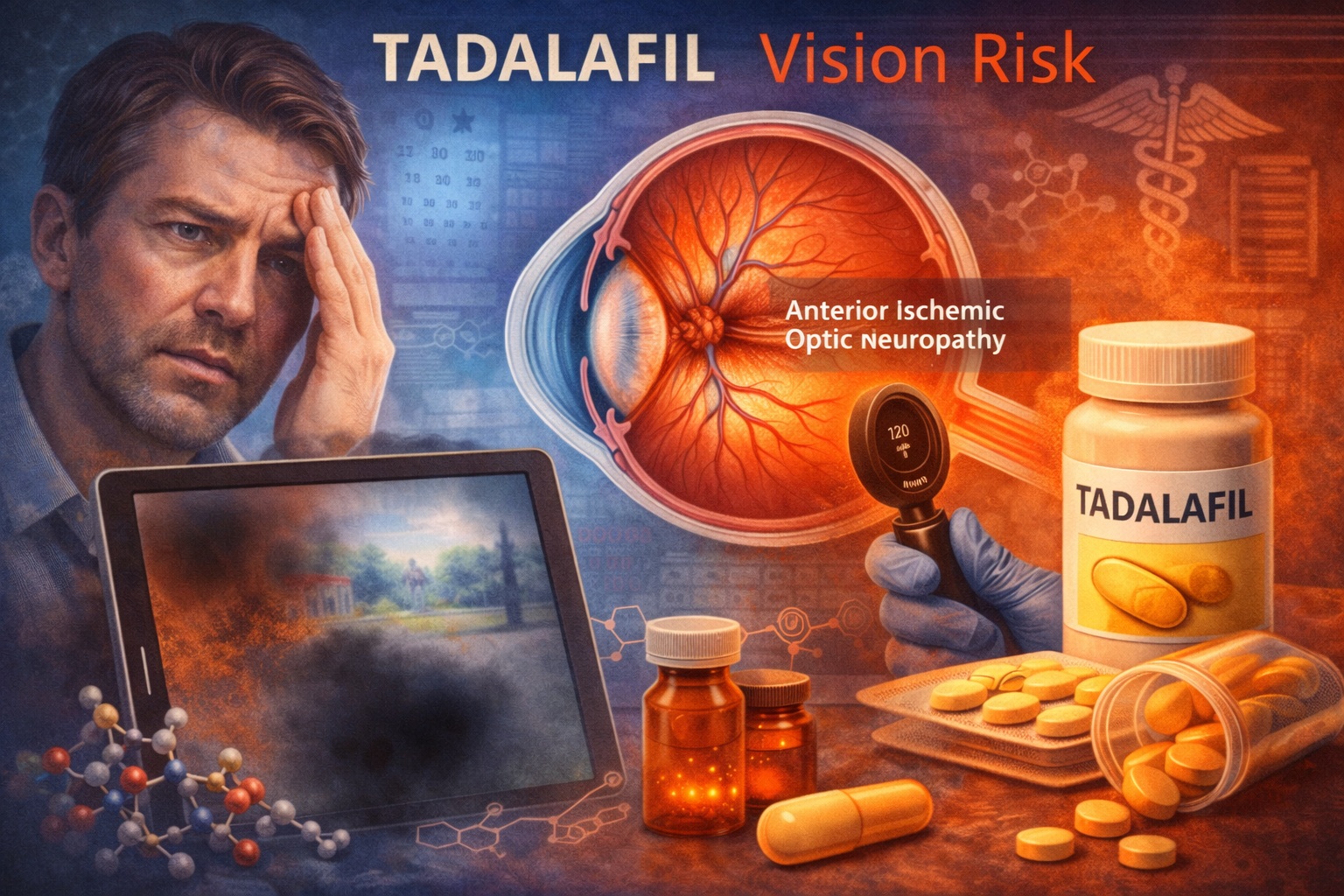
Erectile dysfunction (ED) is one of the most common male health conditions worldwide. Over the past two decades, the introduction of phosphodiesterase type-5 (PDE5) inhibitors has dramatically changed its management. Medications such as sildenafil, vardenafil, avanafil, and tadalafil have become widely prescribed, restoring sexual function and improving quality of life for millions of men.
Yet every effective medication carries the possibility of adverse effects. For PDE5 inhibitors, most side effects are mild and predictable: headache, facial flushing, nasal congestion, and occasionally dyspepsia. However, rare complications occasionally emerge that require closer medical attention. Among the most concerning of these is non-arteritic anterior ischemic optic neuropathy (NAION)—a condition capable of causing sudden vision loss.
Although the association between PDE5 inhibitors and NAION remains controversial, several case reports and pharmacovigilance studies have suggested a potential link. One particularly illustrative clinical case describes the development of anterior ischemic optic neuropathy in a patient using tadalafil for erectile dysfunction.
This article examines the pathophysiology of NAION, explores the possible relationship between PDE5 inhibitors and optic nerve ischemia, and discusses how clinicians should approach patients receiving tadalafil therapy. The goal is not to alarm patients or discourage effective treatment, but rather to clarify a rare yet medically important phenomenon.
After all, modern pharmacotherapy demands a balance between therapeutic benefit and risk awareness. In medicine, as in aviation, even rare events deserve careful investigation.
Erectile Dysfunction Therapy: The Role of PDE5 Inhibitors
Erectile dysfunction affects a substantial proportion of men worldwide, particularly with increasing age. The condition is defined as the persistent inability to achieve or maintain an erection sufficient for satisfactory sexual performance. While ED may arise from psychological causes, it is more commonly associated with vascular, neurological, or metabolic disorders.
The physiology of penile erection relies on nitric oxide signaling. When nitric oxide is released from endothelial cells and nerve endings, it stimulates guanylate cyclase in smooth muscle cells of the corpus cavernosum. This process increases levels of cyclic guanosine monophosphate (cGMP), resulting in smooth muscle relaxation, arterial dilation, and increased blood flow.
Phosphodiesterase type-5 (PDE5) is the enzyme responsible for degrading cGMP. By inhibiting PDE5, medications such as tadalafil prolong the action of cGMP and enhance penile blood flow. This mechanism explains the remarkable effectiveness of PDE5 inhibitors in restoring erectile function.
Tadalafil is particularly notable among PDE5 inhibitors because of its pharmacokinetic profile. Unlike sildenafil, which typically acts for several hours, tadalafil has a much longer half-life, allowing therapeutic effects to persist for up to 36 hours. This extended duration has earned it the informal nickname “the weekend pill,” although physicians usually avoid such poetic terminology in official consultations.
Because tadalafil provides sustained plasma concentrations, it is often preferred by patients seeking greater flexibility in sexual activity. The drug is also used in other conditions, including pulmonary arterial hypertension and benign prostatic hyperplasia.
Despite its benefits, tadalafil—like all systemic vasodilators—can influence blood flow beyond its intended targets. This characteristic raises important questions regarding its potential effects on sensitive vascular structures, including those supplying the optic nerve.
Non-Arteritic Anterior Ischemic Optic Neuropathy: A Brief Clinical Overview
Non-arteritic anterior ischemic optic neuropathy is the most common acute optic neuropathy in adults over the age of 50, although it can occur in younger individuals as well. The condition arises from impaired blood flow to the anterior portion of the optic nerve, resulting in sudden and painless vision loss.
The optic nerve head receives its blood supply primarily from branches of the posterior ciliary arteries. When perfusion through these vessels becomes compromised, ischemia develops within the optic nerve. The resulting damage leads to swelling of the optic disc and visual field defects.
Patients with NAION typically present with sudden visual impairment upon awakening. Many describe a shadow or dark area in the visual field, frequently affecting the upper or lower half of vision. This phenomenon is known as an altitudinal visual field defect, a hallmark of the disease.
On ophthalmologic examination, the optic disc often appears swollen with associated hemorrhages. Automated visual field testing confirms the pattern of visual loss. Unfortunately, once ischemic damage occurs, recovery of vision is limited in many cases.
Several systemic risk factors increase susceptibility to NAION. These include vascular conditions that compromise optic nerve perfusion, such as hypertension, diabetes mellitus, hyperlipidemia, and obstructive sleep apnea. Anatomical characteristics of the optic disc—often described as a “crowded disc”—also predispose individuals to the disease.
Key risk factors commonly associated with NAION include:
- Hypertension and cardiovascular disease
- Diabetes mellitus
- Hyperlipidemia
- Sleep apnea
- Small cup-to-disc ratio (“crowded” optic disc anatomy)
In many patients, these factors combine to create a vulnerable optic nerve environment in which even minor reductions in perfusion may precipitate ischemic injury.
A Clinical Case: Visual Field Loss Associated with Tadalafil Use
A noteworthy clinical case involved a 42-year-old man who developed sudden visual impairment while undergoing treatment for erectile dysfunction with tadalafil. The patient had no significant history of smoking or systemic disease, making the presentation particularly intriguing.
He reported the abrupt onset of a visual field defect in his right eye. The symptom appeared suddenly and was not accompanied by pain, redness, or other ocular discomfort. Because the change in vision was noticeable and persistent, the patient sought ophthalmologic evaluation.
Automated perimetry testing revealed an inferior altitudinal visual field defect, consistent with the pattern commonly observed in NAION. Ophthalmologic examination confirmed swelling of the optic disc in the affected eye, further supporting the diagnosis.
Importantly, the patient’s medical history revealed recent use of tadalafil for erectile dysfunction. Although the medication had been well tolerated otherwise, clinicians considered the possibility that tadalafil might have contributed to reduced perfusion of the optic nerve.
As a precautionary measure, tadalafil therapy was discontinued. The patient was monitored closely during follow-up visits. Unfortunately, as is common with NAION, the visual deficit did not significantly improve.
This case highlights the clinical dilemma faced by physicians: determining whether a medication truly caused the event or merely coincided with an underlying vascular problem.
Possible Mechanisms Linking Tadalafil to Optic Nerve Ischemia
The potential relationship between PDE5 inhibitors and NAION remains the subject of ongoing debate. Several physiological mechanisms have been proposed, though definitive causal evidence remains limited.
One hypothesis involves systemic vasodilation. PDE5 inhibitors relax vascular smooth muscle throughout the body, which can lead to modest reductions in systemic blood pressure. In susceptible individuals, particularly during sleep, this reduction might theoretically decrease perfusion pressure in the optic nerve.
Nighttime hypotension has long been suspected as a contributing factor in NAION. Some patients with the condition demonstrate significant drops in blood pressure during sleep, reducing blood flow to already vulnerable optic nerve tissues.
Another proposed mechanism involves altered autoregulation of optic nerve circulation. The small vessels supplying the optic nerve rely on precise regulatory mechanisms to maintain stable blood flow despite fluctuations in systemic pressure. Pharmacologic vasodilation might disrupt these compensatory responses.
A third possibility relates to platelet aggregation and vascular endothelial function. While PDE5 inhibitors generally promote vasodilation, their effects on microvascular circulation may vary depending on underlying vascular disease.
In reality, NAION is likely a multifactorial condition. Medication exposure may serve as one contributing factor among many, rather than acting as the sole cause of optic nerve ischemia.
Evaluating the Evidence: Association Versus Causation
When examining potential drug-related complications, clinicians must carefully distinguish between association and causation. A temporal relationship between medication use and an adverse event does not automatically prove that the drug caused the event.
In the case of PDE5 inhibitors, millions of prescriptions are issued annually. Even rare conditions such as NAION may occasionally occur in patients who happen to be using these medications.
Large epidemiological studies have attempted to evaluate whether PDE5 inhibitor use significantly increases the risk of NAION. Results have been mixed. Some analyses suggest a modest association, while others fail to demonstrate a statistically significant increase in risk.
Regulatory agencies, including the U.S. Food and Drug Administration, have acknowledged reports of NAION in patients taking PDE5 inhibitors. As a result, warning statements regarding potential vision loss appear in prescribing information.
However, the absolute risk remains extremely low. For most patients without pre-existing risk factors, the benefits of tadalafil therapy outweigh the potential risks.
In other words, tadalafil is not a dangerous medication. But like any pharmacologic agent, it must be used thoughtfully and with appropriate medical supervision.
Clinical Guidance for Physicians Prescribing Tadalafil
Because PDE5 inhibitors remain highly effective therapies, clinicians should not hesitate to prescribe them when appropriate. Nevertheless, certain precautions may help minimize the likelihood of ocular complications.
Before initiating tadalafil therapy, physicians should evaluate the patient’s vascular risk profile. Conditions such as hypertension, diabetes, and hyperlipidemia should be identified and managed appropriately.
Patients should also be informed about potential visual symptoms that warrant immediate medical evaluation. Sudden vision loss, visual field defects, or unexplained changes in visual clarity should prompt urgent ophthalmologic consultation.
Physicians may consider exercising additional caution in patients with a history of NAION in one eye. These individuals already have an increased risk of developing the condition in the opposite eye.
Practical considerations when prescribing tadalafil include:
- Assess cardiovascular and vascular risk factors
- Discuss potential ocular symptoms with patients
- Advise immediate medical attention for sudden visual changes
- Avoid use in patients with previous NAION when possible
These measures do not eliminate risk entirely, but they support responsible prescribing and early detection of complications.
The Broader Perspective: Risk Awareness Without Alarm
It is tempting to interpret rare adverse events as evidence that a medication is inherently unsafe. Such conclusions are rarely justified. In reality, modern pharmacotherapy relies on a careful balance between therapeutic benefit and manageable risk.
For men with erectile dysfunction, tadalafil provides significant improvements in sexual function, psychological well-being, and relationship satisfaction. The medication has been extensively studied and remains one of the most widely used treatments for ED worldwide.
The potential association between tadalafil and NAION should therefore be viewed in context. The condition itself is rare, and most patients taking PDE5 inhibitors will never experience visual complications.
Nevertheless, the case described earlier serves as a valuable reminder that medications can influence physiological systems beyond their intended targets. Vigilance, patient education, and appropriate clinical monitoring remain essential components of safe medical practice.
In medicine, knowledge does not exist to frighten patients—it exists to guide better decisions.
FAQ
Can tadalafil really cause vision loss?
Cases of vision loss related to non-arteritic anterior ischemic optic neuropathy (NAION) have been reported in some patients using PDE5 inhibitors, including tadalafil. However, the condition is extremely rare and usually occurs in individuals with underlying vascular risk factors.
Who is most at risk for NAION?
People with hypertension, diabetes, high cholesterol, sleep apnea, or certain optic nerve anatomical features may have an increased risk. Patients with a previous history of NAION in one eye are also considered higher risk.
Should patients stop taking tadalafil because of this risk?
No. For most individuals, tadalafil is safe and effective. Patients should only discontinue the medication if advised by their physician or if they experience sudden visual symptoms requiring medical evaluation.
