

Introduction: Beyond Symptom Relief in Erectile Dysfunction
Erectile dysfunction (ED) in patients with diabetes mellitus is not merely a functional inconvenience—it is a complex vascular and metabolic disorder rooted in oxidative stress, endothelial dysfunction, and structural damage to penile tissue. While phosphodiesterase type-5 (PDE5) inhibitors such as tadalafil have long been established as effective symptomatic treatments, emerging evidence suggests that their therapeutic potential extends far beyond temporary improvement in erectile function.
Traditional thinking has framed tadalafil as a facilitator of nitric oxide–mediated vasodilation. It enhances cyclic guanosine monophosphate (cGMP) signaling, leading to smooth muscle relaxation and improved penile blood flow. However, this explanation captures only part of the story—arguably the most obvious part.
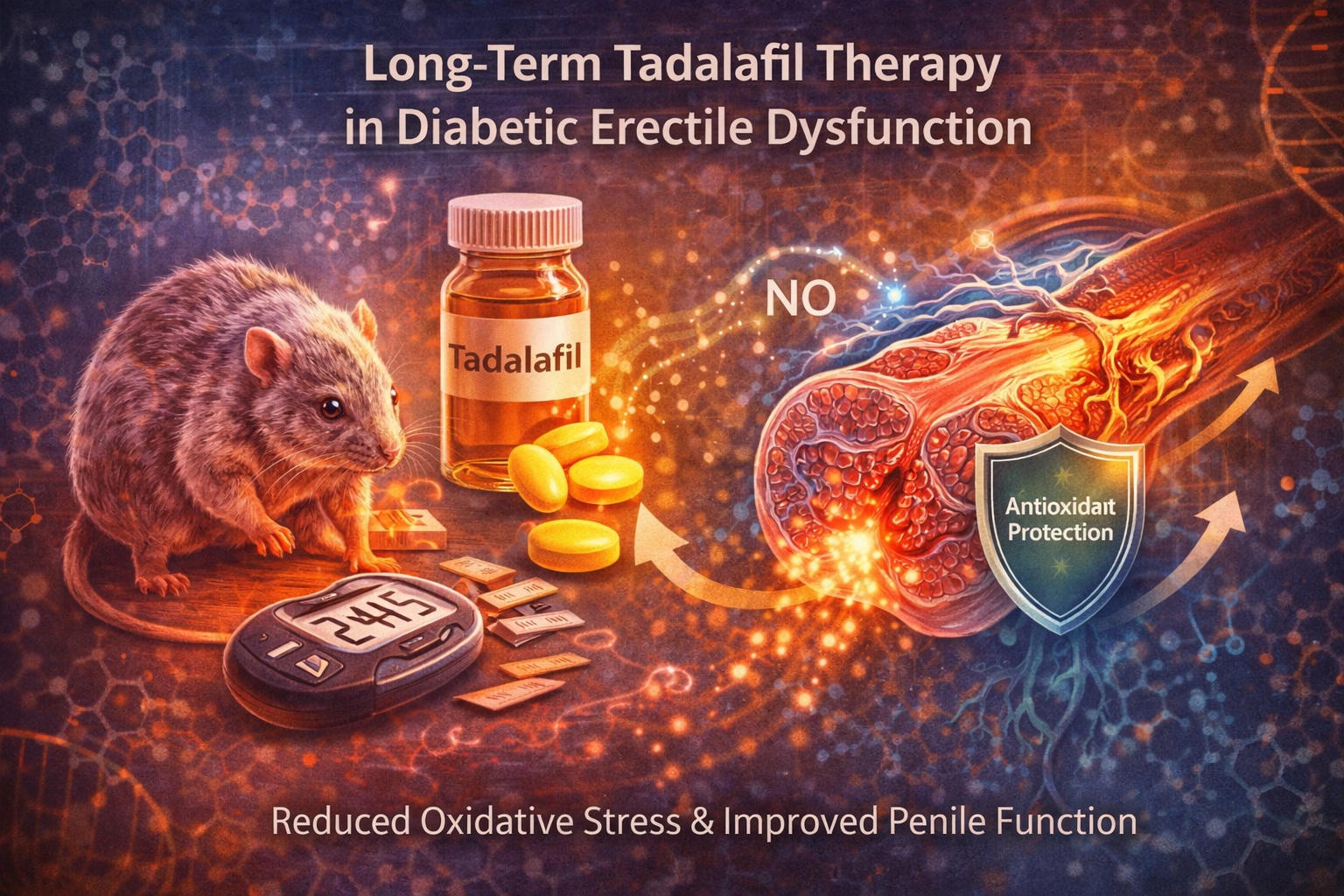
Recent experimental research using streptozotocin (STZ)-induced diabetic rat models reveals a more nuanced mechanism. Long-term administration of tadalafil appears to exert local antioxidative effects within penile tissue, suggesting that the drug may actively participate in reversing pathological changes rather than simply bypassing them.
This insight is particularly important in diabetes, where oxidative stress plays a central role in vascular damage. Reactive oxygen species (ROS) disrupt endothelial function, impair nitric oxide signaling, and contribute to fibrosis and structural degeneration.
In this article, we explore how long-term tadalafil therapy interacts with oxidative stress pathways in diabetic erectile dysfunction. The findings not only redefine the drug’s mechanism of action but also highlight a broader principle: effective therapy should not only restore function but also address the underlying pathology.
Diabetic Erectile Dysfunction: A Disease of Oxidative Stress
Erectile dysfunction in diabetes is fundamentally a disease of chronic oxidative injury. Persistent hyperglycemia leads to increased production of reactive oxygen species, overwhelming the body’s natural antioxidant defenses.
This oxidative imbalance has profound effects on penile tissue. Endothelial cells become dysfunctional, smooth muscle cells lose their ability to relax, and nitric oxide bioavailability declines. The result is impaired vasodilation, reduced blood flow, and compromised erectile function.
In addition to functional impairment, structural changes also occur. Prolonged oxidative stress promotes fibrosis within the corpus cavernosum, replacing functional smooth muscle with non-contractile connective tissue. This transformation reduces the elasticity of erectile tissue and further impairs the ability to achieve an erection.
Neural pathways are also affected. Diabetic neuropathy disrupts the signaling mechanisms required to initiate and maintain erection. When vascular, structural, and neural components are all compromised, erectile dysfunction becomes particularly resistant to treatment.
From a biochemical perspective, several key processes contribute to oxidative stress in diabetes:
- Increased formation of advanced glycation end products (AGEs)
- Activation of the polyol pathway
- Mitochondrial dysfunction and excessive ROS production
These mechanisms create a self-perpetuating cycle of damage, in which oxidative stress begets further oxidative stress.
Understanding this pathophysiology is essential, because it highlights why purely symptomatic treatment may be insufficient. Addressing oxidative stress is not optional—it is central to restoring erectile function in diabetic patients.
Tadalafil: More Than a PDE5 Inhibitor
Tadalafil’s primary mechanism of action is well understood. By inhibiting PDE5, the drug prevents the breakdown of cGMP, thereby enhancing nitric oxide–mediated vasodilation.
This effect is particularly important in erectile tissue, where cGMP plays a central role in smooth muscle relaxation. Increased cGMP levels allow the corpus cavernosum to fill with blood, producing an erection.
However, the pharmacological profile of tadalafil suggests that its effects may extend beyond immediate hemodynamic changes. The drug’s long half-life allows for sustained modulation of intracellular signaling pathways, particularly when administered chronically.
Long-term tadalafil therapy may therefore influence the biochemical environment of penile tissue. Continuous enhancement of cGMP signaling can improve endothelial function, increase nitric oxide bioavailability, and reduce vascular resistance.
More intriguingly, research indicates that tadalafil may also interact with oxidative stress pathways. By improving endothelial health and reducing ROS production, the drug may help restore the balance between oxidants and antioxidants within penile tissue.
This expanded mechanism of action positions tadalafil as more than a symptomatic agent. It becomes a modulator of vascular biology, capable of influencing the underlying disease process.
Experimental Insights: The STZ-Induced Diabetic Rat Model
To investigate the long-term effects of tadalafil on diabetic erectile dysfunction, researchers often employ the streptozotocin (STZ)-induced diabetic rat model. This model replicates many of the metabolic and vascular changes observed in human diabetes.
Streptozotocin selectively destroys pancreatic beta cells, leading to insulin deficiency and hyperglycemia. Over time, these animals develop complications similar to those seen in diabetic patients, including endothelial dysfunction and erectile impairment.
In experimental settings, rats with STZ-induced diabetes exhibit significantly reduced erectile responses when subjected to cavernous nerve stimulation. This impairment reflects both vascular and neural dysfunction.
When tadalafil is administered over an extended period, however, notable improvements occur. Erectile responses increase, suggesting restoration of vascular function.
Importantly, these improvements are not limited to functional measurements. Biochemical analyses reveal changes in oxidative stress markers and antioxidant enzyme activity within penile tissue.
These findings suggest that tadalafil does not merely compensate for dysfunction—it actively modifies the pathological environment.
Antioxidative Effects: Restoring Balance in Penile Tissue
One of the most compelling findings from experimental studies is the effect of long-term tadalafil administration on oxidative stress markers.
In diabetic penile tissue, levels of reactive oxygen species are elevated, while antioxidant defenses are diminished. This imbalance contributes to endothelial dysfunction and impaired nitric oxide signaling.
Tadalafil treatment appears to reverse these changes. Studies demonstrate increased activity of antioxidant enzymes such as superoxide dismutase (SOD) and reduced levels of oxidative stress markers.
The restoration of antioxidant capacity has several important consequences. First, it improves endothelial function by preserving nitric oxide availability. Second, it reduces cellular damage caused by oxidative stress. Third, it may prevent or even reverse structural changes such as fibrosis.
These effects suggest that tadalafil contributes to a more favorable biochemical environment within penile tissue.
From a mechanistic perspective, the antioxidative effects of tadalafil may be linked to its influence on cGMP signaling. Increased cGMP levels can activate downstream pathways that reduce oxidative stress and improve cellular resilience.
In essence, tadalafil appears to help restore the balance between oxidative damage and antioxidant defense, a balance that is profoundly disrupted in diabetes.
Structural and Functional Recovery: Beyond Immediate Effects
Long-term tadalafil therapy does not only improve biochemical markers—it also influences the structural integrity of penile tissue.
In untreated diabetic models, the corpus cavernosum often shows reduced smooth muscle content and increased collagen deposition. These changes impair the mechanical properties of erectile tissue, making it less responsive to stimulation.
Following prolonged tadalafil administration, however, studies demonstrate partial restoration of smooth muscle content and reduced fibrosis. These structural improvements correlate with enhanced erectile function.
This relationship underscores an important principle: function follows structure. By preserving or restoring the architecture of penile tissue, tadalafil enables more effective physiological responses.
Functional recovery is also reflected in improved intracavernous pressure measurements during nerve stimulation. These improvements indicate that the erectile mechanism is not only preserved but actively rehabilitated.
Such findings challenge the notion that PDE5 inhibitors provide only temporary benefits. Instead, they suggest that long-term therapy may contribute to genuine tissue recovery.
Clinical Implications: Rethinking Long-Term Therapy
The insights gained from experimental studies have important implications for clinical practice. In diabetic patients, erectile dysfunction is often progressive, and early intervention may improve long-term outcomes.
Daily or long-term tadalafil therapy may offer advantages beyond episodic treatment. Continuous modulation of vascular and oxidative pathways could help prevent further deterioration of erectile function.
This approach aligns with broader strategies in chronic disease management, where sustained therapy is used to modify disease progression rather than merely alleviate symptoms.
Clinicians should also recognize that treatment response may vary depending on the severity of oxidative stress and tissue damage. Patients with advanced disease may require more comprehensive management, including optimization of glycemic control and cardiovascular risk factors.
Incorporating tadalafil into a broader therapeutic strategy may therefore yield the best results.
Ultimately, the goal is not simply to restore erectile function, but to improve vascular health and quality of life.
Conclusion: From Symptom Management to Disease Modification
The long-term administration of tadalafil in diabetic erectile dysfunction represents a shift in therapeutic thinking. What was once considered a purely symptomatic treatment now appears to influence underlying disease mechanisms.
By reducing oxidative stress, enhancing antioxidant defenses, and improving tissue structure, tadalafil may contribute to genuine recovery of erectile function.
These findings highlight the importance of addressing the root causes of disease rather than focusing solely on symptoms. In diabetes, where oxidative stress plays a central role, therapies that restore biochemical balance are particularly valuable.
Perhaps the most important lesson is this: effective treatment is not just about making things work—it is about making them work better, longer, and more naturally.
And occasionally, a drug designed for one purpose reveals a much broader therapeutic potential than anyone initially imagined.
FAQ
Does tadalafil have effects beyond improving erections?
Yes. Long-term tadalafil therapy may improve endothelial function, reduce oxidative stress, and enhance tissue structure, particularly in diabetic patients with erectile dysfunction.
Why is oxidative stress important in diabetic ED?
Oxidative stress damages blood vessels, reduces nitric oxide availability, and promotes fibrosis in penile tissue. These changes impair the physiological mechanisms required for erection.
Is long-term tadalafil therapy better than on-demand use?
In some patients, especially those with diabetes, long-term or daily use of tadalafil may provide additional benefits by improving vascular health and addressing underlying disease mechanisms.
