

Introduction: Rethinking Vascular Pharmacology Beyond the Vessel Wall
Modern vascular pharmacology has traditionally focused on smooth muscle cells, endothelial function, and large-scale hemodynamics. Yet a growing body of evidence suggests that one of the most overlooked regulators of vascular tone is not located in the vessel wall at all, but rather circulating within the bloodstream itself: the erythrocyte.
Red blood cells (RBCs), long considered passive carriers of oxygen, are now recognized as active participants in vascular regulation. Among their most intriguing functions is the ability to release adenosine triphosphate (ATP) in response to physiological stimuli. ATP acts as a signaling molecule that promotes vasodilation, particularly in microvascular networks where precise blood flow regulation is essential.
At the same time, pharmacologic agents such as phosphodiesterase type-5 (PDE5) inhibitors—including tadalafil—have become central to the treatment of vascular disorders ranging from erectile dysfunction to pulmonary arterial hypertension. These drugs enhance nitric oxide signaling, improving blood flow through well-established pathways.
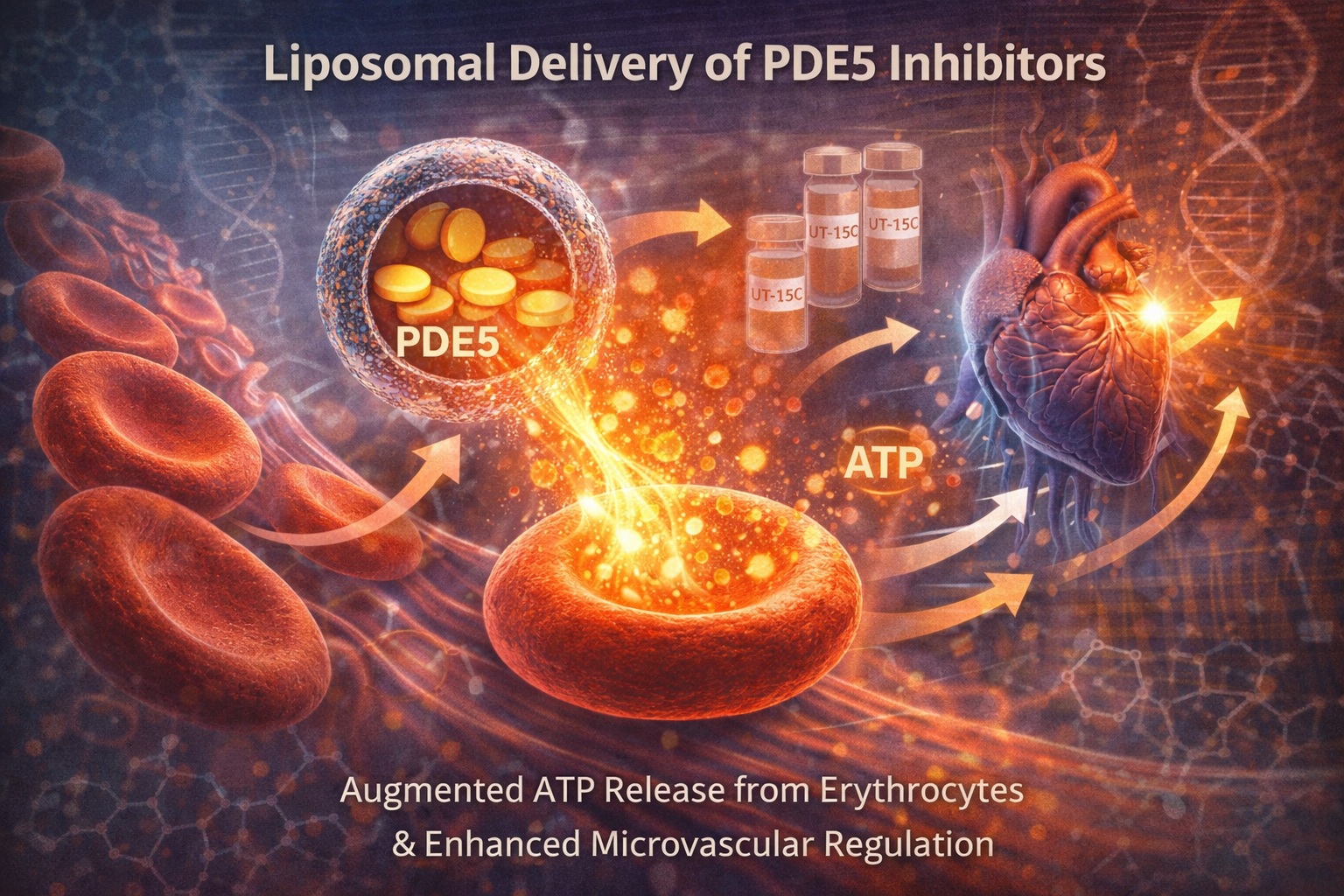
However, recent experimental work has introduced a fascinating new concept: PDE5 inhibitors may also influence ATP release from erythrocytes, particularly when delivered using advanced drug delivery systems such as liposomes. This insight opens a new dimension in vascular pharmacology, where drug action extends beyond traditional targets to include circulating cellular mediators.
The integration of liposomal drug delivery with PDE5 inhibition represents a convergence of pharmacology, nanotechnology, and microvascular physiology. It challenges us to rethink how drugs interact with the circulatory system—and how these interactions might be optimized for therapeutic benefit.
Erythrocytes as Active Regulators of Vascular Tone
For decades, erythrocytes were viewed as biologically simple cells whose primary function was oxygen transport. This perception has changed dramatically. Research has revealed that RBCs possess sophisticated signaling mechanisms that allow them to participate in the regulation of vascular tone.
One of the most important of these mechanisms is the controlled release of ATP. When erythrocytes encounter conditions such as low oxygen tension or mechanical deformation within narrow capillaries, they release ATP into the extracellular environment. This ATP acts on purinergic receptors in endothelial cells, stimulating the production of nitric oxide and other vasodilatory mediators.
This process creates a feedback loop: as oxygen demand increases in a tissue, erythrocytes release ATP, which promotes vasodilation and increases blood flow. The result is improved oxygen delivery precisely where it is needed.
The elegance of this system lies in its responsiveness. Unlike systemic hormonal regulation, ATP release from erythrocytes is localized and immediate. It allows microvascular networks to adapt dynamically to changing metabolic conditions.
Importantly, this mechanism also implies that dysfunction in erythrocyte signaling could contribute to vascular diseases. Impaired ATP release has been observed in conditions such as diabetes and pulmonary hypertension, suggesting that RBC dysfunction may play a role in microvascular impairment.
Thus, erythrocytes are not merely passive passengers in the bloodstream—they are active participants in the orchestration of vascular homeostasis.
PDE5 Inhibitors: Expanding Their Role Beyond Smooth Muscle
Phosphodiesterase type-5 inhibitors have revolutionized the treatment of several vascular conditions. By preventing the breakdown of cyclic guanosine monophosphate (cGMP), these drugs enhance nitric oxide–mediated vasodilation in smooth muscle cells.
In clinical practice, PDE5 inhibitors such as tadalafil are widely used for erectile dysfunction and pulmonary arterial hypertension. Their mechanism of action is well established: increased cGMP levels lead to smooth muscle relaxation, improved blood flow, and enhanced tissue perfusion.
However, emerging evidence suggests that PDE5 inhibitors may exert additional effects beyond smooth muscle cells. Specifically, they appear capable of influencing intracellular signaling pathways within erythrocytes.
Within RBCs, cyclic nucleotides play a role in regulating ATP release. By modulating these signaling pathways, PDE5 inhibitors may enhance the ability of erythrocytes to release ATP in response to physiological stimuli.
This expanded mechanism of action has important implications. If PDE5 inhibitors can augment ATP release, they may indirectly enhance microvascular perfusion through endothelial signaling pathways.
In other words, these drugs may operate on two levels simultaneously:
- Direct vasodilation via smooth muscle relaxation
- Indirect vasodilation via erythrocyte-mediated ATP signaling
Such dual mechanisms could help explain why PDE5 inhibitors demonstrate effectiveness in complex vascular conditions.
UT-15C and the Stimulation of ATP Release
UT-15C, also known as treprostinil, is a prostacyclin analog widely used in the treatment of pulmonary arterial hypertension. Its primary mechanism involves activation of prostacyclin receptors, leading to vasodilation and inhibition of platelet aggregation.
Interestingly, UT-15C has also been shown to stimulate ATP release from erythrocytes. This effect adds another layer to its pharmacological profile, linking prostacyclin signaling with purinergic pathways.
When erythrocytes are exposed to UT-15C, intracellular signaling cascades are activated, resulting in the release of ATP. This ATP then acts on endothelial cells, promoting further vasodilation.
The combination of prostacyclin receptor activation and ATP-mediated signaling creates a synergistic effect, enhancing microvascular blood flow.
However, the magnitude of ATP release can vary depending on the functional state of the erythrocytes and the presence of other pharmacological agents. This variability has prompted researchers to explore ways to amplify ATP release and improve therapeutic outcomes.
One such approach involves combining UT-15C with PDE5 inhibitors, particularly when delivered using advanced drug delivery systems.
Liposomal Drug Delivery: Enhancing Targeted Pharmacology
Liposomal drug delivery represents a major advancement in pharmaceutical technology. Liposomes are microscopic vesicles composed of lipid bilayers, capable of encapsulating drugs and delivering them to specific cellular targets.
The advantages of liposomal delivery are numerous. Encapsulation can improve drug solubility, protect compounds from degradation, and facilitate controlled release. In addition, liposomes can interact with specific cell types, enhancing drug uptake and intracellular activity.
In the context of PDE5 inhibitors, liposomal delivery offers a unique opportunity to target erythrocytes directly. By encapsulating PDE5 inhibitors within liposomes, researchers can increase their interaction with RBCs, potentially enhancing intracellular signaling effects.
This approach addresses a key limitation of conventional drug administration. Systemically administered drugs may not achieve optimal concentrations within erythrocytes, limiting their ability to influence ATP release.
Liposomal delivery, by contrast, allows for more efficient cellular targeting. It effectively brings the drug to the site where it can exert its most novel and potentially beneficial effects.
From a conceptual standpoint, this represents a shift from traditional pharmacology toward cell-targeted therapy, where drug delivery systems are designed to interact with specific cellular populations.
Synergistic Effects: PDE5 Inhibitors and UT-15C in Erythrocytes
Experimental studies have demonstrated that liposomal delivery of PDE5 inhibitors significantly enhances UT-15C–stimulated ATP release from erythrocytes. This finding is both mechanistically intriguing and clinically relevant.
When PDE5 inhibitors are delivered in liposomal form, their intracellular availability within erythrocytes increases. This enhances cyclic nucleotide signaling pathways involved in ATP release.
As a result, when erythrocytes are subsequently exposed to UT-15C, the magnitude of ATP release is amplified. This suggests a synergistic interaction between PDE5 inhibition and prostacyclin signaling at the level of the erythrocyte.
The implications of this synergy are profound. Enhanced ATP release could lead to improved microvascular perfusion, particularly in conditions characterized by impaired blood flow.
Moreover, this mechanism operates independently of traditional smooth muscle pathways. It represents a parallel system of vascular regulation that can be pharmacologically modulated.
In practical terms, combining PDE5 inhibitors such as tadalafil with prostacyclin analogs—and delivering them via liposomes—may offer a more effective strategy for improving tissue perfusion in diseases such as pulmonary hypertension.
Clinical Implications: Toward Precision Microvascular Therapy
The discovery that erythrocytes can be targeted to enhance ATP release opens new possibilities for clinical therapy. Conditions characterized by microvascular dysfunction, such as diabetes, pulmonary hypertension, and ischemic diseases, may benefit from such approaches.
In pulmonary arterial hypertension, for example, impaired microvascular perfusion contributes to disease progression. Enhancing ATP-mediated vasodilation could complement existing therapies and improve patient outcomes.
Similarly, in erectile dysfunction, where microvascular blood flow plays a critical role, augmenting erythrocyte-mediated signaling may enhance the effectiveness of PDE5 inhibitors like tadalafil.
These insights also suggest that drug delivery systems will play an increasingly important role in therapeutic design. The ability to direct pharmacologic agents to specific cell types could allow for more precise and effective interventions.
However, several challenges remain. Liposomal formulations must be optimized for safety, stability, and scalability. In addition, clinical trials will be necessary to confirm the efficacy and safety of these approaches in human patients.
Despite these challenges, the concept of targeting erythrocyte signaling represents a promising new direction in vascular medicine.
Conclusion: A New Paradigm in Vascular Pharmacology
The integration of liposomal drug delivery, PDE5 inhibition, and erythrocyte signaling represents a significant advance in our understanding of vascular regulation.
What began as a study of ATP release from red blood cells has evolved into a broader exploration of how drugs can influence microvascular function through unconventional pathways.
PDE5 inhibitors such as tadalafil, once viewed primarily as smooth muscle relaxants, are now recognized as modulators of intracellular signaling in multiple cell types. When combined with innovative delivery systems, their therapeutic potential expands even further.
Perhaps the most important lesson is this: the circulatory system is more complex—and more adaptable—than we once believed. By targeting not only the vessel wall but also the cells within the bloodstream, we may unlock new strategies for treating vascular disease.
And if erythrocytes—long considered the simplest of cells—can play such a sophisticated role in vascular regulation, one is tempted to wonder what other “simple” systems in medicine are quietly waiting to surprise us.
FAQ
What is ATP release from erythrocytes and why is it important?
ATP released from red blood cells acts as a signaling molecule that promotes vasodilation in microvascular networks. It helps regulate blood flow and oxygen delivery to tissues.
How do PDE5 inhibitors like tadalafil influence this process?
PDE5 inhibitors enhance intracellular signaling pathways that can increase ATP release from erythrocytes, indirectly improving microvascular blood flow in addition to their direct vasodilatory effects.
Why is liposomal drug delivery important in this research?
Liposomal delivery improves drug targeting and intracellular uptake, allowing PDE5 inhibitors to interact more effectively with erythrocytes and enhance ATP release, potentially improving therapeutic outcomes.
